
The Plague That Killed an Empire: Antonine Rome’s Silent Crisis
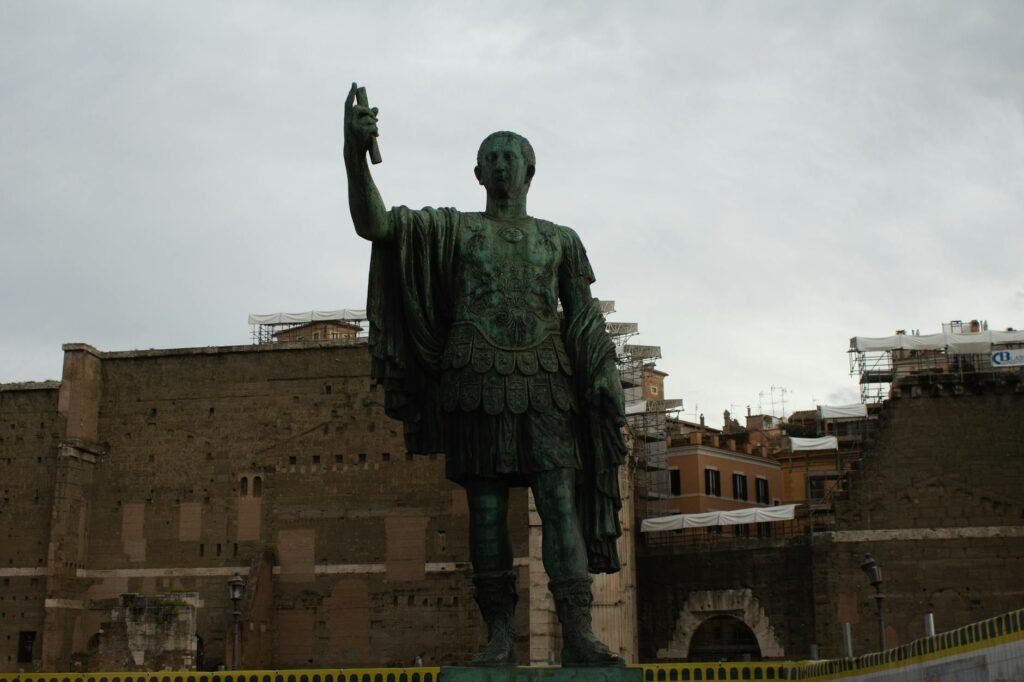
A pandemic carried by soldiers from the East unraveled the Pax Romana, killed two emperors, and set Rome on its long, slow decline. Here is the full story.
Every civilization that has ever flourished believed, on some level, that it would last forever. None of them did â and that gap between ambition and reality is where some of history’s most extraordinary stories live.
The Drama of Rise and Fall
Empires are not built in a day, and they do not collapse in one either. The forces that carry a civilization to greatness â military ingenuity, agricultural surplus, trade networks, visionary leadership â are often the very same forces that, stretched too thin or turned inward, bring it low. The Mongol Empire assembled the largest contiguous land empire in history within a single century, then fractured almost as dramatically. The Ottomans governed an astonishing mosaic of peoples and faiths for over six hundred years before the modern world rendered their model obsolete. Studying these arcs is not simply an exercise in nostalgia. It is a masterclass in how power is built, maintained, and lost â lessons that remain stubbornly relevant no matter the century.
Civilizations Beyond the Familiar Map
For too long, popular history drew a narrow circle around the Mediterranean and called it the cradle of everything worth knowing. The reality is far richer. Persia under the Achaemenids created a model of imperial administration so sophisticated that later empires quietly borrowed from it. Cities in the Indus Valley were practicing urban planning â complete with drainage systems â while much of the ancient world was still organized around small villages. Civilizations flourished across sub-Saharan Africa, the Americas, and Southeast Asia, leaving behind monuments, trade routes, and written records that archaeologists are still working to fully understand. The articles in this section deliberately reach beyond the well-worn paths, because the history of humanity was never confined to one corner of the map.
Lost Cities and What They Still Have to Say
There is something quietly thrilling about the idea of a city swallowed by desert, jungle, or sea â a place that was once bustling with ordinary human life and then simply disappeared from memory. Archaeology has spent the last two centuries pulling these places back into the light: buried trading hubs, ceremonial capitals, port cities that once connected distant worlds. But the real reward of studying lost civilizations is not the dramatic moment of rediscovery. It is what comes after, when researchers piece together how people actually lived, what they valued, and why their world ultimately changed beyond recognition. These are not ghost stories. They are detailed, complicated human histories that deserve the same attention we give to the civilizations whose names never left the textbooks.
Browse the articles below to follow these threads wherever they lead â from the steppe campaigns of Central Asia to the buried streets of a city no one remembered for a thousand years.
A pandemic carried by soldiers from the East unraveled the Pax Romana, killed two emperors, and set Rome on its long, slow decline. Here is the full story.
Affiliate disclosure: As an Amazon Associate we earn from qualifying purchases made through Amazon links in this article. This costs