Military History
War has never been only about weapons and wounds â it has always been about human decision-making under the most extreme pressure imaginable. The choices made on a dusty plain outside Carthage, on the blood-soaked beaches of Normandy, or in the war councils of ancient China rippled outward through centuries, redrawing maps, toppling dynasties, and reshaping the everyday lives of ordinary people who never once held a sword.
From Bronze Age Battlefields to Modern Warfare
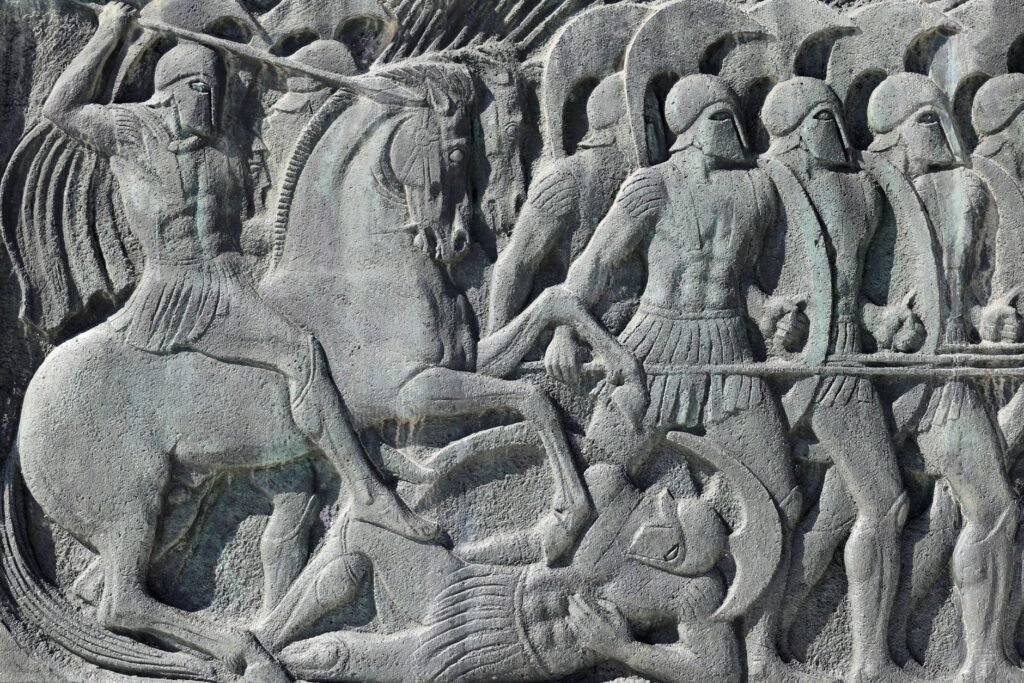
Military history spans an almost incomprehensible range of human experience. Chariots gave way to cavalry, cavalry gave way to cannon, and cannon gave way to technologies that could strike targets halfway around the world. Yet across every era, certain constants emerge: the importance of supply lines, the fragility of morale, the devastating cost of underestimating an opponent. Studying how armies fought across different centuries is not simply an exercise in cataloguing violence â it is a window into how societies organized themselves, what they valued, and how far they were willing to go to protect or expand those values. The evolution of the phalanx into the Roman legion into the medieval pike square tells a story not just of tactics, but of culture and ambition in motion.
The Leaders Who Changed Everything
Behind every pivotal campaign stands a commanding figure whose personality shaped the outcome as much as any map or battle plan. Alexander the Great led from the front with an almost reckless intensity. Napoleon rewrote the rulebook on speed and momentum. Harriet Tubman conducted daring military intelligence operations that proved courage takes many forms. These leaders were products of their time â shaped by political pressures, personal rivalries, and the tools available to them â but the best of them also managed to transcend their circumstances in remarkable ways. Understanding what made a great commander is not about celebrating war; it is about recognizing how leadership, vision, and the ability to adapt under impossible conditions can determine the fate of entire civilizations.
Strategy, Siege, and Sea: The Full Picture of How Wars Were Won
Some of history’s most dramatic moments unfolded not on open battlefields but behind walls, across water, or deep in supply chains far from the fighting. A brilliantly conceived siege could bring a powerful city to its knees without a single pitched battle. Naval dominance allowed small island nations to project power across entire oceans, turning geography into destiny. Logistics â the unglamorous science of feeding, arming, and moving armies â has quietly decided more conflicts than any act of battlefield heroism. The articles collected here explore all of these dimensions, examining strategy and its unintended consequences, the weapons that changed the balance of power overnight, and the sieges and sea battles that textbooks often overlook in favor of more famous engagements.
Whether you are drawn to the grand sweep of ancient empires clashing or the intimate drama of a single commander facing an impossible decision, the stories waiting for you below make the case that military history is, at its heart, a deeply human subject â one well worth exploring.