
AI-narrated version of this post using a synthetic voice. Great for accessibility or listening while busy.
Affiliate disclosure: As an Amazon Associate, History Book Tales earns from qualifying purchases at no additional cost to you.
History publishing does not really have an off-season. Presidential biographies land in spring ahead of summer reading lists, war histories cluster around Memorial Day and Veterans Day, and university presses quietly release serious scholarship year-round with almost no marketing push at all. What is actually useful for a reader trying to keep up is not one “best of the year” list assembled every December — it is knowing which specific books, released recently, are worth the time before the next wave arrives.
This roundup sticks to books that are genuinely new: released in 2025 or 2026, not backlist classics wearing a fresh sticker. Three titles anchor it, chosen because each represents a different, currently active lane in history publishing — political biography built from primary-source correspondence, narrative nonfiction grounded in a real archival hunt, and history-adjacent true crime. If none of the three matches your specific interest, the rest of this piece, and the nine companion guides linked throughout, should get you closer.
Why 2025-2026 Has Been an Unusually Strong Stretch
A few forces are converging in current history publishing worth naming, because they explain why so much of what is landing right now feels different from the canon-defining doorstoppers of a decade ago. Archival access keeps expanding. Digitization projects at national libraries, declassification schedules finally catching up on Cold War-era material, and DNA and isotope analysis applied retroactively to old excavations are giving historians genuinely new primary material to work with, not just new interpretations of the same old sources.
Publishers have also gotten more comfortable letting history books borrow structure from other genres — the treasure-hunt narrative, the true-crime page-turner, the character-driven biography built around private correspondence rather than public record. That has pulled in readers who would not pick up a traditional academic history but will read a fast-moving nonfiction adventure that happens to be rigorously sourced. And a steady run of anniversaries — WWII milestones, Cold War flashpoints reaching the 50-to-75-year mark where archives typically open — keeps generating fresh material on something close to a schedule.
Three Verified New Releases
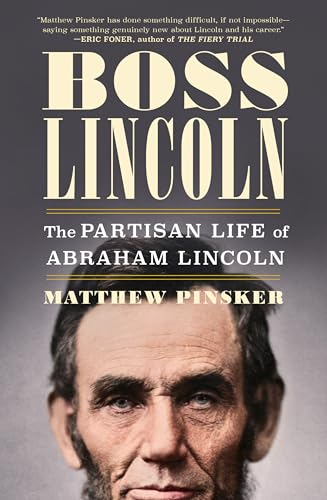
Boss Lincoln: The Partisan Life of Abraham Lincoln
Matthew Pinsker’s 2026 biography, published by W. W. Norton, does something genuinely different with the most-written-about figure in American history: it treats Lincoln first as a party operative, not a statesman who happened to also do politics. Pinsker, a Dickinson College historian, builds the book from Lincoln’s private correspondence rather than the public record most Lincoln biographies lean on, tracing his apprenticeship in rough 1830s Illinois Whig electioneering through his skillful navigation of the fractured, brand-new Republican coalition. The pitch is not “here is Lincoln again” — it is “here is the version of Lincoln that gets left out once the marble-statue version takes over,” which is a legitimately fresh angle on a subject most readers assume has nothing new left to say.
Neptune’s Fortune: The Billion-Dollar Shipwreck and the Ghosts of the Spanish Empire
Julian Sancton, whose previous book *Madhouse at the End of the Earth* built a reputation for turning obscure historical footnotes into genuinely gripping narrative nonfiction, published this one in January 2026. It follows the decades-long, borderline-obsessive hunt for the San Jose, a Spanish galleon that sank off Colombia carrying well over a billion dollars in gold and silver, and the amateur treasure hunter, Roger Dooley, whose single-minded pursuit of the wreck powers the book’s narrative engine. It reads less like a straightforward history of the Spanish treasure fleet system and more like a character study wrapped around one, which is exactly the structural borrowing from adventure writing mentioned above.

The Typewriter and the Guillotine
Mark Braude’s January 2026 release sits at the exact intersection this whole batch of guides is built around: real history, told with the pacing and tension of true crime. It follows American journalist Janet Flanner’s reporting on Eugen Weidmann, a German serial killer whose 1939 public execution in Paris, the last public guillotining in French history, became a flashpoint just as Nazi Germany’s shadow was falling over Europe. The book works as both a specific crime narrative and a portrait of a city and a press corps trying to process an ordinary monster while a much larger one gathered next door.

How the Three Compare
| Book | Subject / era | Published | Closest to |
|---|---|---|---|
| Boss Lincoln | Lincoln’s political career, 1830s-1865 | 2026 (Norton) | Political biography readers |
| Neptune’s Fortune | Spanish treasure fleet, modern-day hunt | Jan 2026 | Adventure/narrative nonfiction fans |
| The Typewriter and the Guillotine | 1930s Paris crime and press | Jan 2026 | True-crime-history crossover readers |
What Connects These Three, and What Does Not
These three books have almost nothing in common on the surface: 19th-century American politics, an 18th-century Spanish shipwreck, and a 1930s Parisian murder trial. What connects them is method. All three lean on primary documents that most previous popular treatments had not fully mined, and all three were written to be read as narrative rather than reference. None assumes you have already read a shelf of books on the subject. That is not a lowering of the bar — it is a deliberate choice about audience that a lot of current history publishing is making, worth knowing about if your mental model of a “serious history book” still defaults to dense, footnote-heavy academic prose.
Where This Fits in the Broader 2025-2026 Publishing Landscape
This piece only covers one corner of what is actually happening in history publishing right now. If World War II is specifically your interest, our bestselling WWII history books guide covers four current standouts, from a definitive new history of occupied Naples to a fresh account of the women who ran America’s wartime propaganda operation. If ancient and deep history is more your speed, our roundup of ancient history releases from the past year covers genuinely new archaeological and linguistic scholarship, including a book that reconstructs the lives of women written out of Homer’s epics.
Two other trends deserve dedicated coverage rather than a paragraph here. The genre boom around overlooked and untold history, women’s history specifically and non-Western and Indigenous history more broadly, has produced enough strong 2025-2026 material to fill its own guide. And the history-meets-true-crime hybrid that The Typewriter and the Guillotine represents has become substantial enough as its own lane that it gets a full roundup, covering two more 2025 releases that did not fit here.
Format Matters More Than It Used To
One more shift worth flagging: how you consume these books has become a real decision, not an afterthought. All three titles above are available in print, ebook, and audio, and for narrative nonfiction built around pacing and tension rather than dense argument, audio is a genuinely strong format rather than a compromise. If that is your preferred way to read, our guide to this year’s best new history audiobooks covers audio-specific picks, including one where the author narrates her own book. If a reluctant reader in your life responds better to illustration than dense text, illustrated and graphic-format history books have had a genuinely strong recent stretch too, and if fiction is the easier entry point, the newest historical fiction releases covers three verified 2026 novels.
Picking Where to Start
If you want political history that reframes a figure you thought you already understood, start with Boss Lincoln — it rewards readers who already know the broad strokes of Lincoln’s life and want the texture filled in. If you want pure narrative momentum and do not need the subject to be capital-H historic to be gripping, Neptune’s Fortune is the pick; it reads more like a mystery than a history book, in the best sense. And if you want history with real tension and a genuine sense of dread building in the background, The Typewriter and the Guillotine delivers that while staying grounded, sourced journalism about a real case and a real reporter.
Reading the Trade Reviews Before You Buy
New releases do not come with a track record the way a decades-old classic does, so it is worth knowing how to read early trade coverage before committing to a brand-new title. Kirkus, Publishers Weekly, and Library Journal all issue advance reviews months before a book’s official release, written for booksellers and librarians rather than general readers, and they tend to be more candid about a book’s actual weaknesses than the pull-quotes a publisher later chooses for the cover. A starred Kirkus review is a genuinely useful signal; a single glowing blurb from another author on the jacket is not, since those are solicited by the publisher and rarely negative. Newspaper book sections — the Washington Post, the New York Times Book Review — add a second, independent layer of judgment once a book is actually out, and cross-checking a new release against both an advance trade review and a post-publication newspaper review is a reasonable way to gauge real quality before spending money on something with no reader reviews yet to speak of.
It is also worth watching for the specific language publishers use around anniversaries and awards. “Instant bestseller” reflects real first-week sales data and is a meaningful, verifiable claim. Prize longlists and shortlists, like the Walter Scott Prize for historical fiction or National Book Critics Circle categories, are judged by panels reading widely across a full year’s output, which makes them a more durable signal than launch-week sales alone. Neither guarantees you will personally enjoy a given book, but both are more reliable starting points than marketing copy by itself.
It is also worth checking a book’s actual publication date against the edition you are buying, since hardcover, paperback, and international editions of the same title frequently release months or even years apart. A book widely discussed as a “2026 release” in American coverage may have already appeared in the UK the previous year, or vice versa, and a paperback reissue of an older title sometimes gets marketed with fresh cover copy that can read, at a glance, as a brand-new book. None of that is dishonest on the publisher’s part — it is standard publishing practice — but it is worth a quick check before treating something as newer than it actually is.
Frequently Asked Questions
Are these books written for general readers, or do they assume prior knowledge?
All three are written for general readers. None require prior specialist knowledge of the subject, though Boss Lincoln rewards readers who already know the outline of Lincoln’s presidency, since it is specifically reframing that story rather than introducing it from scratch.
Is narrative nonfiction like this less rigorous than traditional academic history?
Not necessarily — rigor and narrative structure are not opposites. All three books here are built on real archival and documentary research; what has changed is how that research gets presented, not how carefully it was done.
Why does so much new history writing lean on true-crime or adventure-story structure lately?
Partly reader demand, since these structures are proven to hold attention across a full book-length narrative, and partly because a lot of underused historical material genuinely does have that shape: a hunt, a mystery, a countdown. Writers are increasingly willing to let the material’s natural structure show rather than forcing it into a traditional chronological survey.
How do I find out about new history book releases as they happen, rather than after the fact?
Publisher catalogs, particularly the coming-soon pages for imprints like Norton, Doubleday, and university presses, along with sites like Historia Magazine and the Historical Novel Society for the fiction side, and preorder pages on major retailers, are far more current than year-end lists, which necessarily lag by months.
Will these three titles still be considered new a year from now?
No, and that is specifically why we plan to keep updating guides like this one rather than letting a single best-of-2026 list stand in for ongoing coverage. Check back for updated picks as 2026 closes and 2027’s catalog opens.
Related Auburn AI Products
Building a content site at scale? Auburn AI has production-tested kits: