AI-narrated version of this post using a synthetic voice. Great for accessibility or listening while busy.
Affiliate disclosure: As an Amazon Associate, History Book Tales earns from qualifying purchases at no additional cost to you.
The Tudors ruled England for 118 years, from Henry VII’s victory at Bosworth in 1485 to the death of Elizabeth I in 1603, and they remain the most written-about royal family in English history. That is both a blessing and a problem for readers. There is no shortage of books, but there is a great deal of repetition, and plenty of titles that lean harder on scandal than on evidence.
This guide narrows the field to seven books that, read together, cover the whole dynasty: one overview, one book on the founder, two on Henry VIII’s marriages, one on the minister who made the English Reformation happen, one on Henry’s children and a short life of Elizabeth. The picks are based on publisher descriptions, the authors’ standing as historians, and reader reviews.
Quick Picks
- Best one-volume overview: The Tudors by G. J. Meyer
- Best on Henry VII: Winter King by Thomas Penn
- Best narrative of the six wives: The Six Wives of Henry VIII by Alison Weir
- Best character portraits of the six wives: The Wives of Henry VIII by Antonia Fraser
- Best on Thomas Cromwell: Thomas Cromwell by Diarmaid MacCulloch
- Best on Henry’s children: The Children of Henry VIII by John Guy
- Best short introduction to Elizabeth I: Elizabeth I by Helen Castor
The Whole Dynasty in One Book
The Tudors by G.J. Meyer
Meyer’s single-volume history runs from the obscure Welsh origins of the family to Elizabeth’s death, and it is the most popular one-book overview of the dynasty in the US. At 672 pages it is substantial, but it is written for general readers, and Meyer breaks up the narrative with short background chapters on topics such as religion, money and daily life that help a newcomer keep their bearings.
Meyer is openly critical of Henry VIII and of the way the Reformation was carried out, and some readers find his tone sharper than they expected. That is worth knowing going in. For a reader who wants the full arc before picking a reign to explore in depth, it is still the natural first book.

The Founder
Winter King by Thomas Penn
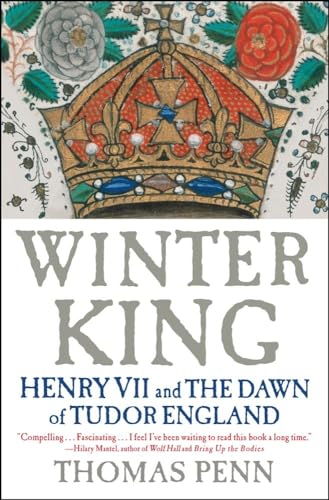
Henry VII tends to get squeezed between the drama of the Wars of the Roses and the drama of his son, which makes this book especially valuable. Penn follows the first Tudor king from his precarious seizure of the crown through a reign shaped by suspicion, pretenders, surveillance and an extraordinary appetite for money, and he shows how much of the world Henry VIII inherited was built by his father.
Readers often single out Penn’s prose and his portrait of the young Prince Henry growing up in that guarded court. If you have come to the Tudors from novels about the Plantagenets, Winter King is the bridge between the two worlds.
Henry VIII and His Six Wives
The Six Wives of Henry VIII by Alison Weir
First published in 1991, Weir’s group biography is one of the books that turned her into one of Britain’s best-selling popular historians. She gives each queen, from Katherine of Aragon to Katherine Parr, a full treatment and keeps the political stakes of each marriage in view: the succession, the break with Rome and the factions that rose and fell with each wife.
It is long, at 656 pages in this edition, but very readable, and it remains a standard starting point for readers who want the marriages told in order.

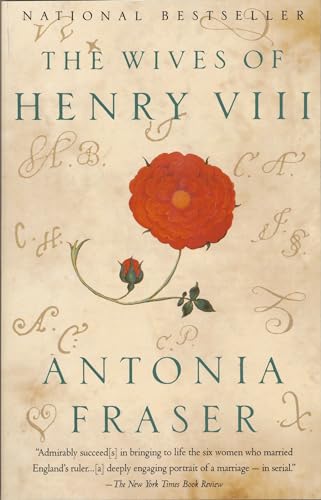
The Wives of Henry VIII by Antonia Fraser
Published a year after Weir’s book and known in Britain as The Six Wives of Henry VIII, Fraser’s account covers the same six women with a different emphasis. Fraser sets out to look past the familiar labels of the old rhyme, divorced, beheaded, died, and to treat each queen as an individual with her own education, faith and political judgement. A useful way to frame the difference: Weir leans toward narrative and politics, Fraser toward character.
You do not need both. Choose Weir if you want the fuller political story and Fraser if you are more interested in the women themselves.
The Power Behind the Throne
Thomas Cromwell: A Revolutionary Life by Diarmaid MacCulloch
Hilary Mantel’s Wolf Hall novels made Thomas Cromwell the most talked-about Tudor of the past two decades. MacCulloch, an Oxford historian of the Reformation and the biographer of Archbishop Thomas Cranmer, wrote the serious biography that readers of Mantel kept asking for. Working from Cromwell’s surviving papers, he traces the blacksmith’s son from Putney who became Henry VIII’s chief minister, drove through the break with Rome and the dissolution of the monasteries, and was executed in 1540.
This is the most demanding book on the list, at 752 pages and with a scholar’s attention to detail, but it is also the one that most changes how you see the period. If you have read Mantel, our Wolf Hall discussion guide is a good companion to it.

The Next Generation
The Children of Henry VIII by John Guy
Henry VIII went to extraordinary lengths to secure a male heir, and the irony that his crown passed to a sickly son and then two daughters is one of the great stories of English history. Guy, a leading Tudor historian and biographer of Mary, Queen of Scots, follows the next generation through the mid-Tudor reigns and the religious swings that came with them, from Edward VI’s Protestant regime to Mary I’s restoration of Catholicism and Elizabeth’s settlement.
At 280 pages it is the most concise way to understand the years between Henry’s death in 1547 and Elizabeth’s accession in 1558, a stretch many overviews hurry through.

Elizabeth I by Helen Castor
Part of the Penguin Monarchs series of short royal lives, Castor’s book covers the last Tudor in 128 pages. Castor, the author of She-Wolves, is particularly good on how Elizabeth built and guarded her own image in a world that doubted whether a woman could rule alone. It is ideal for a reader who wants a sharp, authoritative introduction before committing to one of the full-length biographies, and it makes a neat gift for someone who already owns the bigger books.

Where to Start
For a single book, choose Meyer. For a reading path, go in chronological order: Penn on Henry VII, then Weir or Fraser on the marriages, MacCulloch on Cromwell, Guy on Henry’s children and Castor on Elizabeth. If the Tudors have you curious about what came before them, our guide to the best medieval history books covers the centuries that shaped them, and our Conn Iggulden reading guide includes his novels of the Wars of the Roses, the conflict that put the Tudors on the throne.
Frequently Asked Questions
How long did the Tudors rule England?
From 1485, when Henry VII won the Battle of Bosworth, to 1603, when Elizabeth I died without children and the crown passed to James VI of Scotland, the first Stuart king of England.
Who were the five Tudor monarchs?
Henry VII, Henry VIII, Edward VI, Mary I and Elizabeth I. Lady Jane Grey was proclaimed queen for nine days in 1553 but is not usually counted as a Tudor monarch.
Which is better on the six wives, Alison Weir or Antonia Fraser?
Both are well regarded. Weir’s book is generally seen as the stronger political narrative, while Fraser focuses more on each queen as an individual. Pick one based on which angle interests you more.
What is a good short introduction to the Tudors?
The Penguin Monarchs series offers short lives of each Tudor ruler. Helen Castor’s Elizabeth I is a good example. For the whole dynasty in a single, longer book, G.J. Meyer’s The Tudors is the usual recommendation.
Is Wolf Hall historically accurate?
Hilary Mantel’s novels follow the documented events of Cromwell’s career closely, but his inner life and many conversations are imagined. Diarmaid MacCulloch’s biography is the best way to compare the novel with the historical record.