
AI-narrated version of this post using a synthetic voice. Great for accessibility or listening while busy.
Affiliate disclosure: As an Amazon Associate, History Book Tales earns from qualifying purchases at no additional cost to you.
Rome and Greece produced an unusual amount of physical culture that still reads clearly today — coins with recognizable portraits, armor with a silhouette everyone recognizes from film and textbook illustrations, busts of faces that feel oddly specific rather than generic. That’s part of why replica objects from this period work so well as collectibles in a way that, say, replica medieval manuscripts don’t quite manage: the visual language of a Roman legionary helmet or a Greek marble bust is instantly legible even to someone with only casual interest in the period.
The other draw is scale. Unlike a leather-bound book set or a floor globe, most of what’s on this list fits on a single shelf, and several pieces work on a desk. That makes this category unusually flexible as a gift — there’s a genuinely useful entry point under $30 and a genuinely serious collector’s piece well past $200, often within the same product category.
Reading Replica Listings Correctly
A few terms show up repeatedly in this category and are worth understanding before buying.
Replica vs. reproduction vs. “inspired by.” A true replica claims to closely match a specific known original (a particular coin type, a specific museum bust). “Inspired by” or “in the style of” pieces are more general — attractive, thematically accurate, but not modeled on one specific historical object. Neither is dishonest as long as the listing is clear about which it is, but they’re different purchases.
Materials. Resin and cold-cast bronze/stone composites dominate the affordable end of this category and can look genuinely convincing at normal viewing distance. Solid bronze, brass, or real stone pieces cost substantially more and weigh noticeably more, which matters if the piece is going on a shelf versus a sturdy table or plinth.
Scale. Full-size helmet and armor replicas are dramatically more expensive and harder to display than scale-model versions of the same items. A tabletop-scale bust or helmet model captures the visual appeal at a fraction of the size, weight, and cost of a wearable or life-size piece.
Why Rome and Greece Left So Much Behind to Copy
Part of why this category exists at all is an accident of geology and climate. The eruption of Vesuvius in 79 AD buried Pompeii and Herculaneum under ash so completely that entire households — furniture, frescoes, bread still in ovens — survived in a kind of frozen snapshot that almost never happens elsewhere in the ancient world. The dry conditions across much of the Mediterranean basin preserved metal, stone, and ceramic objects at a rate that wetter climates simply don’t allow, which is a large part of why classical archaeology has produced such an enormous, well-documented catalog of everyday and ceremonial objects to draw replicas from in the first place.
There’s also a long tradition of replica-making itself that predates the modern collectibles market by centuries. Wealthy travelers on the 18th- and 19th-century Grand Tour routinely brought home plaster casts of famous Greek and Roman statues they couldn’t possibly transport (or afford) in the original, and those casts became genuinely respected objects in their own right — entire academic collections of teaching casts still exist at universities and museums today, valued for their educational function rather than treated as lesser substitutes for the “real” thing. Modern resin busts and architectural models are the direct descendants of that tradition: reproductions that let ordinary collectors engage with forms and details that would otherwise be locked away in a handful of major museums.
Five Strong Picks
An Ancient Roman Coin Replica Set
This is the natural entry point into the category — a set of several coin replicas, typically covering a handful of well-known emperors or coin types, often presented in a display case or frame. Roman coinage is unusually well-documented archaeologically, so even a modestly priced replica set is usually based on real, identifiable coin types rather than an invented design, which gives it a genuine educational angle alongside the decorative one. A coin set is also the cheapest, lowest-commitment way to test whether a particular gift recipient actually enjoys this category before considering a larger piece.

- ONE – ANCIENT ROMAN BRONZE COIN. 1700 years old
- Various Ancient Roman Coins Available.
- This Ad is for ONE Ancient Roman Coin
A Roman or Greek Bust Replica
Busts are the centerpiece pieces of this category — a scaled reproduction of a known figure (Julius Caesar, Augustus, Socrates, and similar recognizable subjects are the most commonly reproduced) or a generic “philosopher” or “senator” type styled after the classical tradition. Cold-cast resin versions with a faux-marble or bronze finish dominate the affordable-to-midrange price point and hold up well as shelf pieces; larger and more detailed versions move up quickly in price. This is the piece most likely to become a room’s visual anchor, similar to how a globe functions in the map and globe category.

- THIS BUST OF AUGUSTUS CAESAR is Caesar Primaporta, the Roman autocrat who ruled from 30 BC to 14 AD.
- INSPIRED BY THE ORIGINAL in the Vatican, this work of art celebrates your love of Rome’s military history and art.
- HIGH QUALITY FIGURINE hand-cast using real crushed stone bonded with durable designer resin, this statue captures his handsome…
A Roman Centurion or Legionary Helmet Replica
A scaled or decorative helmet replica captures one of the most immediately recognizable silhouettes from the ancient world — the crested Roman helmet is instantly readable even to people with minimal interest in ancient history specifically. Decorative and display-scale versions (as opposed to wearable, historically accurate reenactment gear, which is its own much more specialized and expensive category) are the right choice for most collectors, offering the visual impact without the cost or weight of a full historically accurate reproduction.
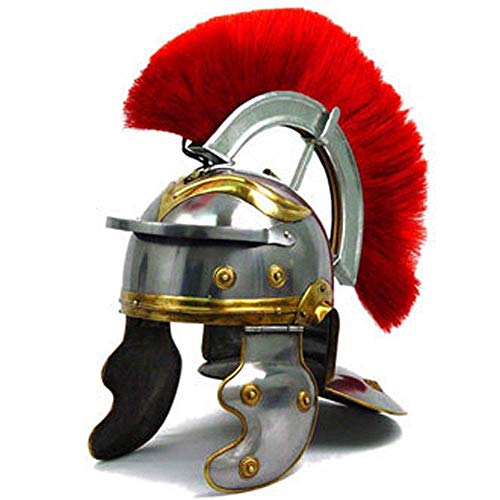
- Overall Length: 13.50 Inches
- Width: 8 Inches (side to side)
- Inside Length: 8.25 Inches (front to back)
A Roman Gladius Replica (Letter Opener or Display Scale)
The gladius — the short sword associated with Roman legionaries — shows up in smaller, non-functional replica forms as letter openers, desk pieces, or wall-mounted display items, which makes it one of the more practical and desk-friendly pieces on this list. It reads as a serious piece without needing the display space a bust or helmet requires, and a letter-opener-scale version doubles as an actually usable desk object rather than a pure display piece.
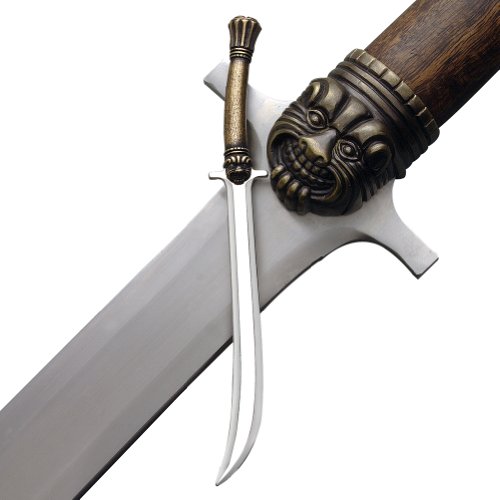
- This miniature sword is beautiful to look at, as almost none of its grand details have been lost in the transition from a fully…
- The single-edged blade has a subtle, slight curve, and the blade flares out at the grip to provide a small sort of guard.
- The hilt is slightly curved with few decorations, exactly as seen on Valeria’s full-size sword.
A Parthenon or Colosseum Architectural Model
Rather than a figure or weapon, an architectural model reproduces one of antiquity’s landmark structures at desk or shelf scale — the Parthenon’s columns and pediment, or the Colosseum’s distinctive tiered arches. These work particularly well for someone whose interest leans toward ancient engineering and urban history rather than military or portrait-focused collecting, and they photograph well as a centerpiece on a bookshelf among the leather-bound sets covered in our leather-bound book set guide.

- DETAILED REPLICA: Meticulously crafted 3D model of the ancient Parthenon temple featuring classical Greek architectural element…
- CLASSICAL DESIGN: Authentic reproduction showcasing the iconic Doric columns, triangular pediments, and ornate roof details cha…
- DISPLAY PIECE: Elegant white sculpture perfect for home decor, office spaces, or educational settings, adding a sophisticated a…
Displaying a Piece Without a Dedicated Case
Not every buyer wants to invest in a formal display case, and most pieces in this category don’t require one to look intentional rather than cluttered. A single bust or helmet earns more visual weight sitting alone on a shelf with breathing room around it than crowded next to unrelated decor — the empty space around a piece is doing real work, the same way a gallery leaves space around a single sculpture rather than packing the room. Coin sets are the exception where a simple frame or shadow box genuinely improves the experience, since loose coins in a drawer get handled, scratched, and eventually forgotten, while the same coins under glass stay visible and protected at the same time.
Comparison Table
| Item | Typical price | Material | Display footprint |
|---|---|---|---|
| Coin replica set | $15-50 | Metal alloy, often plated | Small (case or frame) |
| Bust replica | $25-150+ | Resin, cold-cast bronze/marble | Shelf to tabletop |
| Helmet replica (display scale) | $30-120 | Resin, metal alloy | Shelf to small pedestal |
| Gladius replica (letter opener) | $15-40 | Metal blade, resin/metal hilt | Desk |
| Architectural model | $25-100 | Resin, composite stone | Shelf to tabletop |
Provenance and Honest Listings
Because this category sits between “decor” and “collectible,” it’s worth paying attention to how a listing describes its own product, since the language sellers use varies in how much historical claim it’s actually making. A listing that names a specific documented artifact, museum collection, or coin catalog reference is making a checkable claim; one that only uses broad, evocative language (“ancient warrior,” “old world design”) without any specific reference point is selling an aesthetic rather than a documented reproduction, which is a perfectly fine purchase as long as you know that’s what you’re buying. Neither approach is dishonest by itself, but conflating the two — assuming a vaguely-described piece is a precise reproduction because it looks the part — is the most common way buyers end up disappointed in this category. A few extra minutes reading the full product description before buying resolves this every time.
Building a Collection vs. Buying One Piece
For a first gift in this category, the coin set or the gladius letter opener are the safest choices — both are inexpensive enough that a miss isn’t costly, and both have genuine everyday utility (a coin set is simply interesting to look through; a letter opener gets used). A bust or an architectural model is the right choice once you know the recipient has real, ongoing interest in the period specifically, since these are the pieces that ask for permanent shelf space rather than sitting in a drawer between uses. If you’re building out a themed shelf over time rather than buying one item, starting with a bust as the anchor piece and adding the coin set, helmet, and gladius around it tends to read as a considered collection rather than a scattered assortment of unrelated objects.
For coins and jewelry specifically as their own gift category, our replica coins and history-themed jewelry guide goes deeper on wearable and pocket-sized pieces.
Frequently Asked Questions
Are these replicas based on real historical objects, or invented designs?
It varies by listing, which is why it’s worth checking the product description specifically. Coin replicas are very often based on documented, identifiable coin types since Roman coinage is thoroughly cataloged. Busts and helmets range from replicas of specific known artifacts to general “in the style of” pieces — both are legitimate purchases, but check which one you’re getting if authenticity to a specific original matters to you.
Will a resin bust or helmet look cheap up close?
Quality varies significantly by price point and manufacturer. Mid-range cold-cast resin pieces with a proper faux-bronze or faux-marble finish generally look convincing at normal viewing and photography distance; the very cheapest options can look plasticky under close inspection. Reading reviews for specific mentions of finish quality is worth the extra few minutes before buying.
Are any of these actually functional (wearable armor, sharp blades)?
No, and that’s intentional for this category — these are display and decorative pieces, not functional reenactment gear or weapons. A gladius letter opener has a working edge for opening mail but isn’t a functional weapon; helmet and armor replicas in this price range are decorative, not wearable protective gear.
How should I clean or maintain a resin or metal-alloy replica?
A soft, dry cloth for dusting is usually sufficient for both resin and metal-alloy pieces. Avoid harsh chemical cleaners on faux-bronze or faux-marble finishes, which can strip the applied patina finish and reveal the base material underneath.
What’s a reasonable starter budget for this category?
Somewhere between $20 and $50 covers a genuinely nice coin set or gladius letter opener without much risk. That’s a reasonable place to start before deciding whether to invest in a larger centerpiece piece like a bust or architectural model.
Related Auburn AI Products
Building a content site at scale? Auburn AI has production-tested kits: