
AI-narrated version of this post using a synthetic voice. Great for accessibility or listening while busy.
Affiliate disclosure: As an Amazon Associate, History Book Tales earns from qualifying purchases at no additional cost to you.
True crime and history have always overlapped more than either genre’s marketing usually admits. A well-documented historical murder, trial, or investigation has everything a true-crime reader wants — real stakes, real uncertainty, a real question of who did what and why — with the added weight of genuine historical consequence attached to the outcome. What has changed recently is how openly publishers are marketing books this way, rather than filing a genuinely crime-driven narrative under a more conventional “history” or “biography” label and hoping true-crime readers find it anyway.
The four books below, all published in 2025 or 2026, sit squarely in that overlap. None pretends the crime at its center matters only for its shock value; each uses a real, documented case to say something larger about the era or institution it happened inside.
Why This Specific Hybrid Is Having a Moment
Three things are driving it. True crime as a standalone genre, across podcasts, streaming documentaries, and books, has proven enormous, sustained audience demand for exactly this kind of tension-driven, real-stakes narrative. Historians and journalists have noticed, and a meaningful number of genuinely skilled nonfiction writers are now deliberately choosing historical crime subjects specifically because the structure works, not as a gimmick layered onto existing research. And forensic and archival techniques that did not exist a generation ago — DNA identification of decades-old remains, digitized court and police records, deep newspaper archives now searchable in ways they never were — are letting writers solve or substantially clarify cases that genuinely could not have been fully told before.
Four Verified 2025-2026 Releases
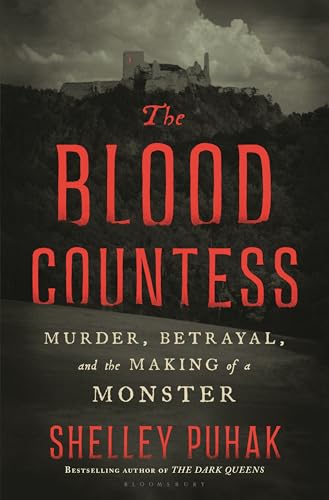
The Blood Countess: Murder, Betrayal, and the Making of a Monster
Shelley Puhak’s February 2026 book, from the author of the national bestseller *The Dark Queens*, takes on Elizabeth Bathory, long alleged to be history’s most prolific female serial killer, accused of torturing and killing as many as 650 young women in 16th- and 17th-century Hungary. Puhak draws on new archival evidence to question long-standing assumptions about the case, tracing Bathory’s downfall against the backdrop of a world sliding toward reactionary, anti-scientific politics — and making a real argument about how misogyny shaped both the original accusations and the legend that followed. It was a Barnes & Noble Most Anticipated Nonfiction pick and one of the chain’s Best Books of February 2026.
The Man Nobody Killed: Life, Death, and Art in Michael Stewart’s New York
Elon Green’s March 2025 release, from Celadon Books, reconstructs the life and 1983 death of Michael Stewart, a young Black artist and model who died after a violent encounter with New York City transit police, and the court proceedings against the officers involved that followed. It is the first comprehensive narrative account of Stewart’s case, and it treats the story as both a specific true-crime investigation and a piece of art and civic history — Stewart’s death and the response to it shaped how a generation of New York artists engaged with police violence as subject matter.

The Scientist and the Serial Killer: The Search for Houston’s Lost Boys
Lise Olsen’s April 2025 book, published by Random House, follows forensic anthropologist Sharon Derrick’s real, years-long effort to identify the unnamed victims of Dean Corll, one of the most prolific serial killers in American history, working from remains held in the Harris County morgue decades after Corll’s killings ended. It is true crime built around forensic science and painstaking archival identification work rather than the crimes themselves, which shifts the book’s actual center of gravity toward the overlooked, difficult work of naming victims long after a case is officially closed.

The Typewriter and the Guillotine
Covered in full in our new-releases roundup, Mark Braude’s January 2026 book earns its place here as squarely true-crime history: American journalist Janet Flanner’s coverage of serial killer Eugen Weidmann’s case and his 1939 public execution, the last in French history, unfolding just as a far larger horror gathered next door in Nazi Germany.

Comparison at a Glance
| Book | Case | Era | Core tension |
|---|---|---|---|
| The Blood Countess | Elizabeth Bathory | 16th-17th c. Hungary | Legend versus documented evidence |
| The Man Nobody Killed | Michael Stewart | 1983 New York | Police violence, art, and civic memory |
| The Scientist and the Serial Killer | Dean Corll’s victims | 1970s Houston, ID’d decades later | Forensic science and victim identification |
| The Typewriter and the Guillotine | Eugen Weidmann | 1930s Paris | A crime overshadowed by a larger horror |
A Note on How These Books Handle Difficult Material
All four deal with real violence and real victims, and it is worth saying plainly that none of them are written for shock value alone. Each uses its central case to make a larger, documented argument — about misogyny and legend-making, about civic memory and police accountability, about the overlooked labor of forensic identification, about a small crime’s place beside a much larger historical horror. That does not make any of them easy reading, but it does distinguish them from true-crime writing that treats violence as pure entertainment.
Matching the Book to the Reader
For a reader drawn to the darker edges of early modern European history, The Blood Countess offers genuinely new archival evidence on one of history’s most notorious, most mythologized cases. For a reader interested in American civil rights and civic history specifically, The Man Nobody Killed connects a single case to a much larger, still-relevant conversation about policing and memory. The Scientist and the Serial Killer suits a reader drawn to forensic science and the specific, difficult work of identification over the crime narrative itself. And The Typewriter and the Guillotine is the pick for a reader who wants true crime set explicitly against the gathering approach of a much larger historical catastrophe.
How These Cases Were Covered the First Time Around
It is worth knowing, at least briefly, how each of these cases was originally reported or remembered, because the gap between that original coverage and these new books is a large part of what makes each one worth reading now. Elizabeth Bathory’s case has existed in popular memory for over four centuries almost entirely as legend — lurid, often exaggerated accounts assembled well after her actual downfall, with the original trial records themselves incomplete and politically motivated in ways later popular retellings rarely acknowledged. Puhak’s contribution is specifically to go back to what documentary evidence actually survives and separate it from four hundred years of accumulated embellishment.
Michael Stewart’s 1983 death received real contemporary news coverage and became a genuine flashpoint in New York City’s ongoing conversation about policing at the time, but that coverage was largely daily-news reporting rather than the kind of sustained, book-length investigation Elon Green undertook decades later — and much of the case’s cultural aftermath, particularly its influence on a generation of New York artists, was never woven into a single comprehensive narrative until now. Dean Corll’s crimes, by contrast, received enormous, sensationalized press attention at the time of their discovery in 1973, precisely the kind of coverage that centers the killer rather than his victims — which is exactly the imbalance Lise Olsen’s book, built around forensic identification work rather than the killer’s biography, sets out to correct. And Eugen Weidmann’s 1939 execution was, at the time, front-page news across France and internationally, but it was quickly overshadowed within months by the outbreak of a war that made a single serial killer’s crimes feel almost quaint by comparison — which is precisely the historical irony Mark Braude’s book excavates.
Taken together, these four cases suggest a pattern worth naming directly: the gap between how a historical crime was first reported and what a rigorous, well-resourced modern author can eventually do with the same underlying facts tends to widen with time, not narrow. Contemporary reporting operates under deadline pressure and incomplete information; a book written decades later can draw on forensic advances, declassified records, and the freedom to spend years on a single case that no newsroom could ever justify. That gap is, in a real sense, the entire reason this genre exists and keeps finding new material worth the effort. It is also why cold cases and decades-old crimes remain such fertile ground for this kind of writing specifically: enough time has to pass for records to declassify, for participants to be willing to speak on the record, and for forensic techniques to catch up to evidence that sat unusable in storage for years, which means the best material for this genre is, almost by definition, never the most recent crime available. It is worth remembering, too, that a book’s publication does not mean a case is fully resolved — The Scientist and the Serial Killer specifically covers identification work that itself took decades and was still incomplete at points during Derrick’s investigation, a reminder that this particular kind of history, victim identification through forensic science, is often still actively unfolding by the time a book about it reaches shelves rather than sitting entirely settled in the past.
If untold and overlooked history more broadly is what drew you here, our roundup of that genre’s current boom covers four more 2025-2026 releases reclaiming stories mainstream publishing skipped for generations.
Frequently Asked Questions
Are these books appropriate for readers sensitive to graphic violence?
All four deal with real violence, and while none is written gratuitously, readers sensitive to detailed accounts of murder or death should approach each with that in mind, particularly The Scientist and the Serial Killer given its subject matter.
How reliable is the evidence in a centuries-old case like The Blood Countess?
Puhak’s book explicitly works from new archival evidence to question earlier assumptions, which is a meaningfully different approach than simply repeating the traditional legend — but any case this old inevitably involves some interpretation of incomplete historical record, which the book itself acknowledges.
Is The Man Nobody Killed primarily about the legal case, or about its cultural aftermath?
Both, roughly equally — it covers the court proceedings against the officers involved as thoroughly as it covers how Stewart’s death shaped later art and civic memory in New York.
Do I need a background in forensic science to follow The Scientist and the Serial Killer?
No — Olsen writes for a general audience and explains the forensic methods Derrick used in accessible terms, without requiring prior scientific background.
Which of these four is closest in tone to a traditional true-crime podcast or documentary?
The Blood Countess and The Man Nobody Killed both lean closest to that pacing and tone, while The Scientist and the Serial Killer and The Typewriter and the Guillotine carry a slightly more measured, journalistic register.
Related Auburn AI Products
Building a content site at scale? Auburn AI has production-tested kits: