See also: The Crusades: What They Were Really Fighting For.
AI-narrated version of this post using a synthetic voice. Great for accessibility or listening while busy.
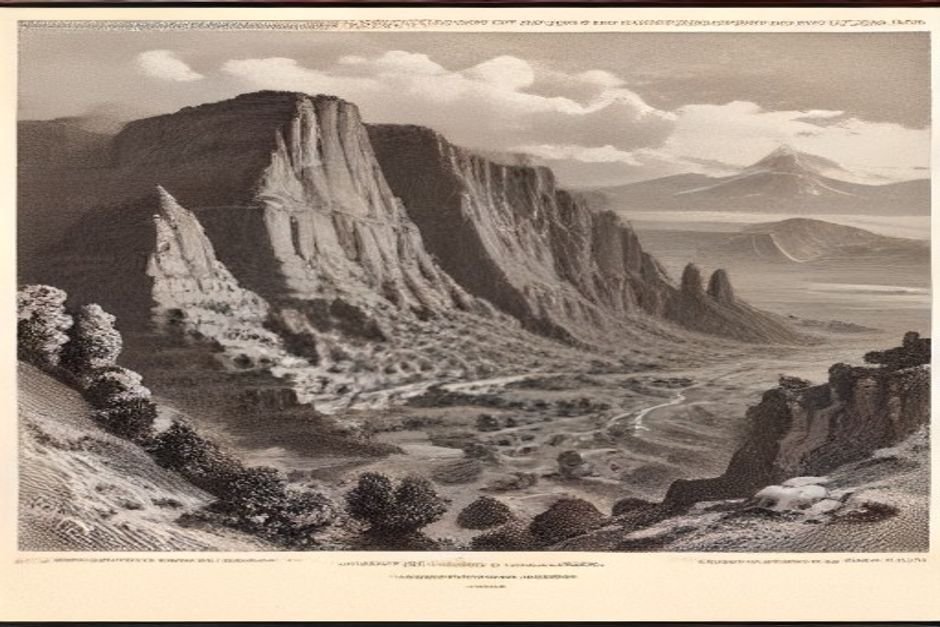
High on the sandstone ledges of the American Southwest sit stone rooms and towers tucked into alcoves that catch the winter sun and hide from the summer heat. No one lives in them now. But for a long stretch of the ancient past, these cliffside villages were home to a people who built a network of communities stretching across an entire plateau — and who, centuries later, would be recognized as the direct ancestors of the Pueblo peoples still living in the Southwest today. Their name for themselves has been lost to time; the names we use now — Ancestral Puebloans, Basketmaker-Pueblo culture — were assembled by outsiders trying to make sense of what they’d found.
A People of the Four Corners
The Ancestral Puebloans were an ancient Native American culture belonging to the broader family of Pueblo peoples, and their world centered on the Four Corners region — the area where the modern borders of southeastern Utah, northeastern Arizona, northwestern New Mexico, and southwestern Colorado meet. It’s a landscape of high desert, deep canyons, and mesas, and it was here that this culture took shape, at least in part, out of an earlier tradition called the Oshara tradition, which in turn developed from the still-older Picosa culture. That lineage places the Ancestral Puebloans within a long, continuous thread of human life on the Colorado Plateau, rather than as a people who appeared from nowhere.
Exactly when “Ancestral Puebloan” becomes the right label for that thread is a question archaeologists still argue over. The framework most researchers lean on today is the Pecos Classification, a system of eras used to organize the culture’s development. Under that system, the current working consensus places the emergence of a distinct Ancestral Puebloan culture around the 12th century BCE, in the period archaeologists call the Early Basketmaker II Era. That’s a starting point, not a settled fact — and it’s one of the places where the picture is still being redrawn.
From the beginning, researchers who explored and excavated these sites saw a direct line running forward from the Ancestral Puebloans to the Pueblo peoples of the present day. That continuity matters: this was not a culture that vanished. It changed, moved, and eventually became something else — namely, the ancestors of communities that still exist.
From Pit Houses to Cliff Palaces
Part of what makes the Ancestral Puebloans so visible in the archaeological record is the sheer range of ways they built their homes. At the simplest end were small pit houses, dug partly into the earth, built to shelter a single family. Over time, communities raised larger structures meant to house entire clans, and eventually grand pueblos — the multi-room, multi-story complexes that give the culture its name. And then there were the cliff dwellings: villages tucked into natural alcoves in canyon walls, built, at least in part, for defense.
This progression — from a single family’s dugout shelter to a clan’s communal building to a sprawling pueblo to a fortified cliff village — traces an arc of growing social complexity. Building a defensible cliff city takes coordination: quarried stone, timber hauled to remote ledges, and enough shared purpose to keep dozens or hundreds of people working toward a common structure. These were not isolated households scattered across the desert. The Ancestral Puebloans maintained a complex network linking hundreds of communities and population centers across the Colorado Plateau, a web of connection that let ideas, goods, and people move across a landscape that, to modern eyes, looks unforgivingly empty.
The Kiva and the Sky
At the heart of an Ancestral Puebloan community sat the kiva — a congregational space used mostly for ceremonies, and an integral part of how these communities were organized. The kiva wasn’t an incidental feature tacked onto a village; it was structural to community life itself, the gathering point around which the rest of the settlement made sense.
That ceremonial life was bound up with something else distinctive about this culture: a real knowledge of celestial sciences, one that found expression directly in how they built. Their architecture reflects an understanding of the movements of the sky — knowledge translated into stone and alignment rather than written down. It’s a reminder that these were not simply defensive fortresses or practical shelters. They were built by people tracking the sun and seasons with enough precision to embed that tracking into their walls.
Today, three of the places this culture left behind are recognized as UNESCO World Heritage Sites credited to the Pueblo peoples: Mesa Verde National Park, Chaco Culture National Historical Park, and Taos Pueblo. Mesa Verde’s cliff dwellings — with their pit-house ancestry, their communal kivas, their fortified cliff alcoves — stand today as the most visited emblem of this world, though the source record here focuses on the broader culture’s structures and connections rather than the details of Mesa Verde’s individual buildings.
A Name Given by Outsiders
The word “Pueblo” itself isn’t the people’s own word. It’s Spanish, meaning both “village” and “people,” and it entered the historical record because Spanish explorers used it to describe the distinctive style of dwelling they encountered — apartment-like stone and adobe complexes unlike anything in their own architectural vocabulary. That borrowed label has stuck ever since, layered onto a culture and its descendants by the outsiders who first wrote about them.
The Hopi people, whose own heritage connects to this ancestry, use a different word entirely: Hisatsinom, meaning “ancient.” It’s a term that carries a different weight than “Ancestral Puebloan” — less an archaeological classification, more a claim of direct lineage, spoken from within the culture’s own descendants rather than assigned from outside it.
That tension — between the names archaeologists use and the names carried by living descendants — runs through the whole story. The people who built the pit houses, the grand pueblos, and the cliff cities didn’t call themselves “Ancestral Puebloans.” That name was built afterward, by researchers piecing together a timeline from stone and pottery and room count. The people who actually lived it left behind their architecture, their kivas, their sky-watching walls — and their descendants, still practicing lifeways connected to that same deep ancestry today.
What we still don’t know
The most basic question — when exactly this culture became distinct enough to deserve its own name — remains genuinely unsettled among archaeologists, even with the Pecos Classification offering a working framework centered on the 12th century BCE. That date reflects current agreement, not certainty, and the classification itself is a tool for organizing evidence, not a fixed law of the past.
The source record here is also notably quiet on the question the cliff dwellings raise most insistently in a visitor’s mind: why people who had built fortified, sky-aligned communities in canyon alcoves eventually moved on from them. What’s clear is that the culture didn’t disappear — its people are recognized as the direct forerunners of contemporary Pueblo peoples — but the specific story of departure from any single site, including the reasoning behind it, isn’t part of the record covered here. What remains, instead, is the architecture itself: pit houses, clan houses, grand pueblos, and cliff cities, standing today as UNESCO-protected testimony to a culture whose descendants are still very much present.
Sources
– This article is a synthesis of the Wikipedia article on Ancestral Puebloans (en.wikipedia.org/wiki/Ancestral_Puebloans), which itself cites the underlying scholarship. Readers wanting primary sources should follow that article’s reference list.
Quick question
At Chichen Itza, the serpent shadow appears to slither down the main pyramid’s staircase during which annual events?
- Summer and winter solstices
- Spring and autumn equinoxes
- Full moon nights in July
- The Maya New Year festival only
Show the answer
B. Spring and autumn equinoxes
At the spring and autumn equinoxes, the afternoon sun creates a shadow of seven triangles along the north staircase of El Castillo, forming what looks like a feathered serpent descending to earth.
Hundreds more questions like this are in The Ultimate Lost Civilizations Trivia Book by Marcus Holloway, available on Amazon.
This trivia series is published by the team behind HistoryBookTales.