AI assistance: Drafted with AI assistance and edited by Auburn AI editorial.
7 Reasons the Timemap.org Interactive History Map Changes How We See the Past
As an Amazon Associate, I earn from qualifying purchases. This helps support our work at no extra cost to you.
Imagine pulling up a map of the world in 3000 BCE. The Sahara is not yet the desert you know. Egypt’s Old Kingdom is just beginning to consolidate power along the Nile. The Indus Valley cities of Mohenjo-daro and Harappa are humming with trade. And Europe — the continent that will later dominate global history — is a patchwork of anonymous farming communities nobody has written down yet. Now slide a timeline forward by five hundred years. Watch empires bloom and collapse in seconds. That is exactly what the timemap.org interactive history tool lets you do, and it does it without a subscription, without a textbook, and without a PhD. It is one of the most quietly useful history resources on the open web — and most people have never heard of it.
What Is Timemap.org and Where Did the Timemap.org Interactive History Project Come From?
TimeMap.org emerged from the academic world rather than the tech industry, which goes a long way toward explaining both its strengths and its aesthetic. The project grew out of work at the University of Sydney’s Archaeological Computing Laboratory — now part of the broader digital humanities ecosystem — and was developed with serious scholarly intent. The goal was not to build a pretty app. It was to solve a genuine intellectual problem: how do you show history spatially and temporally at the same time?
Traditional history education is linear. You study Rome. Then you study China. Then you study the Islamic Caliphates. Each civilization gets its chapter, its maps, its dates. What you almost never get is a view of all of them simultaneously — Rome and Han China existing at the same moment in 100 CE, trading indirectly along the Silk Road while neither empire had much direct knowledge of the other’s existence. TimeMap was built to make that simultaneity visible.
The platform uses the Open Geospatial Consortium’s standards for geographic data and layers historical datasets over a base map of the ancient and medieval world. Users can move through time in increments — sometimes as coarse as a century, sometimes finer — watching political boundaries shift, cities appear, and whole cultures vanish. The interface is not slick by 2026 standards. It was built when Flash was still common and browsers were simpler. But the underlying data is serious, and that is what keeps drawing researchers, teachers, and history enthusiasts back to it.
What surprised us when researching this was how little mainstream coverage TimeMap has received compared to tools like Google Earth’s historical imagery or the more commercial ArcGIS StoryMaps platform. For a project with genuine scholarly pedigree, it has stayed surprisingly under the radar — which may actually be part of its appeal to the kind of reader who prefers primary sources over polished presentations.
If you want to go deeper on the academic history of digital cartography, The History of Cartography series from the University of Chicago Press is the authoritative reference — dense, expensive, and worth every page.
The Timemap.org Interactive History Experience: What You Actually See
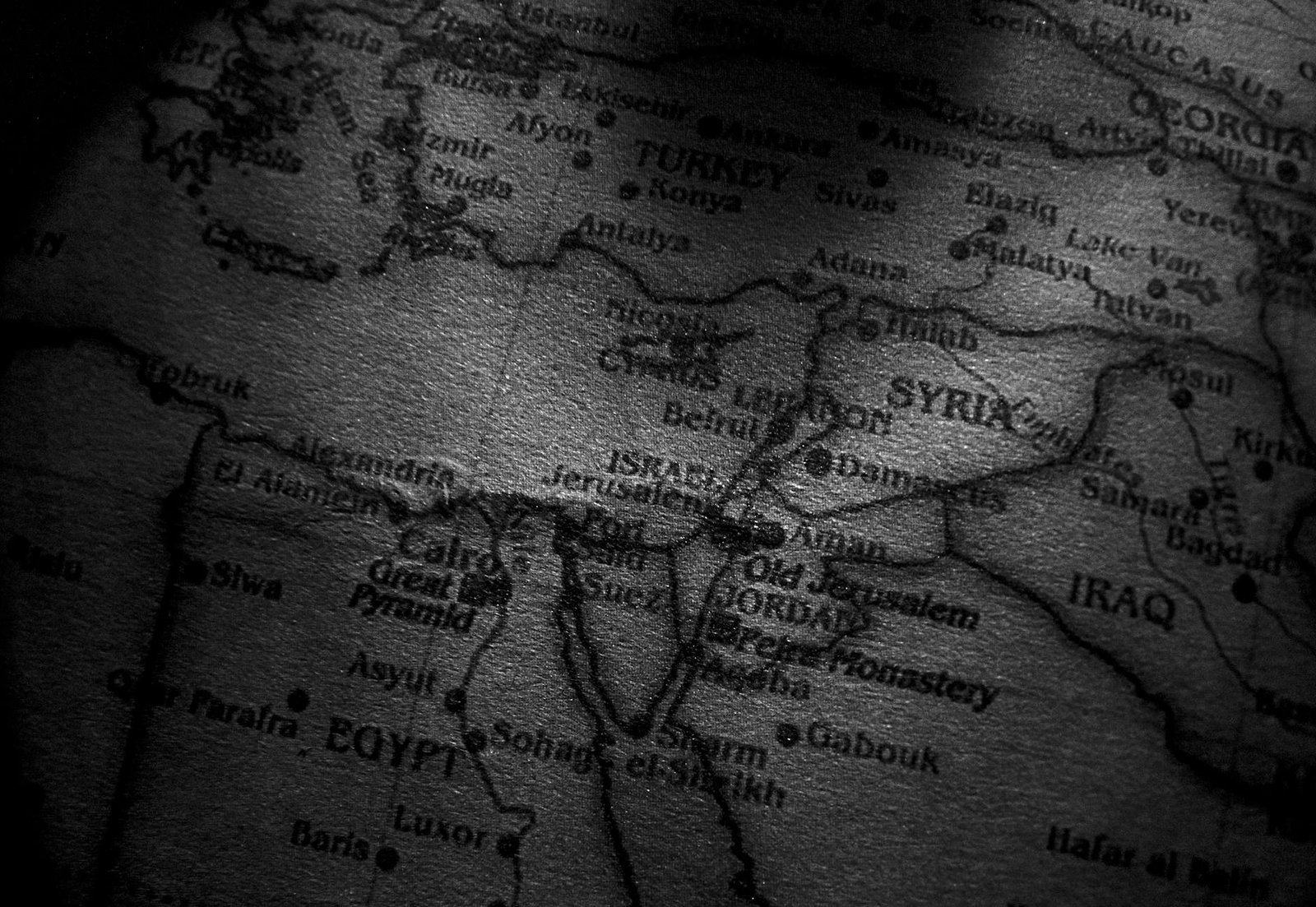
Open TimeMap.org on a desktop browser — it works best there — and you are greeted with a world map centered roughly on the Mediterranean and Middle East. This is not an accident. The bulk of the dataset skews toward the ancient Near East, the classical Mediterranean, and Europe, reflecting both where the scholarly literature is deepest and where the project’s initial funding was focused.
Set the slider to 2000 BCE and take stock. Mesopotamia is dominated by the city-states of Sumer, already ancient by this point — Ur had been a major urban center for a thousand years before this date. Egypt is in its Middle Kingdom period, the era of pharaohs like Mentuhotep II and Amenemhat I, a time of cultural flowering after a period of fragmentation historians call the First Intermediate Period. The Minoan civilization is flourishing on Crete, building the palace complex at Knossos that Arthur Evans would excavate between 1900 and 1905 CE, roughly four thousand years later.
Move the slider forward to 500 BCE. The map reorganizes dramatically. The Persian Achaemenid Empire, founded by Cyrus the Great in 550 BCE, now dominates an enormous swath of territory from the Aegean coast to the borders of India. Greece appears as a cluster of tiny city-states — Athens, Sparta, Corinth — dwarfed in geographic terms by their Persian neighbor, yet producing philosophy, drama, and democratic experiments that will echo for millennia. In China, the Zhou dynasty is fracturing into the Warring States period, generating the intellectual ferment that produced Confucius, Laozi, and Sun Tzu within a single lifetime.
This is where TimeMap earns its keep. No textbook puts Confucius and Socrates on the same page, even though they lived within a generation of each other — Confucius died around 479 BCE, Socrates was born around 470 BCE. The German philosopher Karl Jaspers called this the “Axial Age” in his 1949 work The Origin and Goal of History, arguing that something remarkable happened to human thought across multiple civilizations simultaneously. TimeMap makes that argument visible rather than merely verbal.
Advance to 100 CE and the Roman Empire fills the Mediterranean basin with almost cartographic smugness. But look east. The Kushan Empire bridges Central Asia. The Parthian Empire sits between Rome and Han China. Han China itself covers territory comparable to Rome’s, with a population that may have been larger. These two empires — Rome and Han — knew of each other only dimly, through intermediaries. Roman sources called China “Seres,” the land of silk. Chinese records mention “Daqin,” a great empire to the far west. TimeMap puts them on the same screen at the same moment, and that juxtaposition alone is worth the visit.
The Silk Road trade networks that connected these empires are one of history’s great untold stories, and seeing them geographically makes the distances involved viscerally real.
Why the Timemap.org Interactive History Tool Matters for Understanding the Present
History taught without geography is history with the skeleton removed. You can memorize dates and names, but without spatial context, the causes of events remain mysterious. Why did Alexander the Great march east rather than west? Look at the map. The Persian Empire was the dominant power of the known world, and it sat directly to his east. Why did the Ottoman Empire become a major power in the fifteenth and sixteenth centuries? Look at the map after 1453, when Constantinople falls. The Ottomans now control the land routes between Europe and Asia, which is precisely why European powers started funding sailors to find sea routes around Africa and across the Atlantic.
Geography does not determine history — that is a discredited idea called environmental determinism, and its most famous modern proponent, Jared Diamond, has faced substantial academic criticism for oversimplifying the relationship. But geography shapes the options available to historical actors in ways that are genuinely clarifying. TimeMap makes those options visible.
For educators specifically, the tool offers something textbooks cannot: the ability to ask “what was happening everywhere at once?” A teacher covering the Black Death of 1347-1353 can show students not just Europe’s devastation — roughly 30 to 60 percent of Europe’s population dead within six years, by most scholarly estimates — but the plague’s origins in Central Asia, its spread along trade routes, and the simultaneous pressures on the Mongol Empire that may have contributed to its fragmentation. The pandemic was a Eurasian event, not a European one. The map makes that clear in seconds.
Our reading of the sources suggests that one of the underappreciated values of tools like TimeMap is that they make students ask better questions. When you can see that the Aztec Empire was at its height at exactly the same moment as the Italian Renaissance, you start wondering what each knew of the other — and the answer (almost nothing, until 1519) raises immediate questions about the nature of historical contact, isolation, and contingency.
For a compelling narrative account of how geography shaped ancient civilizations, The Fate of Rome by Kyle Harper is a rigorous and readable study of how climate and disease reshaped the ancient world — exactly the kind of argument that TimeMap’s spatial view supports.
Lesser-Known Facts About Interactive Historical Mapping — And a Few Myths Worth Correcting
The idea that maps are neutral, objective records of geography is one of the more persistent myths in public understanding of cartography. Maps are arguments. Every map makes choices about what to include, what to omit, how to draw borders, and whose names to use for places. TimeMap is no exception, and understanding its limitations makes it more useful rather than less.
The dataset is strongest for the ancient Near East, classical Mediterranean, and medieval Europe. Coverage of sub-Saharan Africa, pre-Columbian Americas, and Southeast Asia is thinner — not because history was not happening in those places, but because the project’s academic sources and funding skewed toward the Western scholarly tradition. The Mali Empire at its peak under Mansa Musa in the early fourteenth century was one of the wealthiest states on earth. Mansa Musa’s 1324 pilgrimage to Mecca reportedly flooded the Mediterranean gold market so severely that it caused inflation in Egypt for a decade. TimeMap’s representation of West Africa in this period is less detailed than its representation of contemporary Europe, and users should know that going in.
A second myth worth correcting: many people assume that historical borders on maps like TimeMap represent clear, enforced lines — the kind of hard boundaries that exist between Canada and the United States today, complete with customs posts and passport checks. They did not. Ancient and medieval political boundaries were zones of control, influence, and contestation, not lines. A map showing the Roman Empire’s border in 117 CE is showing the approximate maximum extent of Roman military presence and tax collection, not a wall (well, except for Hadrian’s Wall in Britain, begun around 122 CE, which was an actual wall).
Roman frontier policy along the Rhine and Danube was far more complex than any single map can capture, involving client kingdoms, seasonal military campaigns, and extensive cross-border trade.
TimeMap itself is transparent about these limitations in its documentation, which is more than can be said for many popular history apps that present their data with false confidence.
The Legacy of TimeMap and the Future of Interactive History
TimeMap.org was not the first attempt to map history interactively, and it will not be the last. But it occupies an important place in the genealogy of digital history tools. It demonstrated, at a time when this was not obvious, that serious academic data could be presented in an interactive geographic format without sacrificing scholarly integrity. That proof of concept influenced later projects including the World Historical Gazetteer at the University of Pittsburgh, the Pelagios Network’s linked ancient world data, and the more commercially oriented platforms that followed.
The broader field of digital humanities has grown substantially since TimeMap’s early development. Institutions from Stanford to the University of Edinburgh now have dedicated digital history labs. The Programming Historian, a peer-reviewed journal of digital methods for humanities researchers, launched in 2008 and now publishes in four languages. Canada’s own Social Sciences and Humanities Research Council has funded digital history initiatives at universities from Dalhousie to UBC, recognizing that the tools historians use shape the questions they can ask.
For the general reader, the practical legacy of TimeMap is simpler: it proved that history is more comprehensible when you can see it moving. The past is not a series of separate rooms. It is one continuous, tangled, simultaneous story — and tools that let you see it whole, even imperfectly, are worth knowing about.
Other digital history tools worth exploring alongside TimeMap include the Orbis network model of the Roman world from Stanford and the Old Bailey Online, which puts 250 years of London criminal records at your fingertips.
Frequently Asked Questions
What is timemap.org and how does the interactive history map work?
TimeMap.org is an open-access digital platform developed from research at the University of Sydney’s Archaeological Computing Laboratory. It overlays historical political and cultural data onto a geographic base map, allowing users to move through time using a slider and watch civilizations rise and fall across a continuous spatial view.
How accurate is the timemap.org interactive history data?
The data is based on peer-reviewed academic sources and is most reliable for the ancient Near East, classical Mediterranean, and medieval Europe. Coverage of sub-Saharan Africa, pre-Columbian Americas, and parts of Asia is less detailed, reflecting the scholarly literature available when the datasets were compiled. Users should treat borders as approximate zones rather than precise lines.
Who created the timemap.org interactive history project?
The project originated at the University of Sydney’s Archaeological Computing Laboratory, with development supported by academic grants and digital humanities research funding. It was designed by scholars with expertise in historical geography and geospatial data standards rather than by a commercial technology company.
When did timemap.org first become available to the public?
TimeMap.org became publicly accessible in the early 2000s, during the period when web-based geographic information systems were first becoming practical for academic use. Its development predates many of the modern mapping platforms that have since become standard tools in digital humanities research.
Why do historians and educators still use timemap.org when newer tools exist?
TimeMap remains valued for its scholarly foundation, open access, and the specific quality of its ancient and medieval datasets. Newer commercial platforms often prioritize visual polish over data depth, while TimeMap’s academic origins mean its underlying information has been more carefully sourced and documented, even if the interface looks dated by current standards.
Start Exploring — The Map Is Waiting
TimeMap.org is free. It requires no account, no download, and no prior knowledge. You can spend twenty minutes on it and come away with a clearer sense of how the ancient world was organized than most people carry from years of school history. Start at 3000 BCE. Drag the slider forward slowly. Watch Mesopotamia give way to Persia, Persia give way to Alexander, Alexander’s empire fracture into the Hellenistic kingdoms, Rome absorb the western Mediterranean, and the whole structure eventually reorganize into something recognizably medieval. Then ask yourself what was happening in India, or China, or West Africa at the same moment. The gaps in the map are as informative as the data. History is not just what we know. It is also the shape of what we don’t know yet — and TimeMap makes both visible.
The past is not a series of separate rooms. It is one continuous story, and any tool that helps you see it whole is worth your time.
– Auburn AI editorial