AI assistance: Drafted with AI assistance and edited by Auburn AI editorial.
Key Takeaways
- The coin posts policy debate reveals a deep tension between private collecting and the preservation of ancient history for everyone.
- The unregulated antiquities market — including ancient coin trading — has been directly linked to the looting of irreplaceable archaeological sites worldwide.
- Coins stripped of their archaeological context lose most of their historical value, even if they retain monetary value on the open market.
- Organized crime networks and, in some documented cases, terrorist organizations have profited from the illegal antiquities trade since at least the 1990s.
- History enthusiasts can engage meaningfully with ancient coinage through museums, academic publications, and ethically sourced numismatic resources.
What Is the Coin Posts Policy Debate Really About?
If you have spent any time in online ancient history communities, you have probably encountered the coin posts policy conversation — and it is far more layered than it first appears. At its core, the debate asks a simple but powerful question: does sharing photographs of privately owned ancient coins help us understand history, or does it quietly enable the destruction of the very past we claim to love? The answer, as historians and archaeologists have argued for decades, leans uncomfortably toward the latter.
This is not just an internet moderation squabble. It is a microcosm of one of the most urgent ethical debates in the entire field of ancient history: who owns the past, and at what cost do we collect it? Understanding the coin posts policy discussion means understanding the global antiquities crisis, the science of archaeology, and the surprising ways that a small bronze coin sitting in someone’s display case can be connected to the destruction of a 2,500-year-old site on the other side of the world.
Ancient Coins as Windows Into the Past
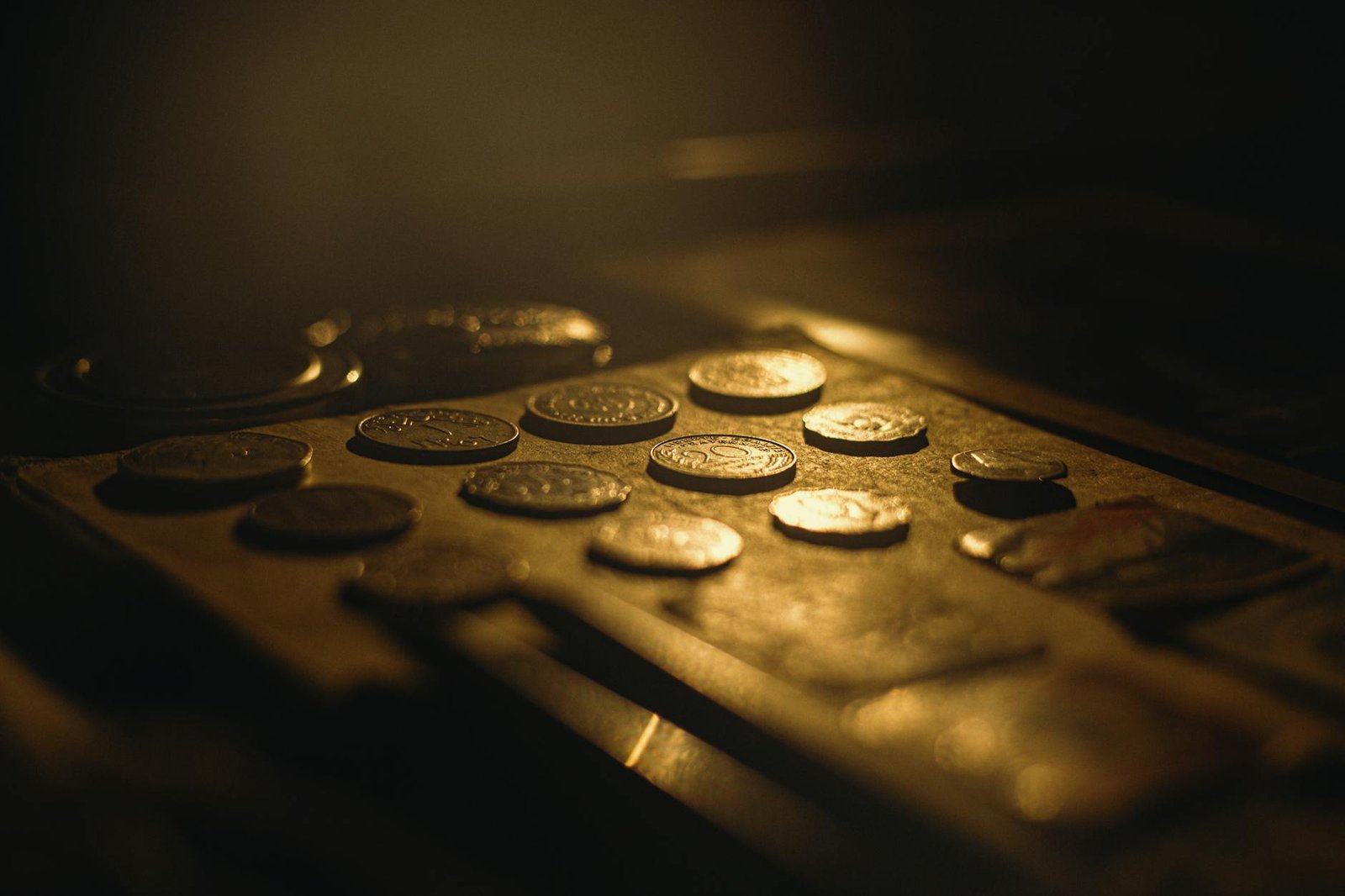
Let’s start with what makes ancient coins genuinely fascinating, because they truly are remarkable objects. A Roman denarius minted under Emperor Augustus, a Greek tetradrachm stamped with the owl of Athena, or a Parthian drachm bearing the portrait of a long-forgotten king — these are tangible connections to civilizations that shaped our world. Historians have found that coins are among the most information-dense artifacts that survive from antiquity.
Ancient coinage served purposes far beyond simple commerce. Rulers used coins as propaganda tools, broadcasting their image, their titles, and their divine associations across vast empires. The iconography on a coin could communicate military victories, religious affiliations, and political legitimacy to a largely illiterate population. Archaeological evidence shows that the spread of coinage types across trade routes can map the economic reach of empires like Rome, Persia, and the Hellenistic kingdoms with remarkable precision.
The Rich History of Ancient Numismatics
The study of ancient coins — numismatics — has a scholarly tradition stretching back centuries. By the Renaissance, European collectors were already assembling cabinets of ancient coins and using them to reconstruct the portraits of Roman emperors whose busts had been lost. The British Museum’s collection of ancient coins numbers over 300,000 individual pieces and remains one of the most important research resources for classical historians anywhere in the world.
What the records reveal is that coins minted in controlled, documented archaeological contexts have contributed enormously to our understanding of ancient economies, trade networks, and political history. The keyword here is context. A coin found during a properly supervised excavation at, say, a Roman fort in Britain tells us not just what the coin is, but when the fort was occupied, what trade connections it maintained, and how money moved through the Roman military supply chain. That layered information is priceless — and it is exactly what is destroyed when coins are looted from the ground.
The Coin Posts Policy and the Global Looting Crisis
Here is where the coin posts policy conversation takes a darker turn. The global market for ancient coins is enormous. Estimates from researchers at the University of Chicago’s Oriental Institute suggest that the illicit antiquities trade — of which coins form a significant portion — generates between $1.5 billion and $3 billion annually, making it one of the largest black markets on earth after drugs and weapons.
The mechanics are straightforward and devastating. Metal detector hobbyists and professional looters scour known and suspected archaeological sites, often in countries with limited resources to police their cultural heritage. They extract coins and other artifacts, destroying the stratigraphic layers that give those objects their historical meaning. The coins then pass through a chain of middlemen — often across multiple international borders — before appearing at auction houses, coin fairs, and online marketplaces with vague or fabricated provenance documentation.
The Scale of Site Destruction
The physical damage to archaeological sites is staggering. A 2014 report by the American Schools of Oriental Research documented satellite imagery showing that sites across Syria, Iraq, and Egypt had been subjected to systematic looting on an industrial scale, with thousands of individual pit marks visible from space. These were not random acts of opportunism — they were coordinated operations targeting areas known or suspected to contain ancient artifacts, including coins.
In the United Kingdom, the Portable Antiquities Scheme — a voluntary program that encourages metal detector users to report finds — has recorded over 1.5 million objects since its founding in 1997. While the scheme has produced genuine historical data, archaeologists have noted that for every coin responsibly reported, an unknown number disappear into the private market, their context forever lost. The coin posts policy debate in online communities is, in a very real sense, a debate about whether sharing those decontextualized objects normalizes a system built on destruction.
Organized Crime, Terrorism, and the Antiquities Trade
Perhaps the most disturbing dimension of the coin posts policy conversation is the documented connection between the antiquities trade and organized crime — and in some cases, terrorist financing. This is not speculation or alarmism. It is a conclusion supported by law enforcement agencies, academic researchers, and investigative journalists working across multiple continents.
The connection between ISIS and the looting of ancient sites in Syria and Iraq became internationally visible after 2013. The organization taxed looters operating in territory it controlled, issued permits for excavation, and sold artifacts — including coins — through established smuggling networks. A 2016 report by the Financial Action Task Force, an intergovernmental body focused on combating financial crime, identified antiquities trafficking as a significant source of terrorist financing, noting that the trade was particularly difficult to police because of the ease with which objects could be moved across borders and the opacity of the high-end art and antiquities market.
The Laundering of Looted Objects
What makes ancient coins particularly useful in this system is their small size, high value relative to weight, and the ease with which false provenance can be manufactured. A coin can be described as having been “in a European private collection since before 1970” — the cutoff date established by the 1970 UNESCO Convention on cultural property — with little documentation required to support that claim. Archaeologists and law enforcement investigators have repeatedly demonstrated that this system is routinely abused.
The 1970 UNESCO Convention itself is a landmark document, but historians and legal scholars have noted its limitations. It established an international framework for the return of stolen cultural property, but enforcement has been inconsistent, and the burden of proof often falls on source countries rather than on collectors or dealers to demonstrate legitimate ownership. You can learn more about the convention and its ongoing impact at the Wikipedia overview of the 1970 UNESCO Convention.
Why Archaeological Context Is Everything
To understand why archaeologists feel so strongly about the looting problem, you need to understand what archaeological context actually means and why its destruction is irreversible.
When an archaeologist excavates a site, they do not simply collect objects. They record the precise location of every find, the soil layers surrounding it, the other objects found nearby, and the structural features of the site. This information — called the stratigraphic context — is what transforms a bronze disc into a historical document. A coin found in a sealed deposit beneath a destruction layer at a Greek city can tell us when that city was sacked, what its economy looked like in its final years, and which trading partners it maintained. Remove the coin and sell it, and all of that information is gone forever. The coin becomes, in the words of archaeologist Colin Renfrew, a “mere curio.”
The Information We Lose
Archaeological evidence shows that even large, well-funded excavations at major sites have been compromised by looting. The ancient site of Apamea in Syria, a UNESCO World Heritage Site, was photographed by satellite in 2012 and 2013 as it was subjected to large-scale looting during the civil war. The imagery showed thousands of illegal excavation pits dug across the site in a matter of months. Coins, jewelry, and architectural elements were extracted and sold. The stratigraphic record of one of the most important Hellenistic and Roman cities in the ancient Near East was destroyed in less than two years.
The Coin Posts Policy in Online History Communities
Against this backdrop, the decision by some online ancient history communities to implement a coin posts policy — restricting or banning posts showcasing privately owned ancient coins — makes considerably more sense. The concern is not that coins are uninteresting. It is that posting photographs of private coin collections in history discussion spaces serves primarily as a form of display rather than genuine historical inquiry, and that it implicitly validates a market with deeply problematic supply chains.
The distinction matters. Discussing the iconography of Athenian tetradrachms, the monetary reforms of Diocletian, or the spread of Hellenistic coinage into Central Asia following Alexander’s campaigns — these are legitimate and fascinating historical conversations. Posting a photograph of a recently purchased lot of Roman bronzes to show off an acquisition is something quite different. The former advances historical understanding. The latter participates, however indirectly, in a system that archaeology has identified as harmful.
The Community Conversation
It is worth acknowledging that not everyone agrees with this position, and the debate within history communities has been genuine and sometimes heated. Some collectors argue that private collecting has a long and legitimate history, that many coins on the market have documented pre-1970 provenance, and that responsible collectors actually fund important numismatic research. These are not frivolous arguments, and they deserve to be taken seriously. But historians have found that the burden of proof in these cases is almost impossible to meet at scale, and that the overall effect of a robust private market for ancient coins is to incentivize looting regardless of individual collectors’ intentions.
For history enthusiasts who want to engage with ancient Roman coins and their historical significance, there are genuinely rewarding paths that do not contribute to the problem.
Ethical Ways to Engage With Ancient Coins
The good news is that you do not have to choose between loving ancient coins and caring about the preservation of ancient history. There are rich, rewarding ways to engage with numismatics that support rather than undermine the archaeological record.
Museum collections offer the deepest engagement with ancient coinage. Major institutions like the British Museum, the American Numismatic Society, and the Bibliothèque nationale de France have digitized large portions of their coin collections, making high-resolution images and detailed scholarly descriptions freely available online. The American Numismatic Society’s MANTIS database alone contains records for hundreds of thousands of ancient coins, each with full provenance documentation and scholarly commentary.
Academic numismatics is also a thriving field. Peer-reviewed journals like the Numismatic Chronicle and the American Journal of Numismatics publish modern research on ancient coinage that goes far beyond anything a private collection photograph could offer. If you are interested in ancient Greek civilization and its material culture, numismatic scholarship offers a genuinely deep entry point.
Finally, for those interested in the physical experience of handling ancient objects, some museums offer handling sessions with objects from their education collections — objects that have been deaccessioned or duplicated and whose provenance is fully documented. This is a world away from purchasing coins of uncertain origin at an online auction.
Ancient Coin Trading: Regulated vs. Unregulated Markets
| Feature | Regulated / Museum Context | Unregulated Private Market |
|---|---|---|
| Provenance Documentation | Full excavation records and chain of custody | Often absent, vague, or fabricated |
| Archaeological Context | Preserved and published in excavation reports | Typically destroyed at point of extraction |
| Historical Research Value | High — contributes to scholarly understanding | Low to moderate — object data only, no context |
| Legal Status | Clear and compliant with international law | Frequently unclear; subject to seizure |
| Public Accessibility | Available to researchers, students, and the public | Restricted to private owner |
| Connection to Looting Networks | None — objects acquired through legal excavation | Documented risk of funding illegal extraction |
For those interested in exploring ancient civilizations and their trade networks, understanding the difference between these two worlds is essential context.
Recommended Books on Ancient Coins and the Antiquities Trade
As an Amazon Associate, I earn from qualifying purchases.
- The Medici Conspiracy by Peter Watson and Cecilia Todeschini — A gripping investigative account of how looted antiquities, including coins, move from Italian archaeological sites to the world’s most prestigious auction houses and museums. Essential reading for anyone who wants to understand the full supply chain of the illicit antiquities trade. Find it on Amazon.
- Loot: The Battle Over the Stolen Treasures of the Ancient World by Sharon Waxman — A deeply reported investigation into the global struggle over cultural property, tracing how artifacts from Greece, Egypt, Turkey, and Iraq ended up in Western museums and private collections. Find it on Amazon.
- Who Owns Antiquity? by James Cuno — A thought-provoking counterargument from a museum director who challenges the nationalist framework of cultural property law. Reading it alongside Watson’s work gives you the full shape of the debate. Find it on Amazon.
- Greek Coins and Their Values by David Sear — For those who want a serious numismatic reference, Sear’s two-volume work is the standard scholarly guide to ancient Greek coinage, used by museums and researchers worldwide. Find it on Amazon.
- The Destruction of Memory: Architecture at War by Robert Bevan — While focused primarily on architecture, this powerful book addresses the deliberate targeting of cultural heritage in conflict zones and provides essential context for understanding why looting is not a victimless crime. Find it on Amazon.
Conclusion: History Belongs to All of Us
The coin posts policy debate is ultimately about something much larger than online community rules. It is about what we owe to the past and to each other as people who care about history. Ancient coins are extraordinary objects — compressed records of human ambition, artistry, and economic life that have survived millennia to reach us. That survival is precious, and it carries a responsibility.
When we engage with ancient coins through museums, academic scholarship, and ethically grounded numismatic research, we honor that responsibility. When we participate in markets that cannot guarantee the legal and ethical provenance of the objects they sell, we risk becoming unwitting partners in the destruction of the very history we love. The coin posts policy conversation, at its best, is an invitation to think more carefully about how we engage with the ancient world — and to choose approaches that leave it richer rather than poorer.
History belongs to all of us, not just to those who can afford to purchase it. If this article has given you something to think about, share it with a fellow history enthusiast, explore the museum resources linked above, and keep asking the hard questions. The ancient world has more than enough wonders to go around — and most of them are available to everyone, free of charge, in the collections of the world’s great museums.
— Auburn AI editorial, Calgary AB