AI assistance: Drafted with AI assistance and edited by Auburn AI editorial.
Empires don’t build walls when they’re winning. They build walls when they’re running out of answers. Hadrian’s Wall, stretching 117 kilometres across northern Britain, is one of the most studied structures in the ancient world, and yet most people get the story completely backwards. They see a monument to Roman power. What they should see is a monument to Roman limits. And honestly? That makes it far more fascinating than any triumphant narrative ever could.

What Actually Was Hadrian’s Wall?
Constructed around 122 CE under the orders of Emperor Hadrian, this fortified barrier ran from the River Tyne in the east all the way to the Solway Firth in the west. It was not simply a wall. The structure included a network of forts, milecastles positioned every Roman mile, watchtowers, and a military road running behind it. At its peak, thousands of soldiers were stationed along its length, monitoring movement, collecting tolls, and responding to threats from the north.
Some of those garrison forts grew into functioning civilian settlements over time. Traders, families, and craftspeople chose to build their lives right on the edge of the Roman world. That detail alone tells you something remarkable about how permanent this border was meant to feel.
The Uncomfortable Truth Behind the Wall
Here is where the history gets genuinely interesting. Rome had spent decades attempting to push further north into what is now Scotland. The campaigns were costly, the terrain was brutal, and the Caledonian tribes refused to cooperate with the standard Roman playbook of conquest, pacification, and taxation. So Hadrian made a decision that would define his legacy: stop pushing and start containing.
That is not the behaviour of a confident empire at its peak. That is the behaviour of an administration doing strategic triage. Hadrian toured the provinces personally and saw an empire that was overextended. The wall was one of several decisions he made to consolidate rather than expand. It was pragmatic, arguably wise, and absolutely an acknowledgment that some problems could not be solved with legions alone.
Defense, Fear, or Political Theatre?
The debate among historians is genuinely lively here. Some argue the wall was primarily about controlling movement and taxing trade rather than stopping military invasions. The Caledonians were not exactly fielding a conventional army capable of threatening Roman cities. So why such an elaborate and expensive structure?
One compelling argument is that the wall served as much as a political statement as a military one. Hadrian needed to demonstrate to Rome that he was managing the empire responsibly after years of expensive expansion under Trajan. A permanent, visible, impressive border said: this is where Rome ends, and we chose that deliberately. It reframed retreat as strategy.
Comparing Rome’s Border Strategies
| Border Strategy | Location | Purpose | Effectiveness |
|---|---|---|---|
| Hadrian’s Wall | Northern Britain | Control movement and raids | Moderate, lasted centuries |
| The Antonine Wall | Central Scotland | Push border further north | Low, abandoned within 20 years |
| Rhine Limes | Germanic frontier | Slow Germanic migration | Mixed, eventually overwhelmed |
| Danube Limes | Eastern Europe | Protect against Dacians and others | High during early empire |
Why It Survived Longer Than Rome Itself
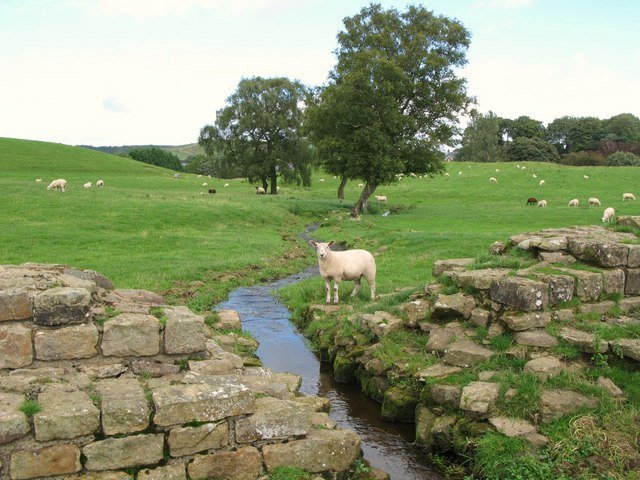
Perhaps the most striking fact about Hadrian’s Wall is that large sections of it still exist today. Nearly 2,000 years after its construction, you can walk stretches of it, trace it on satellite imagery, and visit the museums built around its forts. The empire that built it collapsed over 1,500 years ago. The wall outlasted the civilisation that created it.
That longevity speaks to the quality of Roman engineering, yes, but it also speaks to something else. Structures built out of necessity, built to last because the people constructing them genuinely needed them to work, tend to endure. This was not a vanity project. It was infrastructure born from real strategic pressure.
Recommended Books for Going Deeper
If this slice of history has grabbed your attention, the following books are worth every page. These are among the most respected works on Roman Britain and Hadrian’s Wall specifically.
- Hadrian’s Wall by David Breeze and Brian Dobson — The definitive academic text, updated across multiple editions and essential for anyone serious about the subject. Find it on Amazon
- The Roman Invasion of Britain by Graham Webster — Excellent context for understanding why the wall became necessary in the first place. Find it on Amazon
- Rubicon by Tom Holland — A broader look at Roman power, ambition, and the forces that shaped imperial decision making. Hugely readable. Find it on Amazon
- The Fate of Rome by Kyle Harper — Explores how environmental and structural pressures shaped the late empire. Puts walls and borders into a bigger picture. Find it on Amazon
Frequently Asked Questions
Why did Hadrian build the wall?
Emperor Hadrian ordered the wall’s construction around 122 CE primarily to establish a permanent northern boundary for Roman Britain. It was designed to control movement between the Roman province and the unconquered tribes to the north, regulate trade, and provide a defensible military line that could be garrisoned efficiently.
Did the wall actually stop invasions?
The historical record shows the wall was breached or bypassed on multiple occasions. However, its primary function was likely control and surveillance rather than an impenetrable barrier. Think of it less like a fortress wall and more like a heavily monitored border crossing with serious military backup.
What happened to Hadrian’s Wall after Rome left Britain?
Roman troops began withdrawing from Britain in the early 5th century CE. After that, the wall was gradually stripped for building materials by local populations. Many medieval churches and farms in the region were built using stone taken directly from the wall. What remains today is a fraction of the original structure.
Can you visit Hadrian’s Wall today?
Absolutely. Hadrian’s Wall is a UNESCO World Heritage Site and one of the most visited historical attractions in the United Kingdom. The Hadrian’s Wall Path is an 84 mile walking route running the full length of the wall, and several excellent museums including Vindolanda and the Roman Army Museum bring the history to life with artefacts and reconstructions.
Was Hadrian’s Wall the northernmost point of the Roman Empire?
Not permanently. The Antonine Wall, built further north in what is now central Scotland around 142 CE under Emperor Antoninus Pius, briefly pushed the Roman frontier further. However, it was abandoned within roughly two decades and the empire fell back to Hadrian’s Wall as the effective northern limit of Roman Britain.
This post contains affiliate links. If you purchase through these links, I may earn a small commission at no extra cost to you. Prices are approximate and may vary by retailer and date. Performance results are approximate and will vary based on your specific hardware and environment.
— Auburn AI editorial, Calgary AB