Key Takeaways
- When Howard Carter cracked open Tutankhamun’s tomb on November 4, 1922, he triggered not just an archaeological revolution but a political earthquake that would help end British control over Egypt within three decades.
- King Farouk, who weighed over 300 pounds at his exile and reportedly stole a pocket watch from Winston Churchill at a diplomatic dinner, embodied the decadence that made Egypt’s 1952 revolution almost inevitable.
- Gamal Abdel Nasser’s nationalisation of the Suez Canal in 1956 was one of the most audacious acts of post-colonial defiance in history, humiliating three world powers simultaneously and reshaping global geopolitics.
- The 1967 Six-Day War destroyed roughly 80% of Egypt’s air force in the first three hours, a catastrophe so devastating that Nasser offered his resignation on live television — and millions of Egyptians took to the streets begging him to stay.
- During the 2011 Arab Spring, Tahrir Square in Cairo held an estimated 250,000 protesters at its peak, with the 18-day uprising watched by a global audience of hundreds of millions via satellite and social media.
- Egypt’s modern turbulence — from pharaohs to kings to presidents to military rulers — plays out against the backdrop of the world’s oldest continuous civilisation, one that stretches back more than 5,000 years.
Here is a fact that should stop you cold: when British archaeologist Howard Carter peered through a hole in a sealed doorway deep in the Valley of the Kings on November 26, 1922, and Lord Carnarvon asked him what he could see, Carter replied, “Yes, wonderful things.” That moment — the discovery of Tutankhamun’s intact tomb after 3,245 years of silence — did not just rewrite archaeology. It lit a fuse under Egyptian nationalism that would, within three decades, bring down a king, expel a colonial power, and launch a republic that still shapes the Middle East today. The story of 100 years of Egypt, from kingdom to revolution and beyond, is one of the most dramatic, heartbreaking, and ultimately unfinished stories in modern history. If you have ever searched for what the phrase years egypt kingdom revolution really means in human terms, you are about to find out.
The Tomb That Changed Everything: 1922 and the Tutankhamun Earthquake
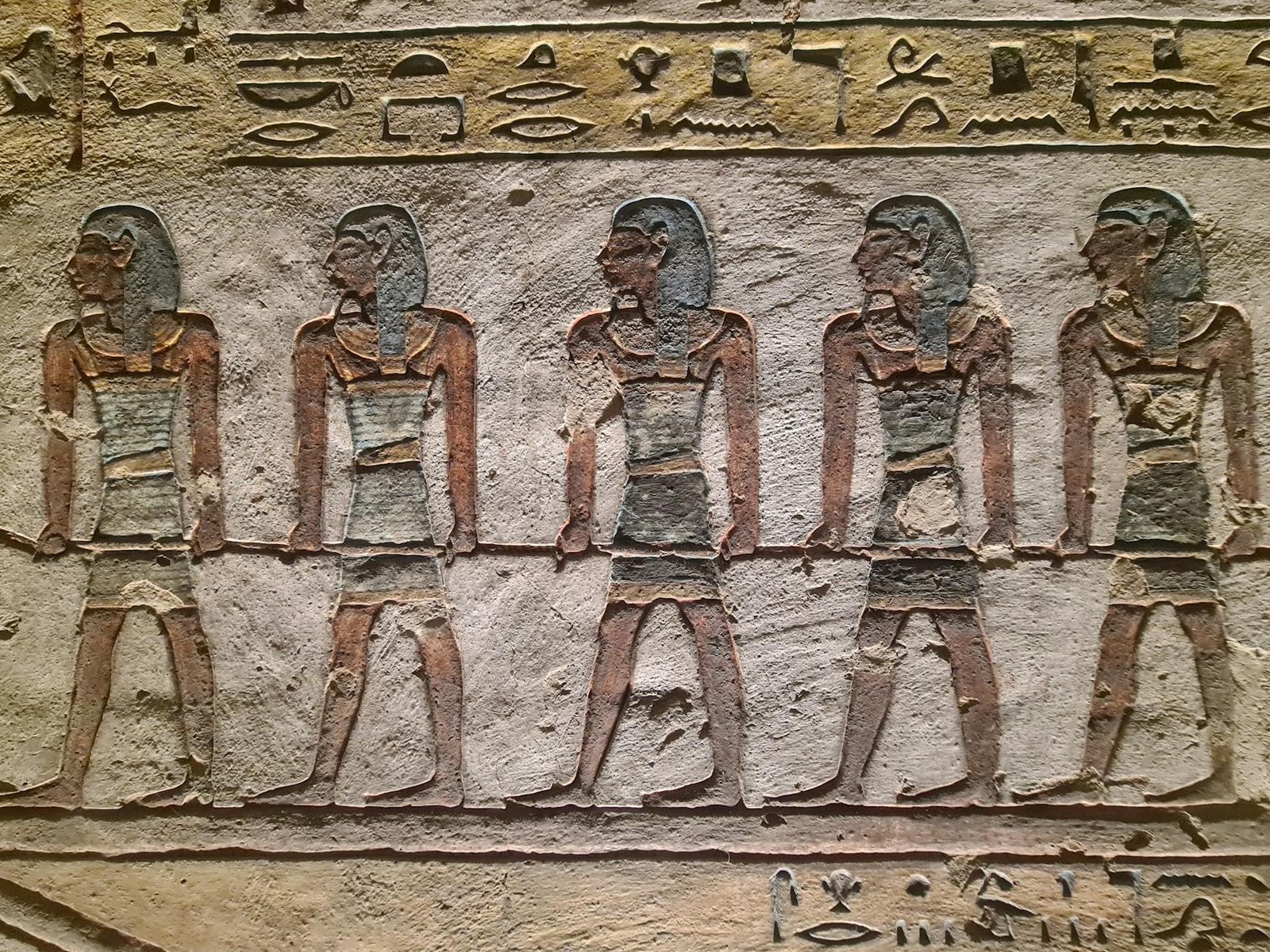
To understand modern Egypt, you have to start in a dusty trench in the Valley of the Kings. On November 4, 1922, a water boy working for Howard Carter’s excavation team stumbled upon a stone step cut into the bedrock. By November 26, Carter and his patron Lord Carnarvon were standing before the greatest archaeological find in history: the nearly untouched burial chamber of Pharaoh Tutankhamun, who had died around 1323 BCE at approximately 18 years of age.
The tomb contained over 5,000 individual objects: gilded shrines, alabaster canopic jars, a solid gold innermost coffin weighing 110.4 kilograms, and the now-iconic golden death mask that stares out from the pages of every history textbook on earth. The British Museum holds extensive records of the excavation correspondence, and the Griffith Institute at Oxford University preserves Carter’s original handwritten notes and photographs, which remain primary sources of extraordinary value to Egyptologists today.
But the political reverberations were just as seismic as the archaeological ones. Egypt in 1922 was technically a nominally independent kingdom under Sultan Fuad I — who would declare himself King Fuad I the same year Carter made his discovery — but in practice it remained a British protectorate. The discovery of Tutankhamun’s tomb exploded across global newspapers and created what historians now call “Egyptomania,” a worldwide obsession with ancient Egypt that made it impossible for Britain to keep treating the country as a colonial backwater. Egyptian intellectuals and nationalists seized on the moment: if Egypt was the mother of civilisation, how could it remain a subject people? Archaeological evidence at the tomb site, meticulously catalogued over ten years of excavation by Carter, revealed a civilisation of breathtaking sophistication — and that sophistication became a political argument for Egyptian self-determination.
The curse of the pharaohs, meanwhile, became global tabloid fodder. Lord Carnarvon died on April 5, 1923 — just five months after the tomb’s opening — from an infected mosquito bite that became septicaemia. The press went wild. But the real curse, if there was one, fell not on archaeologists but on the colonial order in Egypt. The clock was ticking on British rule, and the tomb’s discovery had wound it tight.
For a broader look at this pivotal century, our full deep-dive at 100 Years of Egypt: Kingdom, Revolution, and the Turbulent Century That Reshaped a Nation explores how these threads connect across the decades.
The Kingdom Years: Egypt Under the Muhammad Ali Dynasty
The kingdom that Tutankhamun’s discovery inadvertently helped to undermine had been founded over a century earlier by an Albanian-born Ottoman military officer named Muhammad Ali Pasha. Taking power in 1805, Muhammad Ali modernised Egypt with ferocious energy — building a professional army, reforming agriculture, and sending Egyptian students to Europe to learn medicine, engineering, and military science. By the time he died in 1849, he had created a dynasty that would rule Egypt for 147 years.
His descendants, however, were a decidedly mixed inheritance. Khedive Ismail, who ruled from 1863 to 1879, modernised Cairo so aggressively — building opera houses, boulevards, and the infrastructure for the Suez Canal, which opened in 1869 — that he bankrupted the country and handed Britain the financial lever it needed to establish effective control. By 1882, British troops occupied Egypt. The dynasty continued to reign, but increasingly as figureheads under British supervision.
King Fuad I, who reigned from 1922 to 1936, navigated this humiliating position with varying degrees of resistance and accommodation. His son Farouk, who became king at just 16 years old in 1936, began his reign with genuine popular enthusiasm. He was young, handsome, and spoke of Egyptian dignity. But within a decade, he had descended into a life of spectacular excess: gambling in Monte Carlo, collecting pornography, hosting lavish parties while his people starved, and reportedly stealing a pocket watch from Winston Churchill during a wartime meeting in Cairo — a story that, whether literally true or apocryphal, perfectly captures the contempt in which many Egyptians came to hold him.
The humiliation of the 1948 Arab-Israeli War was the final blow to Farouk’s legitimacy. Egyptian officers fought with defective weapons — weapons that many believed had been sold to the army through corrupt contracts connected to the palace. Approximately 2,000 Egyptian soldiers died in that conflict. The men who survived came home furious, and some of them — young officers who called themselves the Free Officers Movement — began quietly planning a revolution.
The Revolution of 1952: How Egypt Became a Republic
In the early hours of July 23, 1952, tank columns rolled through Cairo. The Free Officers, led by the charismatic Gamal Abdel Nasser and fronted publicly by the senior General Muhammad Naguib, seized control of military headquarters, the radio station, and key government buildings in a remarkably bloodless coup. King Farouk, woken in his palace in Alexandria, found himself with no loyal forces willing to fight for him.
He was given 24 hours to leave. On July 26, 1952, Farouk sailed into exile from Alexandria harbour aboard his royal yacht, the Mahroussa. He took with him an almost incomprehensible collection of personal treasures, but he left behind a country that was done with kings. His infant son Fuad II was briefly recognised as king during a transitional period, but on June 18, 1953, Egypt was formally declared a republic — ending 147 years of the Muhammad Ali dynasty.
What followed was a power struggle between Naguib, who favoured a return to parliamentary democracy, and Nasser, who wanted a more radical transformation of Egyptian society. By November 1954, Nasser had won. Naguib was placed under house arrest, where he would remain until 1971. Nasser became Egypt’s strongman, and he would hold that position until his death in 1970.
The revolution was not simply a change of government. It was a social earthquake. Land reform laws broke up the great estates of the aristocracy and redistributed land to peasant farmers. Foreign-owned businesses were nationalised. The old Turco-Circassian elite that had dominated Egyptian society since Muhammad Ali’s time was swept aside. For millions of ordinary Egyptians, 1952 felt like genuine liberation.
Nasser, Suez, and the Remaking of the Arab World
Gamal Abdel Nasser was one of the most magnetic political figures of the 20th century. Tall, broad-shouldered, with a voice that could fill a stadium, he articulated the dreams of hundreds of millions of Arabs who had spent generations under colonial rule. His ideology — pan-Arab nationalism, anti-imperialism, non-alignment in the Cold War — made him a hero across the Arab world and a thorn in the side of Western powers.
His masterstroke came on July 26, 1956, exactly four years after Farouk’s exile, when he announced the nationalisation of the Suez Canal Company in a speech broadcast live on Egyptian radio. The canal, built partly with Egyptian labour and Egyptian debt, had been controlled by a Franco-British consortium since 1869. Nasser’s announcement was electrifying. He embedded the codeword for the nationalisation — the name “de Lesseps,” the canal’s French builder — into his speech, and when Egyptian military officers heard it, they moved immediately to seize the canal’s offices.
Britain, France, and Israel responded with a military invasion in October 1956 — the Suez Crisis. But American President Dwight Eisenhower, furious that his allies had acted without consulting him during a Cold War moment of maximum sensitivity, forced them to withdraw. It was a stunning reversal. Nasser had faced down three military powers and won. His prestige across the Arab and developing world became almost mythological.
The Smithsonian Magazine has described the Suez Crisis as “the moment the sun finally set on the British Empire” — and the assessment is difficult to argue with. Britain’s humiliation was total. Egypt’s triumph, however, carried within it the seeds of future catastrophe. Nasser’s confidence led him into the disaster of the 1967 Six-Day War against Israel, in which Egypt lost the Sinai Peninsula and approximately 10,000 soldiers in six days. The Egyptian air force was destroyed on the ground in the first hours of the Israeli attack on June 5, 1967. Nasser went on television, offered his resignation, and wept. Millions of Egyptians flooded the streets demanding he stay. He did — but he was broken. He died of a heart attack on September 28, 1970, at just 52 years old. An estimated five million people lined the streets of Cairo for his funeral.
Sadat, Peace, and Assassination: Egypt’s Dangerous Pivot
Anwar Sadat, who succeeded Nasser, was initially dismissed as a transitional figure — a placeholder whom the real power brokers expected to control. They were spectacularly wrong. Sadat proved to be one of the most consequential and controversial leaders in Egyptian history.
In October 1973, he launched the Yom Kippur War — a surprise attack across the Suez Canal that caught Israel completely off guard and partially restored Egyptian military honour after the 1967 catastrophe. The crossing of the Bar-Lev Line, Israel’s supposedly impregnable defensive fortification along the canal’s eastern bank, was a genuine military achievement. Egypt used high-pressure water cannons to blast through the massive sand berms in just hours — a solution so simple and effective that Israeli commanders initially refused to believe it was happening.
Then, in November 1977, Sadat did something that stunned the entire world: he flew to Jerusalem and addressed the Israeli Knesset, becoming the first Arab leader to officially visit Israel. The Camp David Accords of 1978, brokered by US President Jimmy Carter, followed. Egypt and Israel signed a formal peace treaty on March 26, 1979. Egypt got the Sinai back. Israel got recognition. And Sadat got the Nobel Peace Prize — shared with Israeli Prime Minister Menachem Begin — along with the undying hatred of much of the Arab world and a significant portion of his own military.
On October 6, 1981, during a military parade commemorating the 1973 war, a group of Islamist soldiers broke from a passing truck and opened fire on the reviewing stand. Sadat was hit by eleven bullets and died within hours. He was 62 years old. His vice president, Hosni Mubarak — who was seated beside him and survived — was sworn in as president four days later.
Mubarak and the Long Stagnation: Thirty Years of Frozen Power
Hosni Mubarak ruled Egypt for exactly 29 years, 9 months, and 24 days. It is a reign that defies easy characterisation. He maintained peace with Israel, kept Egypt stable through a turbulent regional period, and was a reliable American ally throughout the Cold War’s final decade and the post-9/11 era. But his presidency was also defined by emergency law that remained in force for his entire tenure, systematic torture of political prisoners documented by Human Rights Watch and Amnesty International, rigged elections, and a culture of corruption so pervasive that it reached into virtually every corner of Egyptian public life.
The Egyptian economy grew in some respects during his years — tourism boomed, and the country’s GDP expanded — but the benefits were grotesquely unequal. By 2010, approximately 40% of Egyptians were living on less than two dollars a day. Youth unemployment was catastrophic. A generation of educated young Egyptians found themselves with degrees and no prospects, watching a small connected elite accumulate staggering wealth.
Mubarak’s inner circle — including his sons Gamal and Alaa, who were widely seen as positioning Gamal for dynastic succession — became symbols of everything wrong with the system. The idea that Egypt, a republic born in revolution against a monarchy, was about to hand power from father to son was not lost on anyone. Anger simmered just below the surface of Egyptian public life for years. All it needed was a spark.
Tahrir Square and the Arab Spring: Eighteen Days That Shook the World
The spark came from Tunisia. On December 17, 2010, a young Tunisian street vendor named Mohamed Bouazizi set himself on fire to protest police harassment. His death triggered protests that toppled Tunisia’s president Zine El Abidine Ben Ali on January 14, 2011. Egyptians watched on satellite television and social media and recognised something: it was possible. The wall of fear could come down.
On January 25, 2011 — National Police Day in Egypt, a date chosen with deliberate irony given widespread anger at police brutality — protesters flooded into Tahrir Square in central Cairo and into the streets of Alexandria, Suez, and cities across the country. The government responded with tear gas, rubber bullets, and live ammunition. On January 28, the so-called “Friday of Anger,” the protests exploded. The police disappeared from the streets. The army deployed but declined to fire on civilians. Tahrir Square became a city within a city, with an estimated 250,000 people at its peak, complete with field hospitals, food distribution networks, and extraordinary scenes of Coptic Christians forming human chains to protect Muslims during prayer.
For 18 days, Egypt held its breath. On February 10, Mubarak gave a televised address that seemed to offer nothing. The crowd in Tahrir Square erupted in fury. The next day, February 11, 2011, Vice President Omar Suleiman appeared on television and announced in 32 seconds that Hosni Mubarak had resigned and handed power to the Supreme Council of the Armed Forces. The roar from Tahrir Square was audible for kilometres.
What followed was complicated and painful — a brief period of Muslim Brotherhood government under Mohamed Morsi, elected in June 2012, then a military coup in July 2013 led by General Abdel Fattah el-Sisi, who has ruled Egypt since. The revolution’s promise remains contested, its story unfinished. But the 18 days of Tahrir Square stand as one of the most extraordinary episodes of collective human courage in modern history.
If you want to go deeper into how history’s great upheavals connect to our present moment, the Independent History Newsletter delivers daily insights that put events like Egypt’s revolution in global context — well worth bookmarking.
Comparing Egypt’s Transformative Eras
| Era | Period | Key Figure | Defining Event | Legacy |
|---|---|---|---|---|
| Late Kingdom | 1922–1952 | King Farouk | Discovery of Tutankhamun’s tomb; 1948 Arab-Israeli War | Collapse of royal legitimacy; nationalist awakening |
| Revolutionary Republic | 1952–1970 | Gamal Abdel Nasser | Suez Crisis 1956; Six-Day War 1967 | Pan-Arab nationalism; anti-colonial icon; Aswan Dam |
| Sadat’s Egypt | 1970–1981 | Anwar Sadat | Yom Kippur War 1973; Camp David Accords 1978 | Peace with Israel; Nobel Prize; assassination |
| Mubarak Era | 1981–2011 | Hosni Mubarak | Emergency law; Gulf War alliance; economic inequality | Stagnation; corruption; seeds of revolution |
| Arab Spring and After | 2011–present | Various / el-Sisi | Tahrir Square 2011; Morsi election 2012; coup 2013 | Unresolved democratic aspirations; military governance |
The Best Books on Modern Egyptian History
Egypt’s turbulent century has inspired some of the finest historical writing of our era. These are the books that will transform your understanding of this remarkable country — whether you prefer to read or listen.
As an Amazon Associate and Audible affiliate, HistoryBookTales.com earns from qualifying purchases. Start your free 30-day Audible trial here.
Physical Books
1. The Egyptians: A Radical History of Egypt’s Unfinished Revolution by Jack Shenker
Shenker, a journalist who was tear-gassed and arrested covering the 2011 uprising, writes with both scholarly rigour and raw eyewitness authority. This is essential reading for understanding how Egypt’s revolutionary moment emerged from decades of grassroots resistance. Check price on Amazon
2. Nasser: The Last Arab by Said Aburish
A deeply researched biography of Gamal Abdel Nasser that neither hero-worships nor dismisses him. Aburish draws on interviews with Nasser’s colleagues, opponents, and family members to paint a portrait of a man who genuinely believed he could transform the Arab world — and came heartbreakingly close. Check price on Amazon
3. Tutankhamun: The Untold Story by Thomas Hoving
Hoving, former director of the Metropolitan Museum of Art, uses his insider access to tell the full story of the 1922 discovery, the political battles over the tomb’s contents, and the extraordinary objects Carter spent a decade cataloguing. Packed with details you will not find anywhere else. Check price on Amazon
Audiobooks
4. Egypt: A Short History by James Jankowski (Audiobook)
A masterful compact overview that takes listeners from the pharaohs through the Arab Spring in clear, engaging prose. Perfect for commutes or long drives, and an ideal companion to this article. Listen free with Audible trial
5. The Cairo Trilogy by Naguib Mahfouz (Audiobook)
Nobel laureate Mahfouz’s magnificent trilogy — Palace Walk, Palace of Desire, and Sugar Street — follows a Cairo family from World War I through the 1952 revolution. It is fiction, but no history book captures the texture of Egyptian life across those decades more vividly. Listen free with Audible trial
For even more curated reading suggestions, our Thursday Reading Recommendations for April 2026 features the best history books available right now across every era and region.
Love History Trivia?
Test your knowledge with our History Trivia Book – 100 challenging questions designed for true history enthusiasts.
What This Means Today: Egypt’s Century in the Mirror of the Present
One hundred years of Egyptian history — from the golden mask of a boy king to the smartphones held aloft in Tahrir Square — tells a story that resonates far beyond the banks of the Nile. It is a story about what happens when ancient national pride collides with colonial humiliation, when economic inequality becomes politically unsustainable, and when ordinary people discover that the walls of authoritarian power are not as solid as they appear.
The parallels with other nations are impossible to ignore. The cycle of revolution, military intervention, and frustrated democratic aspiration that Egypt has lived through in the past century is not unique to Egypt — it is a pattern visible from Latin America to Southeast Asia, from the post-colonial African states to the post-Soviet republics. As academic journal Middle East Journal has noted in multiple analyses, Egypt’s experience represents a kind of laboratory for understanding the tensions between stability and freedom that define so much of modern political life.
What Tutankhamun’s tomb revealed in 1922 was not just treasure. It revealed the depth and sophistication of a civilisation that had been building, creating, and governing for millennia before Rome was a village. That revelation gave Egyptians a mirror in which to see themselves differently — not as subjects of a colonial power, but as heirs to one of humanity’s greatest achievements. The revolution of 1952, the defiance of 1956, the courage of 2011: all of it flows, in some essential way, from that moment when Howard Carter held up a candle and saw wonderful things.
Egypt’s story is not finished. It never has been. And that, perhaps, is the most Egyptian thing of all about it — a civilisation that has outlasted every empire that ever tried to own it, still here, still complicated, still searching for the version of itself that matches its extraordinary past.
If this story has gripped you, the single best next step is to pick up Jack Shenker’s The Egyptians or Said Aburish’s biography of Nasser — both will reward you with weeks of compelling reading. Grab your copy on Amazon today and keep the story going.
Pingback: How the Netherlands Systematically Used Extreme Violence in Indonesia — And Buried the Truth for Decades - historybooktales.com