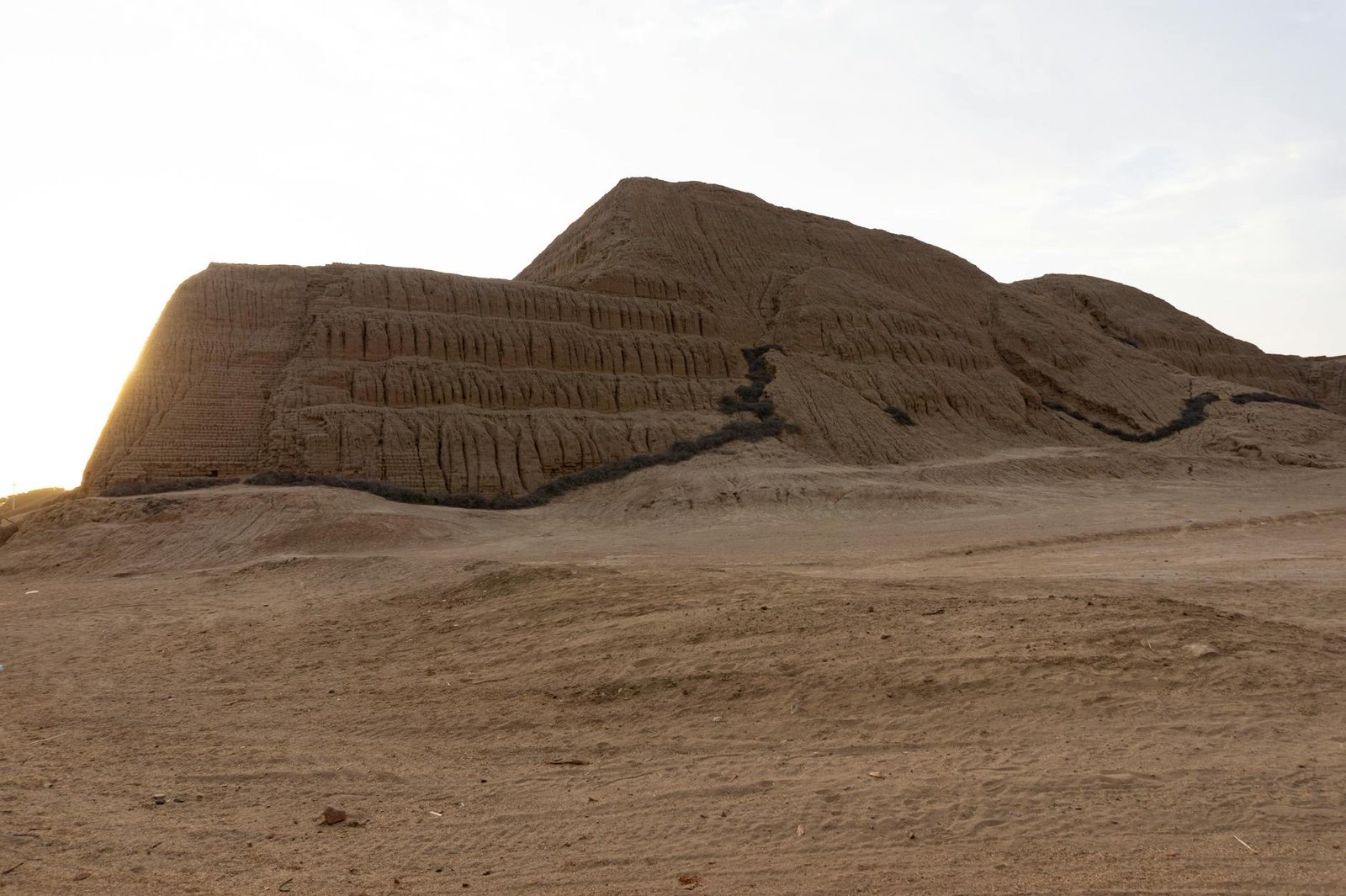
When we think of the ancient world’s great civilizations, Egypt and Mesopotamia tend to steal the spotlight. But nestled across what is now Pakistan and northwestern India, the Harappan Civilization — also known as the Indus Valley Civilization — quietly flourished for over a thousand years, building cities so sophisticated that modern archaeologists are still scratching their heads in amazement.
Dating back to roughly 3300 BCE, this remarkable culture had standardized weights, indoor plumbing, and trade networks stretching to Mesopotamia — all without leaving behind a single deciphered written record. Intrigued? You should be. Let’s dive into the lesser-known corners of one of history’s greatest mysteries.
The Undeciphered Script That Has Baffled Scholars for a Century
Perhaps the most tantalizing mystery of the Harappan world is its script. Over 4,000 inscribed objects have been discovered, yet no one has successfully cracked the code. Unlike Egyptian hieroglyphics, which were unlocked by the Rosetta Stone, the Indus script has no known bilingual companion text to guide researchers.
What We Think We Know
The script contains around 400 to 600 distinct signs, suggesting it could be a logosyllabic system — meaning some symbols represent whole words while others represent sounds. Some researchers, like the late Iravatham Mahadevan, spent decades cataloguing the signs and proposed connections to early Dravidian languages.
Others argue it may not be a true writing system at all, but rather a proto-writing or symbolic notation used for trade and administration. The debate remains fiercely alive in academic circles today.
A Society Remarkably Free of Warfare
Here is something that genuinely sets the Harappans apart from their contemporaries: archaeologists have found almost no evidence of warfare. No grand palaces, no glorified warrior kings, no mass graves from battles, and very few weapons designed purely for combat.
Compare this to Mesopotamia or ancient Egypt, where military conquest was practically a national sport, and the contrast is striking.
This has led some historians to theorize that Harappan society was governed by a merchant or priestly elite rather than a military ruling class. The remarkable uniformity of weights and measures across hundreds of miles suggests a powerful administrative system — but one that apparently did not rely on armies to enforce its will.
Whether this reflects a genuinely peaceful culture or simply a gap in the archaeological record is still debated.
The Mysterious Decline: Climate, Migration or Collapse?
For decades, the favored explanation for the civilization’s decline around 1900 BCE was the so-called Aryan Invasion Theory — the idea that Indo-Aryan migrants swept in and overwhelmed the Harappan people. Modern genetic and archaeological research has largely moved away from this dramatic narrative.
The Climate Change Hypothesis
A growing body of evidence now points to prolonged drought as the primary culprit. Studies of ancient monsoon patterns suggest that a weakening of the South Asian monsoon system around 2200 to 1900 BCE may have devastated agriculture across the Indus Valley.
This aligns with a broader global climate event that also destabilized civilizations in Egypt and Mesopotamia during the same period. Rather than a sudden collapse, the Harappan world likely experienced a gradual eastward migration toward the Gangetic plains where rainfall remained more reliable.
Comparison: Harappan Civilization vs. Contemporary Ancient Civilizations
| Feature | Harappan Civilization | Ancient Egypt | Mesopotamia (Sumer) |
|---|---|---|---|
| Time Period | 3300–1300 BCE | 3100–332 BCE | 3500–539 BCE |
| Urban Planning | Highly standardized grid cities | Monumental but less uniform | Organic city growth |
| Writing System | Undeciphered | Hieroglyphics | Cuneiform |
| Evidence of Warfare | Very limited | Extensive | Extensive |
| Sanitation Systems | Advanced drainage networks | Basic | Limited |
| Known Rulers | None identified | Pharaohs well documented | Kings well documented |
Fascinating Recent Discoveries
Excavations at Rakhigarhi in Haryana, India — one of the largest Harappan sites ever found — have yielded groundbreaking DNA evidence. A 2019 study published in Cell analyzed ancient skeletal remains and found no genetic evidence of steppe ancestry in the Harappan population, further complicating the Aryan migration narrative.
Meanwhile, underwater explorations near the ancient site of Dholavira in Gujarat continue to reveal new structures. Dholavira itself was inscribed as a UNESCO World Heritage Site in 2021 — a long overdue recognition of its extraordinary preservation.
Recommended Books to Go Deeper
• The Indus Civilization by Mortimer Wheeler A classic foundational text from one of the pioneering excavators of Harappan sites.
• Ancient Cities of the Indus Valley Civilization by Jonathan Mark Kenoyer Beautifully illustrated and packed with archaeological insight from a leading Harappan scholar.
• The Lost River by Michel Danino An engaging exploration of the Saraswati River’s role in Harappan geography and decline.
Frequently Asked Questions
Why is the Harappan script still undeciphered?
No bilingual inscription has been found to serve as a translation key. The script’s short inscription lengths and uncertain underlying language make analysis extremely challenging.
What caused the decline of the Indus Valley Civilization?
Current evidence points to prolonged climate change — especially a weakening monsoon — along with shifting river systems. The older Aryan Invasion Theory is now largely discredited.
Were the Harappans really peaceful?
The archaeological record shows remarkably little evidence of organized warfare, though scholars continue to debate what this means for their social structure.
How large was the Harappan Civilization at its peak?
It covered roughly 1.5 million square kilometers — larger than ancient Egypt and Mesopotamia combined — with a population possibly reaching five million.
The Harappan Civilization remains one of history’s most captivating puzzles. Every new excavation season brings fresh surprises, and the questions it raises — about governance, language, religion, and societal collapse — feel remarkably relevant to our own world. Whether you are a lifelong history enthusiast or a curious newcomer, the Indus Valley is an endlessly rewarding rabbit hole to explore.
This post contains affiliate links. If you purchase through these links, I may earn a small commission at no extra cost to you. Prices are approximate and may vary by retailer and date. Performance results are approximate and will vary based on your specific hardware and environment.