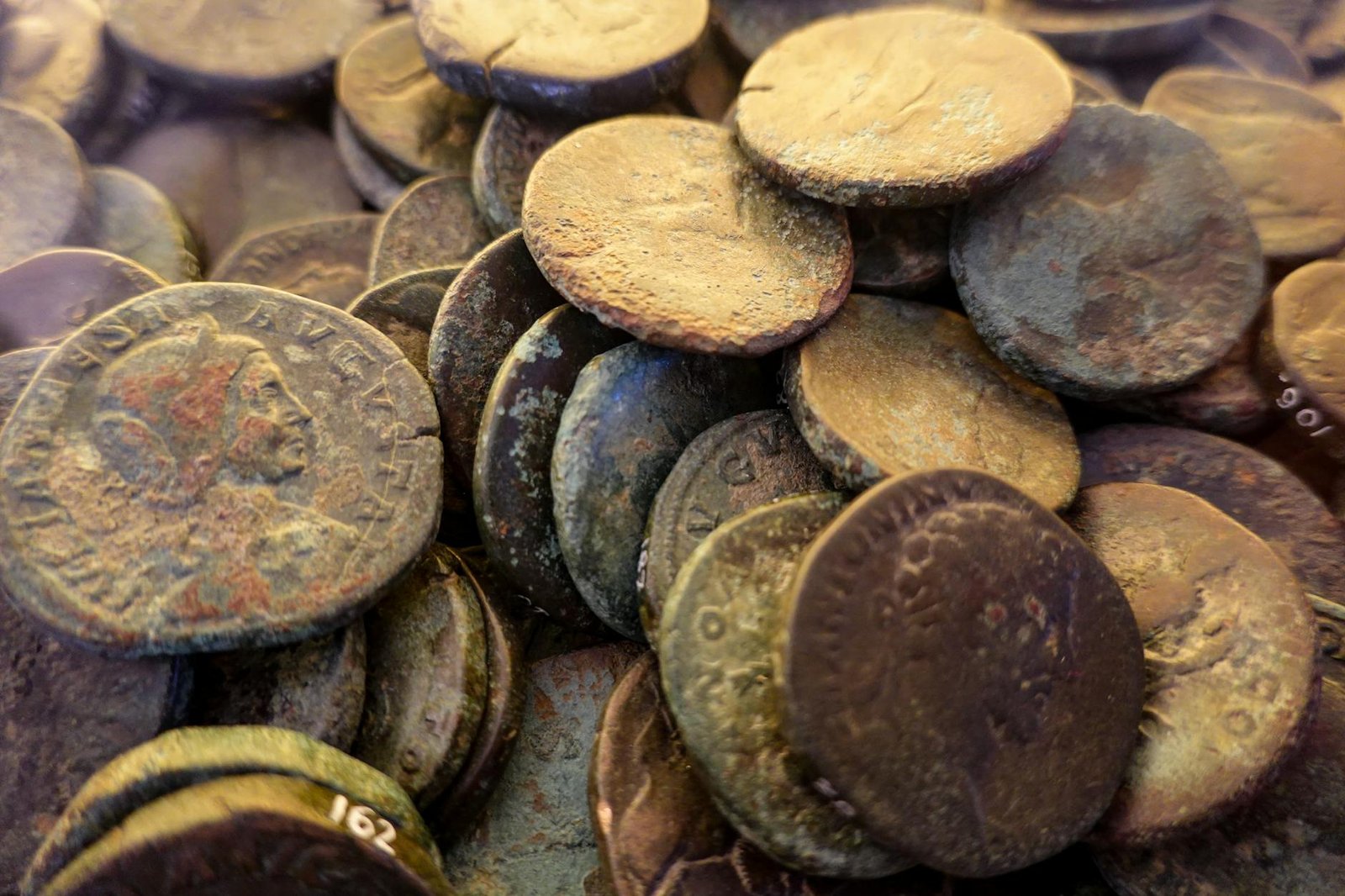
The vrbs roma constantinople mint coin stopped me cold the first time I held one — there was something almost paradoxical about a coin celebrating the city of Rome that was struck hundreds of miles away in a brand-new imperial capital. I kept wondering: what did it actually mean that Constantinople was minting coins honoring Rome, and how did those coins differ from the ones being struck at the original Roman mint at the same time? That comparison turned out to be one of the most revealing rabbit holes I have ever tumbled down in ancient numismatics, and what it uncovers about the late Roman Empire is genuinely fascinating.
Key Takeaways
- The VRBS ROMA coin series was struck between 330 and 335 AD at multiple mints, including Constantinople and Rome, as part of Constantine I’s commemorative coinage program.
- Constantinople mint examples carry distinctive mint marks and stylistic differences that set them apart from their Rome mint counterparts, making identification achievable for collectors.
- The reverse image of Romulus and Remus being suckled by the she-wolf was a deliberate political statement connecting the new eastern capital to Rome’s founding mythology.
- Historians have found that the choice to mint a “City of Rome” coin in Constantinople reflects the ideological tension at the heart of the late Roman Empire’s eastward shift.
- Both mint varieties are collectible today, but the Constantinople examples are generally considered more historically evocative given the city’s symbolic role in the empire’s transformation.
What Is the VRBS ROMA Coin and Why Does the Mint Matter?
The VRBS ROMA coinage was a commemorative bronze series issued by Emperor Constantine I between 330 and 335 AD to celebrate the eternal city of Rome, featuring the iconic reverse design of Romulus and Remus nursing from the Capitoline Wolf. The mint location matters enormously because each imperial mint stamped its own identifying marks onto the coin’s exergue — the small strip at the bottom of the reverse — and those marks reveal not just where a coin was made but what the empire’s political priorities were at that precise moment in history. Comparing a vrbs roma constantinople mint example against one from the Rome mint is, in effect, comparing two very different imperial statements dressed in identical iconographic clothing.
What the records reveal is that Constantine launched this commemorative series in 330 AD, the same year he formally dedicated Constantinople as his new imperial capital. The timing was not coincidental. By issuing coins celebrating Rome from a mint located in his gleaming new city on the Bosphorus, Constantine was making a sophisticated political argument: that Constantinople was not replacing Rome but inheriting and perpetuating its sacred legacy. Archaeological evidence shows that at least a dozen mints across the empire participated in striking the VRBS ROMA type, but the Constantinople and Rome examples stand at opposite symbolic poles of that argument.
The Rome Mint: Origins, Characteristics and Legacy
The mint at Rome — the Moneta — was one of the oldest and most prestigious coin-producing institutions in the ancient world, tracing its origins to around 269 BC when it was established near the Temple of Juno Moneta on the Capitoline Hill. By the time the VRBS ROMA series was issued in the 330s AD, the Rome mint had been operating for over six centuries and carried an almost sacred institutional weight. It was the original source of Roman monetary authority, and coins struck there bore that prestige implicitly.
The Rome mint’s VRBS ROMA coins carry the mint mark R or RP (for Roma Prima or Roma) in the exergue, sometimes accompanied by officina letters indicating which workshop within the mint produced the specific piece. Stylistically, historians have found that the Rome mint’s engravers tended toward a slightly more conservative, classicizing aesthetic — the helmeted bust of Roma on the obverse is rendered with careful attention to traditional Roman portraiture conventions. The she-wolf reverse, too, shows a refinement consistent with craftsmen working in the city that had produced fine coinage for centuries.
The legacy of the Rome mint’s VRBS ROMA issues is that they represent one of the last great flourishes of a mint that was already losing political centrality. The British Museum’s numismatic collection holds multiple examples that illustrate this late-antique Roman style with remarkable clarity. Within decades of the VRBS ROMA series, the Rome mint would be producing coins of declining imperial importance as power consolidated in the east.
The VRBS ROMA Constantinople Mint: Origins, Characteristics and Legacy
The vrbs roma constantinople mint story begins with one of the most audacious acts of city-building in ancient history. Constantine formally dedicated his new capital on May 11, 330 AD — a date chosen by astrologers as auspicious — and almost immediately established a mint there to supply the eastern empire with coinage. The Constantinople mint’s VRBS ROMA issues carry the distinctive mint mark CONS in the exergue, often accompanied by Greek officina letters (A, B, Γ, Δ) reflecting the city’s Hellenistic cultural environment, a detail that immediately distinguishes them from their western counterparts.
Stylistically, the Constantinople mint examples display what numismatists describe as a slightly more energetic, sometimes bolder engraving style. The helmeted bust of Roma can appear more dynamic, and the she-wolf reverse occasionally shows subtle compositional differences in the positioning of the twins beneath the wolf. These are not dramatic divergences — both mints were working from the same imperial iconographic template — but they are consistent enough that experienced collectors can often identify the mint of origin by style alone, even before reading the exergue mark.
The lasting legacy of the Constantinople mint’s VRBS ROMA coins is profound. Archaeological evidence shows that these coins circulated widely across the eastern Mediterranean and into the Balkans, carrying Rome’s founding myth into regions that had never been part of the original Roman heartland. The city of Constantinople would go on to survive as the capital of the eastern Roman Empire for more than a thousand years after the western empire’s fall in 476 AD, making these coins an early artifact of that extraordinary continuity. A coin struck in Constantinople celebrating Rome’s she-wolf legend is, in retrospect, a tiny bronze monument to one of history’s most successful acts of cultural inheritance.
VRBS ROMA Constantinople Mint vs. Rome Mint: Side-by-Side Comparison
| Feature | Constantinople Mint | Rome Mint |
|---|---|---|
| Mint Mark (Exergue) | CONS (+ Greek officina letters A, B, Γ, Δ) | R or RP (+ Latin officina letters) |
| Date of Issue | 330–335 AD | 330–335 AD |
| Obverse Design | Helmeted bust of Roma, slightly bolder style | Helmeted bust of Roma, more classicizing style |
| Reverse Design | She-wolf suckling Romulus and Remus; two stars above | She-wolf suckling Romulus and Remus; two stars above |
| Engraving Style | Energetic, sometimes more dynamic | Conservative, classically restrained |
| Denomination | AE3 (small bronze follis) | AE3 (small bronze follis) |
| Primary Circulation Area | Eastern Mediterranean, Balkans | Italy, western provinces |
| Symbolic Significance | New capital claiming Rome’s founding legacy | Original city affirming its own eternal status |
| Collector Availability | Moderately available; strong collector demand | Moderately available; slightly more common in western collections |
7 Key Differences Between the VRBS ROMA Constantinople Mint and Rome Mint Coins
1. The Mint Mark Is the Definitive Identifier. The most reliable way to distinguish a vrbs roma constantinople mint coin from a Rome mint example is the exergue inscription. CONS (or CONSA, CONSB, CONSG, CONSD for the four officinae) definitively places the coin in Constantinople, while R or RP identifies the Roman workshop. This single detail transforms what looks like an identical coin into a geographically and politically distinct artifact.
2. The Officina Letters Reflect Two Different Worlds. Constantinople used Greek letters for its workshop designations — alpha, beta, gamma, delta — while Rome used Latin letters. This small detail encapsulates the bilingual, bicultural nature of the late Roman Empire, where the east operated in Greek and the west in Latin even within the same imperial bureaucratic system.
3. Stylistic Engraving Differences Are Real but Subtle. Numismatists studying late Roman bronze coinage have documented consistent stylistic tendencies by mint. The Constantinople engravers, working in a newly established workshop staffed partly by craftsmen from the older Nicomedia mint, brought slightly different artistic conventions to the same iconographic template.
4. The Coins Traveled in Opposite Directions. What the records reveal about circulation patterns is striking: Rome mint VRBS ROMA coins moved primarily westward and southward through Italy and North Africa, while Constantinople mint examples spread through Thrace, Greece, Asia Minor and the Balkans — two halves of the same empire already living increasingly separate economic lives.
5. The Weight Standards Could Vary Slightly. While both denominations were officially AE3 small bronzes, archaeological evidence shows that actual weights varied between mints and even between officinae within the same mint. Coins from this period typically weigh between 1.5 and 2.5 grams, and subtle weight variations can sometimes assist in attribution alongside mint marks.
6. The Political Message Was Identical but the Messenger Was Different. Both coins say VRBS ROMA — City of Rome — on the obverse. But a coin saying this from Rome is a statement of fact, while the same coin from Constantinople is a statement of ambition and ideological inheritance. The message is the same; the meaning is entirely different depending on where it was made.
7. Their Historical Trajectories Diverged Dramatically. The Rome mint continued operating until the late 4th century before declining in output and importance. The Constantinople mint, by contrast, grew in significance and continued striking coins for over a thousand years, eventually becoming the primary mint of the Byzantine Empire. The VRBS ROMA series represents the very beginning of that extraordinary divergence.
What the Comparison Reveals: A Definite Historical Position
After examining these two mint varieties side by side, the conclusion is clear and worth stating plainly: the vrbs roma constantinople mint coin is the more historically significant of the two, not because it is rarer or more beautiful, but because it embodies a contradiction that tells us everything about where the Roman Empire was heading. Rome striking a coin celebrating Rome is simply Rome being Rome. Constantinople striking a coin celebrating Rome is an act of deliberate mythological appropriation — a new city reaching back 900 years to Romulus and Remus to claim legitimacy it could not yet have earned through age alone.
Historians have found that Constantine’s entire program of founding Constantinople was built on this kind of layered symbolism. He called it Nova Roma — New Rome — and populated it with statues, relics and institutions transplanted from the original city. The VRBS ROMA coinage was part of that same project, a bronze propaganda campaign distributed across millions of small coins that circulated through every market, army camp and tax collector’s purse in the eastern empire. The she-wolf on the reverse was not just a pretty image; it was an argument.
What this comparison ultimately reveals is that by 330 AD, Rome the city and Roman civilization were already beginning to separate from each other. The civilization — its laws, its myths, its administrative structures, its coins — was migrating east. The VRBS ROMA series, struck simultaneously in both cities, captures that migration at its very moment of departure. Holding either coin in your hand is holding a piece of that pivot point. Holding the Constantinople example is holding the direction history actually traveled.
If you are interested in exploring more about how Roman coinage reflected imperial politics, take a look at our guides on late Roman bronze coinage and what it tells us about the empire’s decline and Constantine I and the transformation of the Roman world.
Recommended Books for Further Reading
As an Amazon Associate, I earn from qualifying purchases.
- Roman Coins and Their Values (Vol. IV) by David R. Sear — The definitive reference for late Roman coinage, covering the VRBS ROMA series in authoritative detail. Find it on Amazon
- The Roman Imperial Coinage (Vol. VII) by Patrick Bruun — The scholarly standard for Constantinian coinage, essential for serious study of the 330–335 AD mint issues. Find it on Amazon
- Constantine: Roman Emperor, Christian Victor by Paul Stephenson — A compelling biography that places the founding of Constantinople and its coinage program in full political context. Find it on Amazon
- Late Roman Bronze Coinage by R.A.G. Carson, P.V. Hill and J.P.C. Kent — A compact but invaluable field guide for identifying late Roman bronzes including the VRBS ROMA commemorative series. Find it on Amazon
- The Fall of the Roman Empire by Peter Heather — Essential background reading for understanding the broader forces that made the eastward shift of Roman power both necessary and inevitable. Find it on Amazon
Frequently Asked Questions
What does VRBS ROMA mean on a Roman coin?
VRBS ROMA is Latin for “City of Rome.” It appears on a commemorative bronze coin series issued by Emperor Constantine I between 330 and 335 AD to honor Rome’s eternal status and founding mythology, featuring a helmeted bust of the goddess Roma on the obverse and the she-wolf nursing Romulus and Remus on the reverse.
How do I identify a VRBS ROMA Constantinople mint coin?
The key identifier is the mint mark in the exergue — the small area at the bottom of the reverse side. Constantinople mint examples display CONS followed by a Greek letter (A, B, Γ, or Δ) indicating which of the four workshops produced the coin. Rome mint examples show R or RP instead.
Why did Constantine mint coins celebrating Rome in Constantinople?
Constantine founded Constantinople in 330 AD as his new imperial capital and wanted to legitimize it by connecting it to Rome’s ancient founding myths. Striking VRBS ROMA coins in Constantinople was part of a broader ideological program to present the new city as the rightful heir to Roman civilization rather than a replacement for it.
What is the she-wolf image on the VRBS ROMA coin?
The reverse of the VRBS ROMA coin shows the Capitoline Wolf — the legendary she-wolf who suckled the abandoned twins Romulus and Remus according to Roman founding mythology. Romulus went on to found the city of Rome in 753 BC by tradition. This image was one of the most powerful symbols of Roman identity and was deliberately chosen for this commemorative series.
How much is a VRBS ROMA Constantinople mint coin worth today?
Values vary significantly based on condition, sharpness of strike and completeness of the mint mark. In circulated but clearly identifiable condition, examples typically sell in the range of $20 to $100 USD, with exceptional examples commanding considerably more. Constantinople mint examples tend to attract strong collector interest given their historical significance.
How many mints produced the VRBS ROMA coin series?
Archaeological evidence and numismatic research show that at least a dozen mints across the Roman Empire participated in striking the VRBS ROMA commemorative series between 330 and 335 AD, including Constantinople, Rome, Nicomedia, Antioch, Alexandria and Thessalonica. Each mint’s examples can be identified by their distinctive exergue mint marks.
Are you a collector or history enthusiast fascinated by what late Roman coinage reveals about the empire’s transformation? Share your thoughts in the comments below — we would love to hear which mint variety you find most compelling, and whether you think the Constantinople examples deserve more recognition than they typically receive. And if you found this comparison useful, explore more of our deep dives into ancient Roman coins and their historical stories right here on HistoryBookTales.