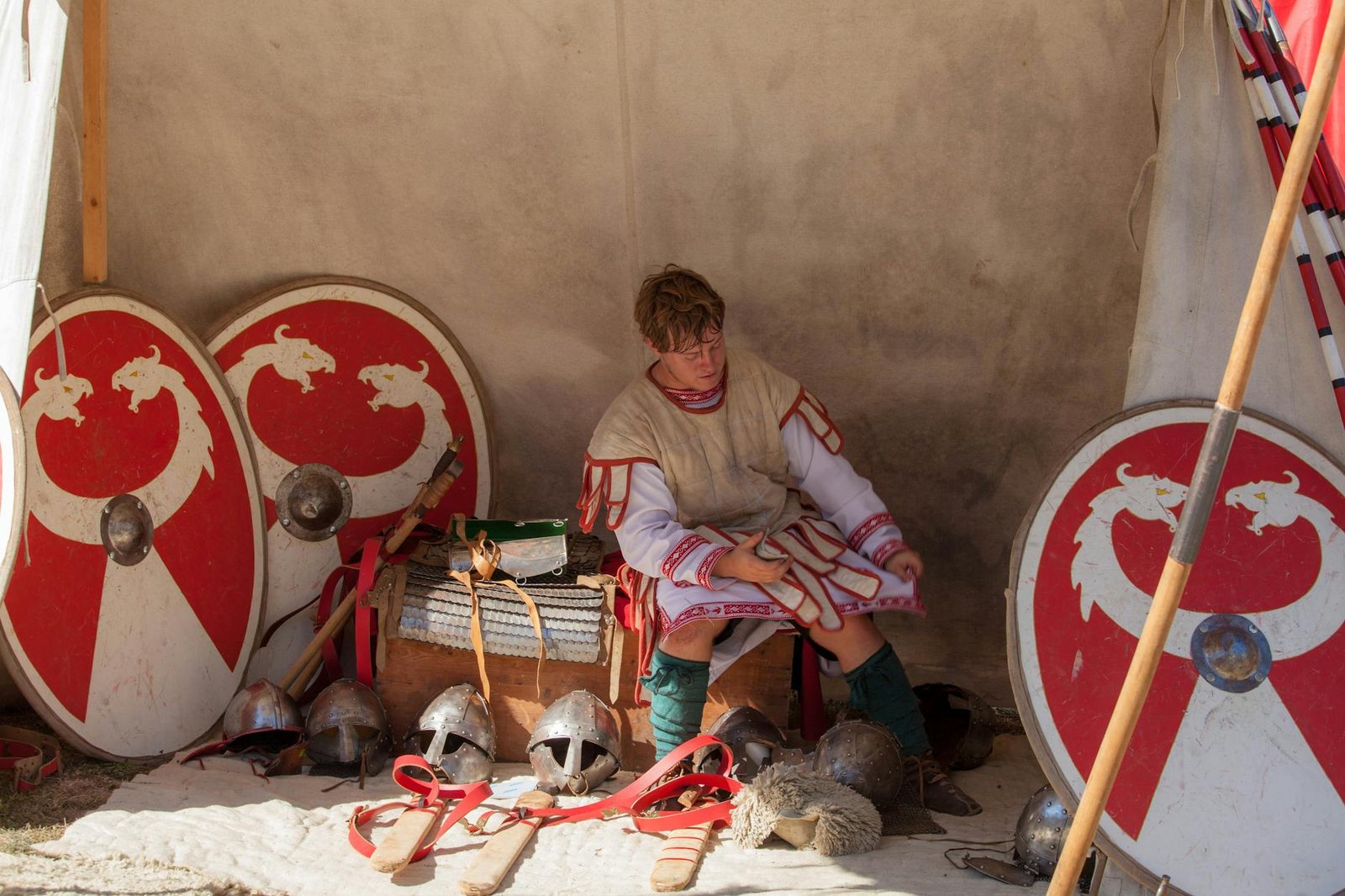
I’ll be honest — when I first stumbled across the ongoing scholarly debate surrounding the late Roman limitanei, I assumed it was a fairly settled corner of military history. But the more I dug into the competing arguments, the papyrus records, and the archaeological digs along Hadrian’s Wall and the Danube frontier, the more I realized just how dramatically our understanding of these soldiers is being rewritten right now. What struck me most was how thoroughly modern researchers are dismantling a century-old assumption that these men were barely soldiers at all. This is one of those historical debates where the stakes feel genuinely high — because how we assess the limitanei shapes how we understand the fall of the Western Roman Empire itself.
Key Takeaways
- The late Roman limitanei were frontier garrison troops who defended Rome’s borders from roughly the 3rd century AD onward, and scholars are actively debating how capable and professional they truly were.
- For much of the 20th century, historians dismissed the limitanei as part-time farmer-soldiers, but recent archaeological and documentary evidence paints a far more complex picture.
- The Notitia Dignitatum, a late Roman administrative document dating to around 395–420 AD, lists hundreds of limitanei units across the empire’s frontiers.
- New research suggests these soldiers maintained professional standards, received regular pay, and were far more militarily effective than older scholarship acknowledged.
- Understanding the limitanei is central to the broader debate about why Rome’s frontier defense ultimately succeeded for so long — and why it eventually failed.
Why This Debate Matters Now
The late Roman limitanei — Rome’s frontier garrison soldiers — were not a forgotten footnote but the backbone of an empire-wide border defense system that held together for over a century under extraordinary pressure. The reason this debate is gaining fresh urgency in 2026 is straightforward: a new wave of archaeological fieldwork along the Rhine, Danube, and North African limes (frontier zones), combined with digital analysis of papyrus documents from Roman Egypt, is producing hard data that directly contradicts the dismissive portrait of these soldiers that dominated 20th-century scholarship. Historians and archaeologists are now asking a more pointed question — not whether the limitanei were “good enough,” but why we ever assumed they weren’t.
This reassessment matters beyond academic circles. The question of Rome’s frontier defense is inseparable from the question of Rome’s fall, and if we’ve been wrong about the limitanei’s capabilities, we may have been wrong about the entire story of imperial decline.
Who Were the Late Roman Limitanei? A Historical Background
The word limitanei derives from the Latin limes, meaning border or frontier zone. These were the soldiers permanently stationed along Rome’s vast perimeter — from the Scottish lowlands to the Euphrates, from the Rhine delta to the Saharan edge of North Africa. They emerged as a distinct military category during the reforms of the 3rd and early 4th centuries AD, most clearly codified under Emperor Diocletian (reigned 284–305 AD) and further developed by Constantine I in the early 300s.
What the records reveal is a layered and sophisticated organization. According to the Notitia Dignitatum, the remarkable administrative document compiled around 395–420 AD, the limitanei were organized into dozens of distinct unit types — legiones, auxilia, cunei equitum (cavalry wedges), and alae (cavalry wings) — spread across every frontier province. Historians have found references to more than 300 individual limitanei units listed in this single document alone, giving us a snapshot of a border army of staggering scale. The Wikipedia entry on the Limitanei provides a useful overview of their organizational structure and geographic distribution.
These soldiers were not temporary conscripts. They were hereditary professionals in many cases, with service obligations passing from father to son under legislation codified in the Codex Theodosianus of 438 AD. They lived in frontier forts called castra and castella, many of which have been excavated across Britain, Germany, Jordan, and Egypt. Archaeological evidence shows permanent barracks, granaries, bath houses, and chapels — the infrastructure of a settled, long-term military presence, not a hastily assembled militia.
The Old View: Were the Late Roman Limitanei Really Second-Rate Soldiers?
For most of the 20th century, the dominant scholarly view — shaped heavily by Edward Gibbon’s 18th-century masterwork The Decline and Fall of the Roman Empire and later reinforced by historians like A.H.M. Jones — portrayed the limitanei as a degraded, semi-militarized peasant class. The argument went roughly like this: by the 4th century, Rome had essentially handed its serious fighting to the mobile field army, the comitatenses, while the limitanei were left to tend their border plots and man the walls when trouble came. They were seen as farmer-soldiers at best, a kind of territorial militia that happened to wear Roman insignia.
This view drew on a few pieces of ancient evidence that seemed compelling. The emperor Julian, writing in the 360s AD, dismissively referred to frontier troops as agrarii milites — agricultural soldiers. The legal codes show that limitanei were sometimes permitted to farm land adjacent to their forts, which seemed to confirm the picture of a part-time force more interested in harvests than warfare. And when the Western Empire began to crumble in the late 4th and 5th centuries, it was the field armies — not the frontier garrisons — that featured most prominently in the surviving literary sources.
The problem, as more recent scholars have pointed out, is that this interpretation relied too heavily on a handful of rhetorical texts written by elite authors with obvious political agendas, while largely ignoring the documentary and material record.
What the Evidence Actually Shows About Late Roman Limitanei Effectiveness
Archaeological evidence shows a very different picture from the one painted by ancient literary critics. Excavations at frontier forts in Roman Arabia — particularly along the Limes Arabicus — have revealed sophisticated military installations maintained and upgraded well into the 5th and even 6th centuries AD. The fort at Udruh in modern Jordan, for example, shows continuous military occupation and structural investment across multiple generations of limitanei garrison. This is not the profile of a neglected, underfunded militia.
The papyrus documents from Roman Egypt are equally revealing. The Oxyrhynchus papyri and the archive of Flavius Abinnaeus — a 4th-century cavalry commander stationed at Dionysias in the Fayum — show soldiers receiving regular pay, filing detailed administrative reports, requesting equipment, and engaging in active policing and border patrol operations. Historians have found pay records indicating that limitanei received roughly two-thirds the salary of comitatenses troops in the 4th century, which was a meaningful differential but hardly the ration of a forgotten peasant militia.
A 2012 study by scholar John Haldon published in the context of Byzantine military continuity argued that limitanei units in the Eastern Empire maintained operational effectiveness well into the 6th century, with some units traceable through the reign of Justinian I (527–565 AD). This longevity alone challenges the idea that they were militarily irrelevant. You can explore the broader context of Roman frontier defense through the Britannica article on the Roman limes.
What the records reveal most strikingly is that the limitanei were not simply sitting behind walls waiting to be overrun. They conducted active patrols, small-unit raids, intelligence gathering, and coordination with local allied forces. In the Eastern provinces especially, they formed the essential first layer of a defense-in-depth strategy that could slow, channel, and attrit enemy forces before the mobile field army ever arrived.
Limitanei vs. Comitatenses: Rome’s Two-Tier Military System
One of the most important analytical tools for understanding the limitanei is comparing them directly with their better-known counterparts, the comitatenses — the mobile field armies that accompanied emperors and responded to major threats across the empire. The table below summarizes the key differences as historians currently understand them.
| Feature | Limitanei (Frontier Troops) | Comitatenses (Field Army) |
|---|---|---|
| Primary Role | Static border defense, patrol, policing | Mobile offensive and defensive campaigns |
| Pay Level (4th century) | Roughly two-thirds of comitatenses pay | Full standard military pay |
| Deployment | Permanently stationed in frontier provinces | Traveled with emperor; deployed empire-wide |
| Unit Types | Legions, auxilia, alae, cunei equitum | Palatine legions, vexillationes, auxilia palatina |
| Land Allotment | Often permitted to farm adjacent land | Generally not tied to land |
| Longevity in East | Traceable into 6th century AD | Evolved into Byzantine tagmata |
What this comparison reveals is that the two-tier system was not simply about quality — it was about function. The limitanei were not failed comitatenses; they were a different tool designed for a different purpose. Treating them as inferior because they weren’t mobile field troops is a bit like criticizing a castle garrison for not being a cavalry charge.
Competing Scholarly Perspectives on the Frontier Army
The scholarly landscape on this topic is genuinely contested, which makes it all the more fascinating. Three broad camps have emerged in recent decades.
The Decline School — represented by earlier 20th-century historians following A.H.M. Jones’s monumental 1964 work The Later Roman Empire — maintained that the limitanei represented a fundamental degradation of Roman military capability. Jones argued that the division between frontier and field army reflected a loss of strategic coherence, with the limitanei becoming essentially a hereditary peasant caste that happened to hold military titles. This view still has adherents, particularly among scholars who emphasize the structural weaknesses of the late imperial state.
The Revisionist School — including scholars like Benjamin Isaac, whose 1990 work The Limits of Empire was a landmark reassessment — argued that the limitanei were never primarily designed for large-scale warfare in the first place. Isaac controversially suggested that the Roman frontier system was more about policing, taxation, and controlling population movement than about stopping military invasions. This reframing elevated the limitanei’s actual function even while questioning whether they were “soldiers” in the traditional sense.
The Rehabilitationist School — the currently ascendant position in academic circles — argues that the limitanei were genuinely capable professional soldiers whose reputation suffered from an overreliance on biased literary sources. Scholars like Hugh Elton and Adrian Goldsworthy have pointed to the documentary and archaeological record to argue that these troops maintained real military competence well into the 5th century. Goldsworthy’s work on the Roman army more broadly has been influential in pushing back against the idea of a straightforward military decline.
What all three schools agree on, interestingly, is that the limitanei were far more important to the Roman imperial system than popular history has ever acknowledged. The debate is about how they were important, not whether they were.
If you’re interested in exploring how Diocletian’s military reforms reshaped the entire Roman army, that context is essential for understanding where the limitanei fit into the bigger picture. And for those curious about the complex causes behind the fall of the Western Roman Empire, the role of frontier defense is one of the most debated threads in that larger story.
Recommended Reading
As an Amazon Associate, I earn from qualifying purchases.
- The Later Roman Empire (284–602 AD) by A.H.M. Jones — The foundational academic text on the late Roman state, including detailed analysis of military organization. Essential background even if some conclusions have since been revised. Find it on Amazon
- The Limits of Empire by Benjamin Isaac — A provocative and deeply researched reassessment of Roman frontier policy that fundamentally changed how scholars think about the limitanei’s purpose. Find it on Amazon
- The Fall of the Roman Empire by Adrian Goldsworthy — Goldsworthy’s accessible and authoritative account weaves the story of frontier defense into the broader narrative of imperial collapse. Find it on Amazon
- Warfare in Roman Europe AD 350–425 by Hugh Elton — One of the most detailed modern studies of late Roman military practice, with substantial attention to the limitanei and their actual battlefield role. Find it on Amazon
- The Roman Army of the Late Empire by Yann Le Bohec — A comprehensive survey of late Roman military organization that gives the limitanei the serious treatment they deserve. Find it on Amazon
What This Means for How We See History
The ongoing rehabilitation of the late Roman limitanei is more than a specialist argument about ancient soldiers — it’s a case study in how historical bias gets baked into the record and then transmitted across generations of scholarship. When 18th and 19th-century historians read Roman literary sources that mocked frontier troops as rustic and second-rate, they took those sources at face value without asking who was writing them, for what audience, and with what political purpose. The result was a narrative that suited a particular story about Roman decline — one in which military degradation was both symptom and cause of imperial collapse.
What the newer evidence demands is a more honest accounting. The limitanei held Rome’s frontiers for generations under conditions of chronic underfunding, political instability, and relentless external pressure. The fact that the Western frontier system eventually failed in the late 5th century tells us something important about the structural limits of imperial overextension — but it doesn’t retroactively make the soldiers who held the line for so long into failures. If anything, the story of the limitanei is one of remarkable institutional resilience in the face of impossible odds.
For history enthusiasts and general readers, the takeaway is both humbling and exciting: some of the most important soldiers in Western history have been hiding in plain sight, dismissed by ancient snobs and modern scholars alike. The debate isn’t over, but the direction of travel is clear. The limitanei deserve to be taken seriously — and increasingly, they are.
Have thoughts on Rome’s frontier defense or the limitanei debate? Drop a comment below, share this article with a fellow history enthusiast, or explore more of our deep dives into the late Roman military world right here on HistoryBookTales.
Frequently Asked Questions
Frequently Asked Questions
What were the late Roman limitanei responsible for?
The late Roman limitanei were frontier garrison troops responsible for defending Rome’s borders, conducting patrols, policing frontier zones, gathering intelligence, and serving as the first line of defense against raids and invasions. They were permanently stationed in frontier provinces rather than traveling with the mobile field army.
Why did historians dismiss the limitanei as second-rate soldiers?
Earlier historians relied heavily on Roman literary sources — including dismissive comments by Emperor Julian — that portrayed frontier troops as agricultural peasants rather than real soldiers. Modern scholars have since recognized that these sources were biased and that the documentary and archaeological evidence tells a very different story about the limitanei’s professionalism and effectiveness.
How were the limitanei different from the comitatenses?
The comitatenses were Rome’s mobile field armies that traveled with emperors and responded to major threats across the empire, while the limitanei were permanently stationed frontier garrisons. The comitatenses received higher pay and were generally deployed for large-scale offensive campaigns, whereas the limitanei focused on static defense, patrolling, and local security operations.
How long did the limitanei exist as a military institution?
The limitanei emerged as a distinct military category during the reforms of Diocletian in the late 3rd century AD and continued in various forms for several centuries. In the Eastern Roman Empire, limitanei units remained traceable well into the reign of Justinian I in the 6th century AD, representing an institutional lifespan of roughly 300 years.
What sources do historians use to study the late Roman limitanei?
Historians draw on several key sources including the Notitia Dignitatum, papyrus documents from Roman Egypt such as the Abinnaeus Archive, the Codex Theodosianus, archaeological excavations of frontier forts, and the writings of late Roman authors and emperors. The combination of documentary, legal, and material evidence has been crucial to the modern reassessment of these soldiers.