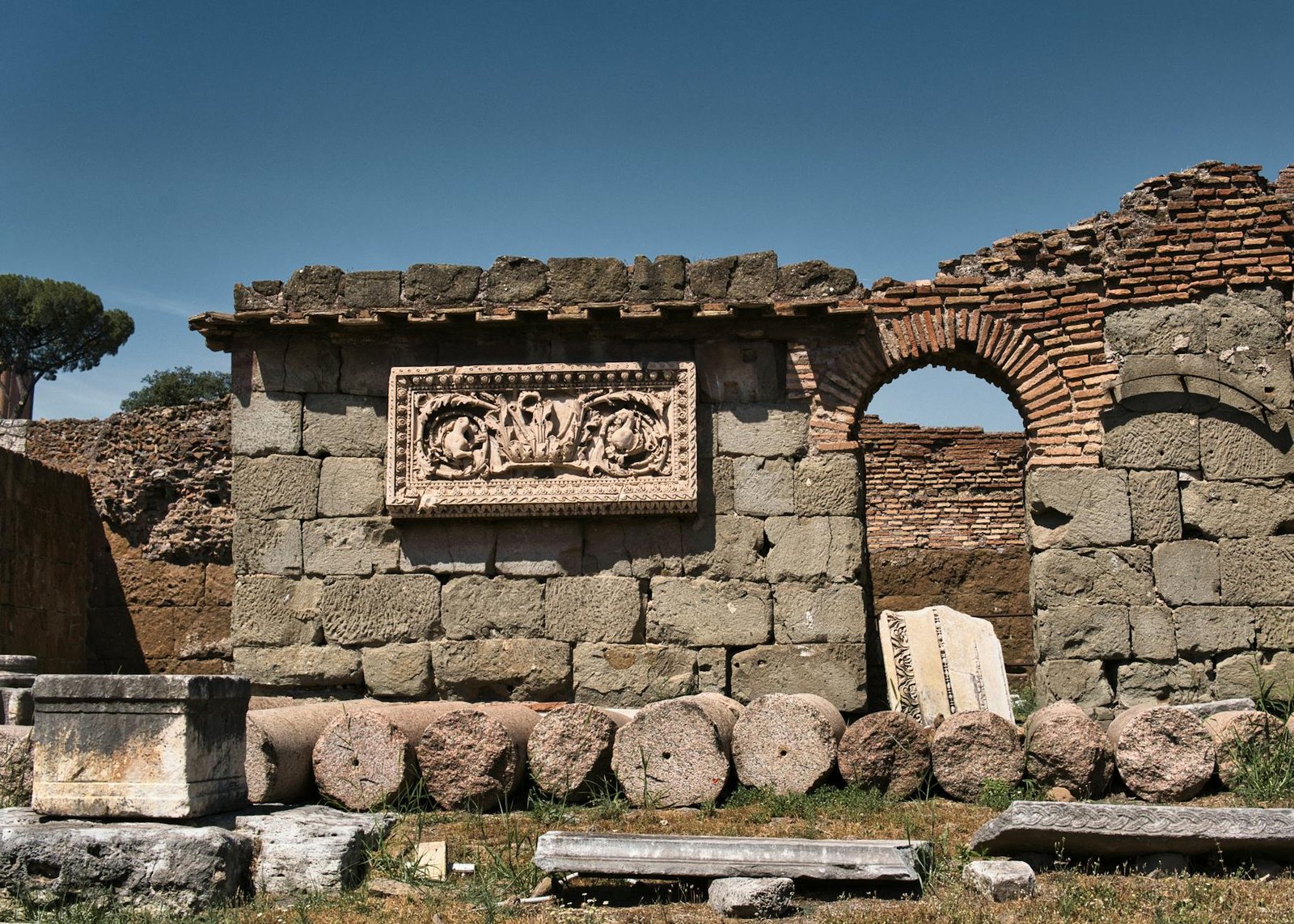
The Jewry Wall Leicester home to one of Roman Britain’s most spectacular surviving structures has captivated me ever since I first stumbled across a photograph of those massive ancient stones rising improbably above a modern city street. I’ve spent a good deal of time digging through archaeological reports, museum records, and Roman history texts to compile this list, and the more I learned, the more astonished I became. It is genuinely one of those places where you stand in front of something nearly two thousand years old and feel the full weight of human history pressing down on you. I’m so excited to share these seven facts because I think this site deserves far more attention than it typically gets outside of specialist circles.
Key Takeaways
- The Jewry Wall is the tallest surviving above-ground Roman structure in the entire United Kingdom, standing approximately 9 metres high.
- It formed part of the elaborate public bathhouse of the Roman town of Ratae Corieltauvorum, built around the 2nd century AD.
- The medieval church of St Nicholas, constructed around 802 AD, was built directly adjacent to the wall and reused vast quantities of Roman stonework and brick in its fabric.
- Archaeological excavations in the 20th century dramatically expanded our understanding of the bathhouse’s full scale and layout.
- The site is now managed as a Scheduled Ancient Monument and is free to visit, with an adjacent museum housing extraordinary finds from Roman Leicester.
The Jewry Wall in Leicester is the largest surviving piece of Roman masonry in Britain that still stands above ground, forming part of a grand 2nd-century public bathhouse built in the Roman town of Ratae Corieltauvorum. It has endured nearly two millennia of history, watched a medieval church rise beside it, and survived into the modern city as a Scheduled Ancient Monument of global significance. What the records reveal is a story of engineering ambition, civic life, and extraordinary survival that stretches from the Roman Empire all the way to the present day.
1. The Wall Stood at the Heart of Roman Ratae Corieltauvorum
When the Romans arrived in the East Midlands during the 1st century AD, they established a settlement that would grow into one of the more prosperous towns of Roman Britain. They called it Ratae Corieltauvorum — the town of the Corieltauvi, the Iron Age tribe that had previously dominated the region. By the 2nd century, the town had developed all the hallmarks of Roman urban life: a forum, a basilica, temples, and of course, a substantial public bathhouse. The Jewry Wall formed the palaestra wall — the gymnasium exercise hall — of that bathhouse complex, and its sheer mass speaks to the ambitions of the Roman administrators and citizens who commissioned it.
Historians have found that Ratae sat at the junction of several important Roman roads, making it a genuine hub of commerce and administration in Britannia. Archaeological evidence shows that the town covered a significant area of what is now central Leicester, and the civic buildings were concentrated in a zone that modern excavations have only partially uncovered. The bathhouse and its associated structures were among the grandest public investments the town’s inhabitants ever made, reflecting the deeply Roman belief that communal bathing was not a luxury but a civic necessity.
2. It Is the Jewry Wall Leicester Home to the UK’s Tallest Roman Ruin
Standing at approximately 9 metres (around 30 feet) in height, the Jewry Wall holds a record that surprises many visitors: it is the tallest surviving above-ground Roman structure anywhere in the United Kingdom. That is a remarkable distinction for a relatively unheralded site in the English Midlands. While Hadrian’s Wall is undoubtedly more famous, its surviving courses rarely reach more than a few metres above the original ground level. The Jewry Wall, by contrast, retains two large arched openings and rises to a height that gives a genuine sense of Roman architectural scale. English Heritage and Wikipedia’s entry on the Jewry Wall both confirm its status as a Scheduled Ancient Monument of the highest importance.
The wall is constructed from courses of Roman tile interspersed with dressed limestone blocks — a technique known as opus mixtum — which gave it both visual rhythm and structural strength. Archaeological evidence shows the original wall would have been even more imposing, forming the interior dividing wall between the exercise hall and the warm rooms of the bathhouse. Four large arched openings originally pierced the wall, allowing bathers to move between spaces; two of these arches survive in a recognisable form today, and standing beneath them you can still feel the ambition of the Roman builders who raised them sometime around 130–150 AD.
3. The Bathhouse Complex Was a Marvel of Roman Engineering
Roman public baths were far more than places to get clean — they were social institutions, community centres, and demonstrations of imperial civilisation all rolled into one steaming, tile-clad package. The bathhouse at Ratae followed the standard Roman sequence of rooms: the frigidarium (cold room), tepidarium (warm room), and caldarium (hot room), all fed by an underfloor heating system known as a hypocaust. Archaeologists have recovered substantial evidence of the hypocaust pillars, mosaic floors, and painted wall plaster that once decorated these spaces, giving us a vivid picture of how colourful and sophisticated the interior must have been.
What the records reveal about the bathhouse’s scale is genuinely impressive. Excavations have shown the complex covered an area of roughly 2.5 acres, making it one of the larger provincial bathhouse complexes known from Roman Britain. The palaestra — the open exercise courtyard attached to the baths — would have been a bustling space where citizens exercised, socialised, and conducted informal business. Leicester Museums’ Jewry Wall Museum holds a superb collection of finds from the site, including fragments of the painted plaster and mosaic work that once lined these rooms.
| Feature | Roman Original | Current Status |
|---|---|---|
| Wall Height | Estimated 12+ metres originally | ~9 metres surviving |
| Arched Openings | 4 original arches | 2 still recognisable |
| Bathhouse Area | ~2.5 acres total complex | Partially excavated |
| Construction Date | c. 130–150 AD | Wall still standing |
| Adjacent Church | N/A (Roman period) | St Nicholas, c. 802 AD |
4. A Saxon Church Rose from the Bathhouse’s Bones
One of the most extraordinary aspects of the Jewry Wall site is the story of what happened to the bathhouse after the Romans left Britain in the early 5th century. Rather than being simply abandoned and forgotten, the massive masonry of the complex became a convenient quarry for later builders. The Church of St Nicholas, which stands directly behind the Jewry Wall to this day, was constructed around 802 AD — and historians have found that its builders helped themselves liberally to the Roman stonework, tiles, and brick that lay all around them. Look closely at the fabric of St Nicholas and you can still see Roman tile courses embedded in its walls, a literal layering of two civilisations in a single building.
This practice of spolia — the reuse of materials from earlier structures — was extremely common throughout early medieval Europe, and it tells us something important about how post-Roman communities related to the ruins around them. They were not necessarily indifferent to the past; sometimes they were actively venerating a place by building a Christian church near or upon it. What is certain is that the Saxon builders of St Nicholas were working in the shadow of a structure they could not have failed to find awe-inspiring. The church remains in active use today, making this corner of Leicester one of the most layered historical landscapes in all of Britain — Roman, Saxon, and medieval all compressed into a single city block.
5. The Name “Jewry Wall” Is Wrapped in Historical Mystery
Despite its prominence, the origin of the name “Jewry Wall” is genuinely uncertain, and this ambiguity has generated considerable debate among local historians and linguists over the years. One popular theory holds that the name derives from the medieval Latin word jurat, meaning a sworn councillor or juror, suggesting the wall may have stood near a place of civic assembly in the medieval town. Another theory connects it to a Jewish community that may have lived in the vicinity during the medieval period, though there is limited documentary evidence to confirm this directly. A third interpretation suggests it is simply a corruption of an older place-name that has been lost over time.
What is clear is that the name was well established by the post-medieval period and appears in historical records of Leicester from at least the 16th century. The uncertainty around its etymology is actually rather fitting for a structure whose history spans so many different eras and cultures. Archaeological evidence shows that the area around the wall has been continuously significant — as a Roman civic space, a Saxon religious site, a medieval neighbourhood, and now a modern heritage attraction — and perhaps the name simply accumulated meaning from all of those layers without belonging definitively to any one of them.
6. 20th-Century Excavations Transformed What We Knew
For much of its post-Roman history, the Jewry Wall was visible but poorly understood. It was recognised as Roman in origin, but the full extent of the bathhouse complex beneath and around it remained largely unknown until the major excavation campaign led by Kathleen Kenyon between 1936 and 1939. Kenyon — who would later become famous for her excavations at Jericho and Jerusalem — produced a landmark report that fundamentally reshaped understanding of Roman Leicester. Her work revealed the plan of the bathhouse in considerable detail, identified the hypocaust systems, and recovered thousands of finds including coins, pottery, and architectural fragments that are now housed in the adjacent museum.
Historians have found Kenyon’s Leicester excavation to be a model of systematic urban archaeology for its era, and her published report remains a key reference for anyone studying Roman Britain. Subsequent investigations in the later 20th century and into the 21st century have continued to refine the picture, with watching briefs during construction work regularly turning up new Roman deposits across the city centre. Leicester is now recognised as one of the most archaeologically rich Roman towns in Britain, and the Jewry Wall sits at the very centre of that story. The other great Roman towns of Britain have their own impressive survivals, but few can match the sheer drama of the Jewry Wall’s standing masonry.
7. The Jewry Wall Leicester Home to a World-Class Museum Experience
One of the best things about the Jewry Wall site is that it remains entirely free to visit, and the Jewry Wall Museum immediately adjacent to the ruins houses one of the finest collections of Roman-period artefacts in the country. The museum’s centrepiece is the remarkable Peacock Pavement — a large section of Roman mosaic flooring recovered from a nearby site, featuring a vivid peacock motif in rich tesserae that gives a direct window into the decorative ambitions of wealthy Romano-British residents. Alongside it you will find reconstructed wall paintings, hypocaust tiles, personal objects like hairpins and brooches, and a detailed model of the bathhouse complex as it would have appeared in its Roman heyday.
The outdoor site itself is managed so that visitors can walk right up to the wall and examine its construction at close quarters — the alternating courses of tile and stone are clearly visible, and the surviving arch openings give a real sense of the original spatial experience. If you are interested in Roman heritage sites across England, the Jewry Wall should absolutely be on your itinerary. It is the kind of place that rewards a slow, contemplative visit: standing in front of masonry laid by Roman craftsmen nearly 1,900 years ago, with a Saxon church at your back and a modern city humming all around you, is an experience that is genuinely difficult to replicate anywhere else in Britain.
The Bigger Picture
The Jewry Wall is far more than a local curiosity or a regional heritage asset — it is a window into the full sweep of British history and a reminder of just how profoundly the Roman occupation shaped the island. The town of Ratae Corieltauvorum was one of perhaps twenty significant Roman urban centres in Britannia, and the investment its citizens made in public infrastructure like the bathhouse reflects the genuine integration of this distant province into the Roman world. The fact that the wall still stands today — having survived the end of Roman rule, the Saxon period, the Norman conquest, the medieval and early modern eras, the Industrial Revolution, and two World Wars — is a testament both to the quality of Roman construction and to the remarkable continuity of human settlement on this particular patch of English soil.
There is also something deeply moving about the way the site layers different historical moments on top of one another. The Saxon builders who cannibalized the bathhouse for their church were not erasing Roman history — they were, in their own way, continuing it, finding new uses for ancient materials and keeping the site alive through centuries of change. Today’s visitors who stand in front of the wall and photograph it on their phones are doing something not entirely different: engaging with the past, carrying it forward, and ensuring that the story of Roman Leicester remains part of the living fabric of British culture. If this article has sparked your curiosity, I’d strongly encourage you to make the trip to Leicester — and to explore the other surviving Roman bath complexes across Britain that tell similarly compelling stories about life under the eagles.
Further Reading
As an Amazon Associate, I earn from qualifying purchases.
- Roman Leicester by Malcolm Todd — a thorough and accessible account of the archaeology and history of Ratae Corieltauvorum. Find it on Amazon
- Roman Britain: A New History by Guy de la Bédoyère — a beautifully illustrated overview of Roman Britain that places sites like the Jewry Wall in their broader imperial context. Find it on Amazon
- The Roman Baths of Britain by John Wacher — an authoritative study of bathhouse architecture and engineering across the Roman province. Find it on Amazon
- Britannia: The Roman Conquest and Occupation of Britain by Sheppard Frere — a classic scholarly text that covers the full arc of Roman rule in Britain, essential background for understanding sites like Ratae. Find it on Amazon
- The Towns of Roman Britain by John Wacher — a comprehensive survey of every major Roman urban centre in Britannia, with detailed coverage of Leicester. Find it on Amazon
Frequently Asked Questions
Why is the Jewry Wall in Leicester so historically significant?
The Jewry Wall is the tallest surviving above-ground Roman structure in the United Kingdom, standing approximately 9 metres high. It formed the palaestra wall of a major 2nd-century Roman bathhouse in the town of Ratae Corieltauvorum and represents one of the most impressive pieces of Roman masonry still visible in Britain today.
How did the Jewry Wall get its unusual name?
The exact origin of the name is genuinely uncertain. Theories include a derivation from the medieval Latin word jurat meaning a sworn councillor, a possible connection to a medieval Jewish community in the area, or a corruption of an older lost place-name. The name was well established in documentary records by at least the 16th century.
What was the Roman bathhouse at Leicester used for?
The bathhouse served as a major public facility for the citizens of Roman Leicester, offering a sequence of cold, warm, and hot rooms heated by underfloor hypocaust systems. It also included a palaestra exercise courtyard where citizens would socialise and conduct informal business — it was a civic institution central to Roman urban life.
How did the Church of St Nicholas come to be built next to the Jewry Wall?
The Church of St Nicholas was constructed around 802 AD by Saxon builders who made extensive use of Roman stonework and brick from the ruined bathhouse complex as building material. This practice of reusing materials from earlier structures, known as spolia, was common in early medieval Europe, and Roman tile courses are still visibly embedded in the church’s fabric today.
What can visitors see at the Jewry Wall site today?
Visitors can view the standing Roman masonry of the Jewry Wall itself for free, including the surviving arch openings and the distinctive Roman tile-and-stone construction. The adjacent Jewry Wall Museum houses outstanding finds from Roman Leicester including the stunning Peacock Pavement mosaic, reconstructed wall paintings, hypocaust tiles, and personal artefacts that bring Roman Leicester vividly to life.