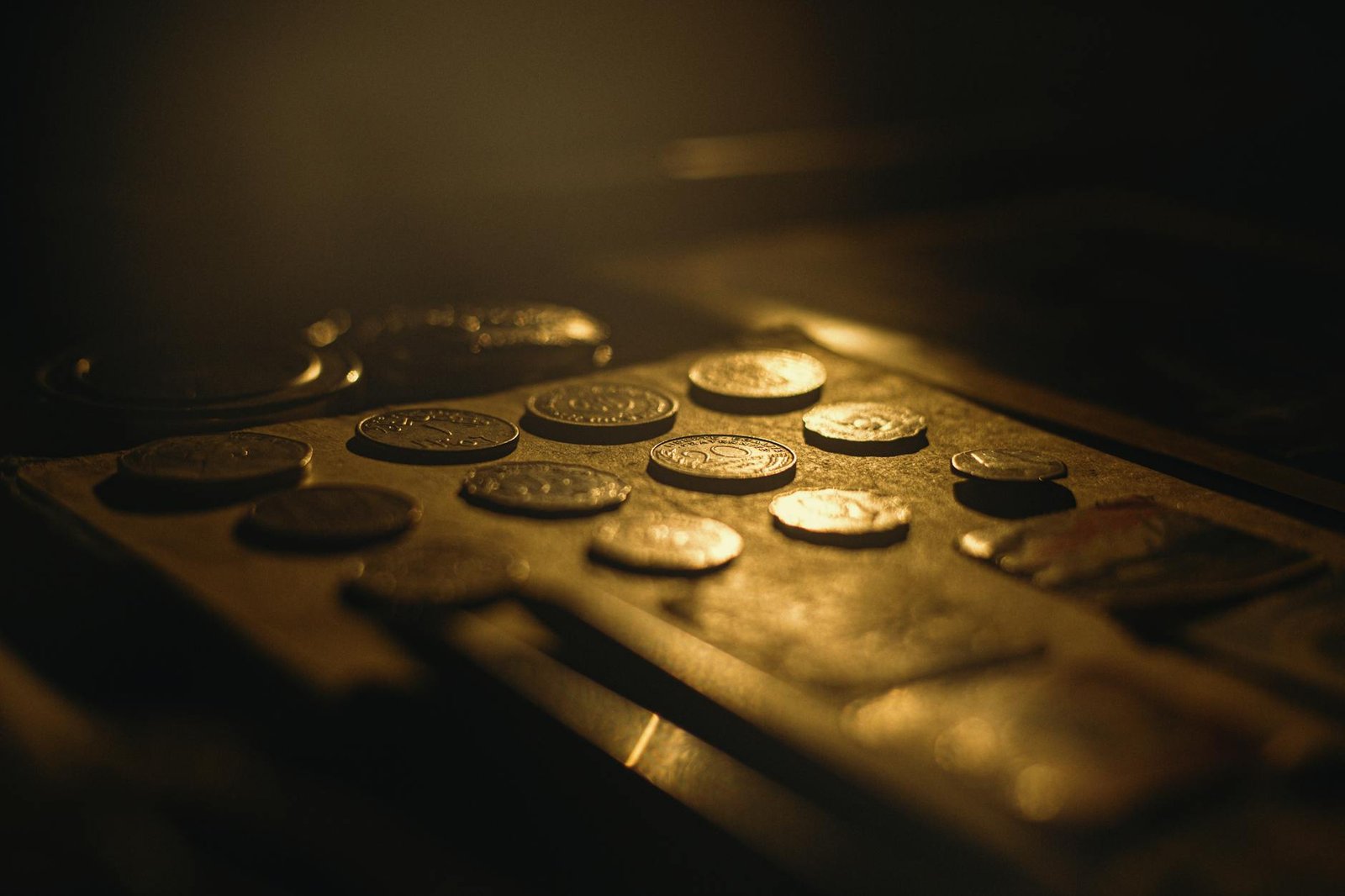
I have to be honest — when I first stumbled across the growing debate around the coin posts policy implemented in online ancient history communities, I genuinely did not expect it to pull me into one of the most fascinating ethical arguments in modern archaeology and public history. What started as a moderation decision on a history forum turned out to be a window into a much older, much thornier conflict between private collectors, academic scholars, and the communities whose ancestors actually made these objects. The more I researched, the more I realized this story touches on looting, cultural heritage law, organized crime, and the very question of who gets to own the past — and I couldn’t stop reading.
Key Takeaways
- The coin posts policy debate reflects a decades-long academic and legal conflict over private antiquities collecting and its links to archaeological site destruction.
- Historians and archaeologists have documented direct connections between the unregulated ancient coin market and the funding of looting operations worldwide.
- Online communities restricting coin display posts are part of a broader cultural shift toward responsible engagement with ancient material culture.
- International frameworks like the 1970 UNESCO Convention have attempted to regulate the antiquities trade, but enforcement remains deeply inconsistent.
- Understanding why these policies matter requires looking at the full historical and ethical context of how ancient objects move from the ground to private hands.
Why This Debate Is Happening Right Now
The coin posts policy controversy is not simply a story about forum moderation — it is a flashpoint in a much larger, ongoing argument about who owns ancient history and what responsibilities come with that ownership. The decision by the r/ancienthistory community in July 2022 to prohibit private collection coin posts sparked significant discussion among history enthusiasts, collectors, and scholars alike, and the reverberations of that conversation are still being felt in academic and public history circles today.
At its core, this debate forces us to ask a genuinely uncomfortable question: can a private individual’s enjoyment of an ancient object ever be fully separated from the circumstances under which that object left the ground? Historians have found that this question does not have a clean answer, and that is precisely what makes it so worth examining carefully.
The Coin Posts Policy Explained: What It Actually Means
The coin posts policy introduced in mid-2022 represented a deliberate choice by an online ancient history community to prioritize scholarly discussion over the display of privately owned ancient artifacts. The reasoning was layered and thoughtful: moderators observed that posts featuring personal coin collections rarely generated meaningful historical conversation and instead functioned primarily as showcases of personal acquisition — what the policy announcement itself described as conspicuous consumption rather than historical engagement.
But the policy went further than aesthetics or community tone. It explicitly acknowledged that the market surrounding ancient coins — particularly those without documented provenance — is deeply entangled with some of the most destructive forces in the antiquities world. These include the looting of unexcavated archaeological sites, the involvement of organized criminal networks in artifact trafficking, and in some documented cases, the financing of extremist organizations through the sale of cultural objects.
What the records reveal is that this was not a decision made in isolation. It reflected a growing consensus among archaeologists, museum professionals, and cultural heritage lawyers that even seemingly innocent participation in the unprovenanced coin market carries ethical weight.
| Factor | Private Coin Collecting (Unprovenanced) | Institutionally Documented Coins |
|---|---|---|
| Archaeological Context | Typically lost or unknown | Recorded and preserved |
| Historical Value | Reduced without find context | Maximized with stratigraphic data |
| Legal Status | Often ambiguous or disputed | Legally documented and traceable |
| Market Incentive for Looting | High — demand drives supply | Low — acquisition strictly regulated |
| Community Discussion Value | Limited to aesthetics and value | Rich in historical and cultural context |
Ancient Coins and the Antiquities Market: A Troubled History
To understand why the coin posts policy carries such weight, you need to understand the scale and structure of the ancient coin market. Ancient coins are among the most widely traded antiquities in the world, with thousands of examples changing hands at auction houses, coin fairs, and online marketplaces every single year. Unlike larger sculptural works or architectural fragments, coins are small, portable, and extraordinarily difficult to trace — qualities that make them particularly attractive to those who profit from looted archaeological sites.
Archaeological evidence shows that ancient coins found outside of controlled excavations have almost always been separated from the contextual information that gives them their fullest historical meaning. When a Roman denarius is pulled from the ground by a looter rather than a trained archaeologist, the soil layers, associated objects, and spatial relationships that could tell us about trade routes, economic conditions, or burial practices are permanently destroyed. According to research published by the Archaeological Institute of America, the loss of archaeological context is irreversible and represents a fundamental impoverishment of the historical record.
The scale of this problem is staggering. Estimates from cultural heritage researchers suggest that tens of thousands of archaeological sites across the Mediterranean, Middle East, and Central Asia have been significantly damaged or destroyed by looting operations in recent decades. The ancient coin trade — worth hundreds of millions of dollars annually by some estimates — provides a steady economic incentive that keeps those operations running.
Looting, Archaeology, and the Real Cost of Unprovenanced Coins
The connection between the private ancient coin market and archaeological destruction is not speculative — it is documented. Historians have found that the demand side of the market directly shapes the supply side, meaning that every purchase of an unprovenanced ancient coin creates economic pressure that encourages further looting. This dynamic was extensively analyzed in the aftermath of the conflicts in Iraq and Syria after 2003 and 2011 respectively, when satellite imagery and field reports confirmed catastrophic looting at sites including Apamea, Dura-Europos, and dozens of smaller ancient settlements.
What made the Syrian and Iraqi cases particularly alarming was the documented involvement of extremist organizations in the sale of looted antiquities, including coins, to fund their operations. A 2017 report from the RAND Corporation estimated that the Islamic State alone generated between $4 million and $7 million annually from antiquities trafficking at the height of its territorial control, though some researchers place the figure considerably higher. Ancient coins, because of their size and ease of transport, featured prominently in these networks.
The Smithsonian Institution’s cultural heritage resources and similar institutional bodies have long emphasized that the ethical dimensions of artifact ownership extend far beyond the individual collector. When a person buys an unprovenanced ancient coin, they are participating in a supply chain whose origins are often impossible to verify and whose upstream effects can include the permanent destruction of irreplaceable historical sites.
This is the context in which the coin posts policy makes complete sense as an ethical stance, not merely a community preference.
The Coin Posts Policy Through Different Scholarly Perspectives
Not everyone agrees on where the line should be drawn, and it is worth taking seriously the range of scholarly perspectives on this debate. The conversation breaks down into several distinct camps, each with genuine intellectual substance.
The Archaeological Consensus View holds that the unprovenanced coin market is categorically harmful and that any engagement with it — including displaying purchases in online communities — normalizes practices that damage the archaeological record. Scholars in this tradition, including prominent voices like archaeologist Paul Barford, argue that there is no ethical way to participate in the market for ancient coins that lack documented find contexts predating 1970, the year of the landmark UNESCO Convention on cultural property.
The Collector Advocacy Position argues that ancient coins, particularly common types produced in enormous quantities during the Roman and Greek periods, are so abundant that their collection poses minimal harm and that restricting the market simply drives it underground. Advocates in this camp point to the long tradition of numismatic scholarship — the study of coins and currency — as evidence that collectors have contributed meaningfully to historical knowledge over centuries.
The Middle-Ground Scholarly View acknowledges both the genuine contributions of numismatic study and the real harms of the unregulated market. Researchers in this tradition tend to focus on provenance documentation as the key variable, arguing that coins with verifiable pre-1970 collection histories occupy a fundamentally different ethical category from those with no documented history at all.
What this scholarly landscape reveals is that the coin posts policy debate is not simply about coins — it is about how we as a society decide to value the preservation of the past versus the rights of individuals to own pieces of it. That is a genuinely difficult question, and the fact that online history communities are grappling with it seriously is, in many ways, a sign of growing historical literacy among the public.
International Law and Cultural Heritage Protection
The legal framework surrounding ancient coins and the broader antiquities trade has evolved significantly since the mid-twentieth century, though enforcement remains deeply uneven. The 1970 UNESCO Convention on the Means of Prohibiting and Preventing the Illicit Import, Export and Transfer of Ownership of Cultural Property established 1970 as the benchmark year for legitimate provenance documentation — meaning that objects without documented collection histories predating that year are presumed to be of potentially illicit origin under the policies of most major museums and many national governments.
As of 2024, more than 140 countries have ratified the 1970 UNESCO Convention, making it one of the most widely adopted international cultural heritage instruments in history. The United States ratified the convention in 1983 and has since entered into bilateral cultural property agreements with more than 20 source countries, including Greece, Italy, Cyprus, and Iraq — all nations with rich ancient histories and serious ongoing problems with archaeological looting.
Despite these frameworks, the ancient coin market has proven remarkably resistant to regulation. The sheer volume of coins produced in antiquity — the Roman Empire alone minted coins in quantities that modern estimates place in the billions — makes it genuinely difficult to establish clear provenance for individual examples. This ambiguity has been exploited by those who argue that common ancient coins should be exempt from cultural property regulations, a position that most archaeologists and cultural heritage lawyers firmly reject.
The ancient Roman economy and its monetary system is a fascinating topic in its own right, and understanding the scale of ancient coin production helps contextualize why this debate is so complex. Similarly, the ethics of archaeology and artifact ownership is a subject that deserves far more public attention than it typically receives.
What This Means for How We See History
The coin posts policy debate ultimately invites us to think carefully about something that does not get discussed enough in popular history circles: the relationship between how we consume history and how we preserve it. Every choice we make as history enthusiasts — what we read, what we share, what we buy, what communities we participate in and how — has downstream effects on the broader ecosystem of historical knowledge production and preservation.
When online communities choose to restrict the display of privately collected ancient coins, they are making a statement about what kind of historical engagement they want to model and encourage. They are saying that the excitement of holding an ancient object in your hands — real and understandable as that excitement is — does not automatically justify participation in markets that may have caused significant harm to the archaeological record. That is a mature and genuinely important position, and it reflects a growing sophistication in how the public thinks about cultural heritage.
For historians, archaeologists, and history enthusiasts alike, the lesson here is one of responsibility. The past belongs to everyone, which means that how we access it, discuss it, and yes, collect it, carries obligations that extend beyond personal enjoyment. The coin posts policy, whatever one thinks of its specific implementation, is part of a broader and necessary conversation about those obligations.
If this topic has sparked your curiosity — and I genuinely hope it has — I encourage you to dig deeper into the literature on cultural heritage ethics, archaeological site preservation, and the history of the antiquities trade. Leave a comment below with your thoughts on where the line should be drawn between private collecting and public responsibility. This is exactly the kind of conversation that makes history come alive.
Recommended Reading
As an Amazon Associate, I earn from qualifying purchases.
- The Medici Conspiracy by Peter Watson and Cecilia Todeschini — A gripping investigative account of how looted antiquities from Italy entered the world’s top museums and private collections, exposing the criminal networks at the heart of the trade.
- Who Owns Antiquity? by James Cuno — A provocative examination of the debate over cultural property, encyclopedic museums, and the ethics of artifact ownership that presents the collector-friendly perspective with intellectual rigor.
- The Rape of Europa by Lynn H. Nicholas — While focused on World War II art looting, this essential read provides crucial context for understanding how cultural objects become separated from their origins and why provenance matters so deeply.
- Archaeology Under Fire edited by Lynn Meskell — A scholarly collection examining nationalism, politics, and the destruction of cultural heritage across the ancient world, essential reading for anyone serious about these issues.
- Loot: The Battle Over the Stolen Treasures of the Ancient World by Sharon Waxman — An accessible and thoroughly reported account of the global struggle over who owns ancient artifacts and what museums, governments, and collectors owe to history.
Frequently Asked Questions
Frequently Asked Questions
Why did online ancient history communities implement a coin posts policy?
Online ancient history communities implemented coin posts policies primarily because private collection coin posts were found to generate little meaningful historical discussion while normalizing participation in an antiquities market linked to archaeological looting, organized crime, and in some cases the financing of extremist organizations. The policies reflect a broader ethical stance about responsible engagement with ancient material culture.
How did the ancient coin market become connected to archaeological looting?
The ancient coin market became connected to archaeological looting through basic economic incentives. Because ancient coins are small, portable, and difficult to trace, they are highly attractive to looters who can sell them through coin fairs, auction houses, and online marketplaces with minimal documentation. Demand from collectors creates financial pressure that encourages ongoing looting of unexcavated sites, permanently destroying archaeological context.
What was the 1970 UNESCO Convention and why does it matter for coin collecting?
The 1970 UNESCO Convention established 1970 as the benchmark year for legitimate provenance in the antiquities trade. For coin collectors, this means that coins without pre-1970 documentation occupy an ethically and legally ambiguous status under the policies of most major museums and many governments worldwide.
What is provenance and why do archaeologists consider it so important for ancient coins?
Provenance refers to the documented history of an object’s ownership and origin. Archaeologists consider it critically important because the context in which an ancient coin is found provides historical information that the coin itself cannot. When a coin is looted rather than properly excavated, this contextual information is permanently destroyed.
How does the coin posts policy debate reflect broader questions about who owns ancient history?
The coin posts policy debate is a microcosm of a much larger global argument about cultural property, national heritage, and the rights of private individuals versus the interests of source communities and the broader public — questions that museums, governments, and scholars have been wrestling with for decades.