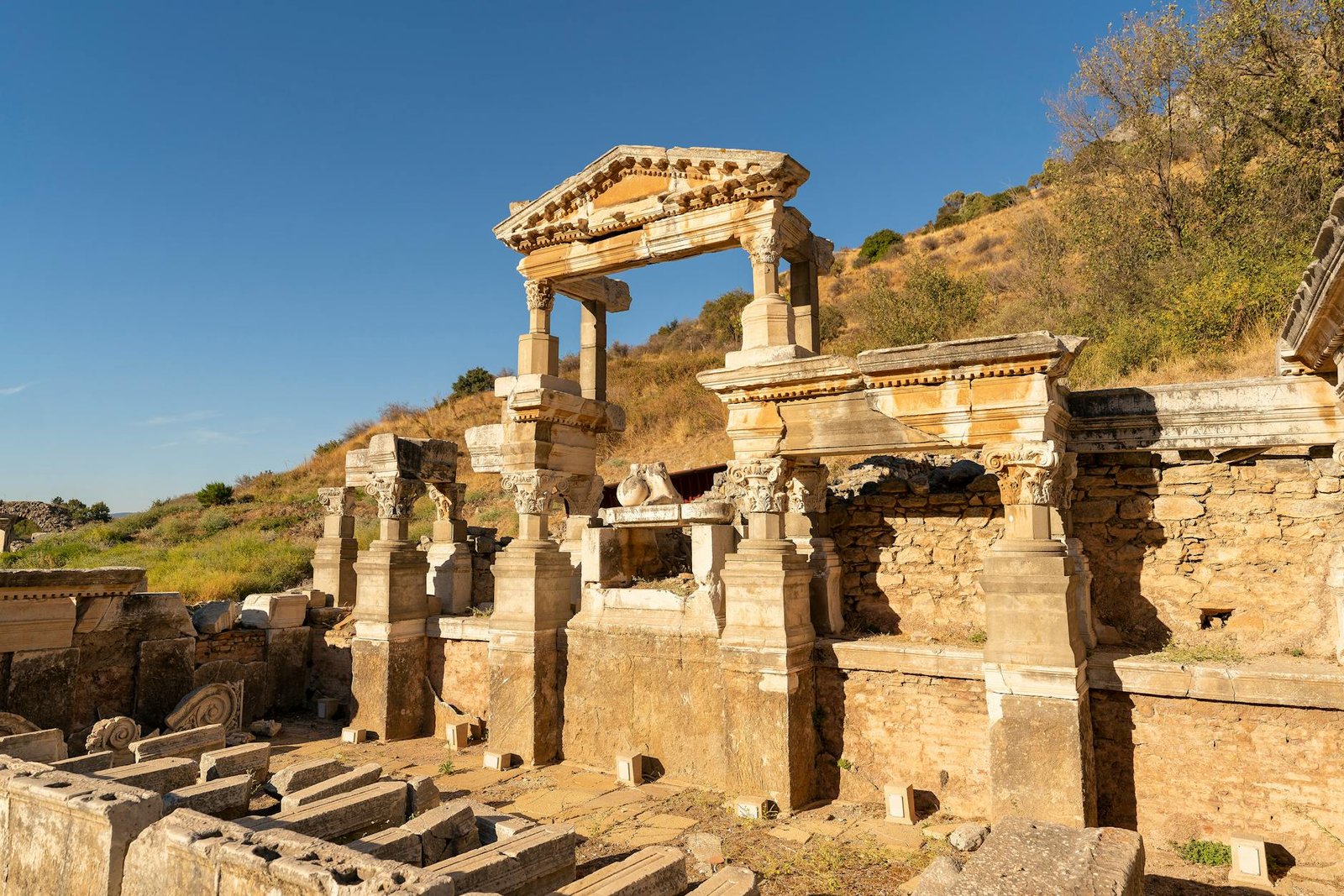
Every time I browse a weekly history questions thread, the same electrifying debate keeps surfacing: Ancient Rome versus Ancient Greece. I’ve been fascinated by this comparison for years, ever since I stood in the ruins of the Roman Forum and realized that almost everything around me had a Greek ancestor hiding somewhere in its DNA. The differences between these two civilizations are sharper than most people expect — and far more revealing about how great societies rise, adapt, and leave their mark on everything that follows. Let me walk you through what I’ve found, and why this comparison genuinely changed how I think about the ancient world.
Key Takeaways
- Ancient Greece was a collection of independent city-states; Rome was a unified republic and later an empire with centralized authority.
- Greek culture prioritized philosophy, art, and individual intellectual achievement; Roman culture emphasized law, engineering, and collective civic duty.
- Greece’s democratic experiments in Athens around 507 BCE predate Rome’s republican constitution by roughly a generation.
- Rome absorbed and transformed Greek culture rather than replacing it — making the two civilizations deeply intertwined despite their differences.
- Both civilizations left foundational legacies in Western law, language, architecture, and political thought that remain active today.
What the Weekly History Questions Thread Always Asks First
The single most common question in any weekly history questions thread about the classical world is this: were Rome and Greece really that different, or was Rome just Greece with better plumbing? The honest answer is that they were profoundly different in structure, values, and ambition — yet so thoroughly intertwined that separating them is like trying to separate coffee from the cup it was brewed in. Rome did not simply copy Greece; it consumed, transformed, and exported Greek ideas at a scale the Greeks themselves never achieved, while building something entirely its own in the process.
Ancient Greece: Origins, Characteristics, and Legacy
Origins and Political Structure
Ancient Greek civilization did not emerge as a single nation. What we call “Greece” was, for most of its history, a fragmented mosaic of independent city-states — known as poleis — each with its own laws, coinage, military, and identity. By the 8th century BCE, city-states like Athens, Sparta, Corinth, and Thebes had developed distinct political cultures that sometimes cooperated and frequently clashed. Historians have found that this competitive fragmentation was actually a driver of Greek intellectual and cultural innovation, forcing each polis to sharpen its identity and institutions.
Athens introduced one of history’s most radical political experiments: democracy. Around 507 BCE, the reformer Cleisthenes restructured Athenian government to give ordinary male citizens a direct voice in legislation — a development documented extensively by scholars at the Encyclopaedia Britannica’s history division as a watershed moment in political thought. Sparta, by contrast, developed a rigid militaristic oligarchy that valued collective discipline over individual expression. These two models — open debate versus enforced conformity — defined the poles of Greek political imagination.
Key Characteristics: Philosophy, Art, and the Life of the Mind
What the records reveal most clearly about Greek civilization is its extraordinary investment in intellectual and artistic life. The 5th and 4th centuries BCE produced Socrates, Plato, and Aristotle — thinkers whose frameworks for logic, ethics, metaphysics, and political theory remained the dominant intellectual currency of the Western world for nearly two millennia. Greek theater, sculpture, and architecture set aesthetic standards that Rome would later adopt wholesale. The Parthenon, completed around 432 BCE, remains one of the most studied buildings in human history, its proportions still influencing architects today.
Greek science and mathematics were equally groundbreaking. Pythagoras, Euclid, Archimedes, and Hipparchus established foundations in geometry, physics, and astronomy that would not be substantially surpassed until the Scientific Revolution of the 17th century CE. Archaeological evidence shows that Greek traders and colonists spread these ideas across the Mediterranean, from modern-day Spain to the Black Sea coast, creating a cultural network of remarkable reach for a civilization that never achieved true political unity.
Legacy of Ancient Greece
Greece’s most durable legacy is arguably conceptual. The vocabulary of Western philosophy, science, politics, and aesthetics is overwhelmingly Greek in origin. Words like democracy, philosophy, theater, cosmos, history, and mathematics are Greek words that entered modern languages precisely because the concepts they named were Greek inventions. As a Smithsonian Magazine analysis of classical influence notes, Greek thought permeated Roman education so thoroughly that elite Romans were effectively bilingual in Greek culture as well as Latin language.
Ancient Rome: Origins, Characteristics, and Legacy
Origins and Political Structure
Rome’s origins are humbler and more contested than Greece’s golden age mythology. Archaeological evidence shows that the city on the Tiber began as a modest Iron Age settlement sometime in the 8th century BCE — roughly contemporary with the Greek city-states. Roman tradition placed the city’s founding at 753 BCE, a date modern historians treat as approximate rather than precise. What distinguished Rome from its earliest centuries was not cultural brilliance but organizational drive: a relentless capacity to absorb neighboring peoples, codify agreements into law, and build institutions that outlasted individual leaders.
The Roman Republic, established around 509 BCE after the expulsion of the last Etruscan king, created a sophisticated system of shared governance through the Senate, elected magistrates, and a complex web of checks on individual power. Unlike Greek democracy, Roman republicanism was never truly egalitarian — the Senate remained dominated by patrician families — but it was remarkably stable, governing an expanding empire for nearly five centuries before giving way to the Principate under Augustus in 27 BCE.
Key Characteristics: Law, Engineering, and Civic Identity
Where Greece excelled in abstract thought, Rome excelled in applied systems. Roman law is perhaps the civilization’s single greatest contribution to world history. The Twelve Tables of 450 BCE established the principle that law should be written, public, and equally applicable to citizens — a revolutionary idea whose echoes run directly through the legal systems of France, Spain, Italy, and Latin America today. Historians have found that Roman jurisprudence was so sophisticated that Byzantine scholars were still codifying and refining it under Emperor Justinian in the 6th century CE, more than a thousand years after the Twelve Tables were first carved.
Roman engineering transformed the physical landscape of Europe, North Africa, and the Near East in ways that Greek city-states never attempted at scale. More than 80,000 kilometers of paved roads connected the empire at its height, enabling military deployment, trade, and communication at speeds that would not be matched until the railway age. Roman aqueducts, amphitheaters, bridges, and concrete-vaulted buildings were feats of practical genius that expressed a distinctly Roman value: the grandeur of the collective state over the brilliance of the individual.
Legacy of Ancient Rome
Rome’s legacy is institutional rather than purely intellectual. The Roman Catholic Church inherited Roman administrative geography and Latin as its sacred language. The legal systems of most of continental Europe descend directly from Roman law. The very concept of a unified Europe — debated, dreamed of, and partially realized in the EU — is haunted by the memory of a Rome that once made it real. Romance languages including French, Spanish, Portuguese, Italian, and Romanian are daughters of Latin, meaning that hundreds of millions of people today speak a direct descendant of Rome’s tongue.
Side-by-Side: Weekly History Questions Thread Comparison Table
| Category | Ancient Greece | Ancient Rome |
|---|---|---|
| Political Structure | Independent city-states (poleis); Athenian democracy from ~507 BCE | Unified republic then empire; Senate-led governance from ~509 BCE |
| Cultural Focus | Philosophy, art, theater, mathematics, individual intellect | Law, engineering, military organization, civic duty |
| Geographic Reach | Mediterranean colonies; Alexander’s conquests reached India | Unified empire from Britain to Mesopotamia at its peak |
| Religious Practice | Polytheistic; gods as human-like personalities central to civic life | Polytheistic (adopted Greek gods); later state adoption of Christianity |
| Language Legacy | Greek: language of science, philosophy, and Eastern Christianity | Latin: ancestor of Romance languages and Western legal tradition |
| Key Architectural Achievement | Parthenon (completed ~432 BCE); temple architecture | Colosseum, Pantheon, aqueducts; concrete vaulted engineering |
| Decline | Macedonian conquest under Philip II in 338 BCE; absorbed by Rome | Western empire fell 476 CE; Eastern (Byzantine) empire survived until 1453 |
What the Comparison Reveals: Weekly History Questions Thread Conclusions
Placing these two civilizations side by side in any weekly history questions thread format forces a conclusion that is both surprising and clarifying: Greece and Rome were not rivals in the same race — they were running entirely different races that happened to share the same track. Greece asked the great questions. Rome built the great systems to govern the answers. Neither was complete without the other, and the fact that Rome deliberately absorbed Greek culture while building its own institutional architecture tells us something profound about how civilizations actually grow.
What the records reveal is that the tension between Greek individualism and Roman collectivism is not a historical curiosity — it is the founding tension of Western civilization itself. Every debate about individual rights versus state authority, about artistic freedom versus civic responsibility, about the life of the mind versus the demands of practical governance, echoes this original comparison. Greece gave the West its intellectual vocabulary. Rome gave it its administrative skeleton. Together, they gave us the civilization we are still arguing about and building upon today.
The comparison also reveals something about historical transmission: ideas rarely travel in pure form. Rome did not receive Greek philosophy as Greeks practiced it. It filtered, simplified, institutionalized, and sometimes distorted it — but in doing so, it preserved and broadcast those ideas across a far wider world than Greece alone could ever have reached. That is not a failure of fidelity. It is how history actually works.
Curious about how other ancient civilizations compare? Explore our deep-dive on Mesopotamia vs Ancient Egypt or discover how Alexander the Great bridged these two worlds in ways historians are still debating.
Recommended Books to Go Deeper
As an Amazon Associate, I earn from qualifying purchases.
- The Greeks: History, Culture, and Society by Ian Morris and Barry Powell — Find it on Amazon
- SPQR: A History of Ancient Rome by Mary Beard — Find it on Amazon
- The Fate of Rome: Climate, Disease, and the End of an Empire by Kyle Harper — Find it on Amazon
- Greek Fire, Poison Arrows and Scorpion Bombs: Biological and Chemical Warfare in the Ancient World by Adrienne Mayor — Find it on Amazon
- The Storm Before the Storm: The Beginning of the End of the Roman Republic by Mike Duncan — Find it on Amazon
Frequently Asked Questions
Why did Ancient Rome outlast Ancient Greece as a political power?
Rome’s longevity came down to institutional resilience. Where Greek city-states depended on the genius of individual leaders and the loyalty of free citizens, Rome built legal and administrative systems that could function across vast distances and survive the deaths of individual rulers. The Roman Senate, the legal code, the professional army, and the provincial governor system created redundancy that no single Greek polis ever matched.
How did Ancient Rome adopt Greek culture without losing its own identity?
Rome was extraordinarily selective in what it borrowed. It absorbed Greek art, philosophy, and religion but filtered all of it through Roman values of civic duty, martial virtue, and practical utility. A Roman reading Plato was reading him to become a better senator or general, not a better philosopher. This pragmatic appropriation allowed Rome to claim Greek prestige while maintaining a distinctly Roman character.
What was the most significant difference between Greek democracy and Roman republican government?
Greek Athenian democracy was direct — citizens voted personally on legislation in the Assembly. Roman republicanism was representative and heavily weighted toward elite families through the Senate. Athens extended political voice to a broader male citizen base in theory; Rome built more durable institutions that could scale across an empire of millions, something Athens’ direct model could never have managed.
How did geography shape the differences between Greece and Rome?
Greece’s mountainous, island-dotted landscape naturally fragmented political authority into city-states separated by terrain. Rome’s position on a large, relatively flat peninsula with access to the Mediterranean gave it both the incentive and the geographic capacity to expand continuously outward, absorbing neighbors rather than competing with them as equals. Geography was not destiny, but it was a powerful nudge in very different directions.
Why do historians still debate which civilization had the greater impact on the modern world?
Because the answer genuinely depends on what you measure. If you measure intellectual frameworks — philosophy, science, mathematics, aesthetics — Greece wins by a wide margin. If you measure institutional inheritance — law, language, administrative geography, religious organization — Rome’s fingerprints are everywhere. Most historians today, including scholars like Mary Beard in SPQR, argue that the question is ultimately a false choice: modern Western civilization is the product of both, inseparably fused.