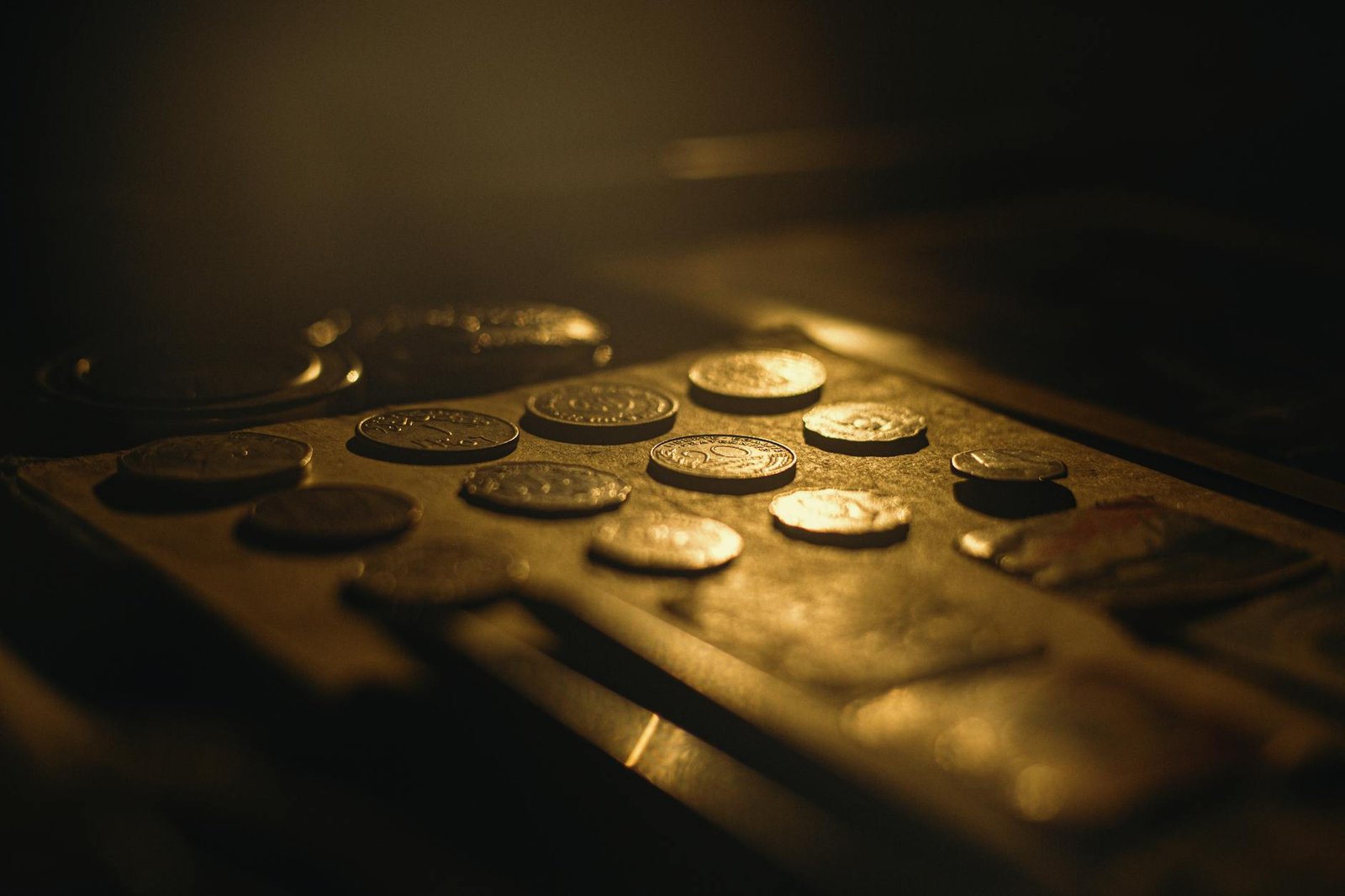
The coin posts policy debate has quietly fascinated me ever since I first stumbled into online ancient history communities and noticed how sharply people disagreed about whether sharing private coin collections belonged in the same space as serious historical discussion. I kept asking myself: what is the real difference between a collector showing off a Roman denarius and a historian unpacking what that same coin tells us about imperial propaganda, trade networks, and the lives of ordinary people two thousand years ago? The more I dug into the archaeology of the issue — the looting, the lost context, the ethical fault lines — the more I realized this comparison reveals something profound about how we value the ancient world. So let me lay it all out, side by side, because the contrast genuinely matters.
Key Takeaways
- The coin posts policy adopted by major ancient history communities in July 2022 reflects a principled stand against content that prioritizes ownership over education.
- Private coin collecting is directly linked by archaeologists and law enforcement to the looting of unexcavated archaeological sites worldwide.
- Genuine historical scholarship uses ancient coins as primary sources — examining iconography, metallurgy, and mint marks — rather than as collectible trophies.
- The antiquities black market, fueled in part by collector demand, has been estimated to generate billions of dollars annually, funding organized crime and in some cases terrorism.
- Responsible history communities can celebrate ancient coinage as historical evidence while firmly rejecting the culture of conspicuous collecting that harms irreplaceable heritage.
What Is the Coin Posts Policy and Why Does It Matter?
The coin posts policy, as formalized by major online ancient history communities in mid-2022, draws a clear boundary between content that advances historical understanding and content that primarily celebrates personal ownership of ancient objects. It matters because the distinction is not merely academic — it sits at the intersection of archaeology, ethics, law, and the long-term survival of our shared human heritage. Put simply: showing off a coin you own is fundamentally different from analyzing what that coin reveals about the civilization that struck it, and conflating the two does real damage to both the historical record and the communities devoted to studying it.
Historians have found that this boundary has become increasingly urgent as the global antiquities trade has expanded. According to research published by the British Museum’s Portable Antiquities Scheme, unprovenanced ancient objects — those without a documented find history — make up the vast majority of coins circulating in private collector markets, meaning their archaeological context has almost certainly been lost forever. What the records reveal is that every unprovenanced coin represents not just a missing object but a missing chapter of history: the stratigraphy, the associated finds, the spatial relationships that tell archaeologists how people actually lived.
Private Coin Collecting: Origins, Culture, and Key Characteristics
Private coin collecting — known formally as numismatics when practiced by hobbyists — has roots stretching back to Renaissance Europe, when wealthy patrons began assembling “cabinets of curiosities” that included ancient Greek and Roman coins as prestige objects. By the 17th century, collecting ancient coins had become a marker of social status among European aristocracy, a tradition that persisted into the modern era and eventually democratized through auction houses, coin fairs, and, most recently, online marketplaces.
The key characteristics of private collecting culture, as it manifests in online communities, tend to center on acquisition, display, and market valuation. Posts typically feature high-resolution photographs of individual coins alongside information about where they were purchased, what they cost, and their estimated grade or condition. Discussion gravitates toward rarity, aesthetic appeal, and monetary worth. Archaeological evidence shows that this collector-market demand creates powerful financial incentives for the looting of sites across the Mediterranean, the Middle East, and Central Asia — regions that contain some of the densest concentrations of ancient numismatic material on earth.
Interpol and UNESCO have both documented the link between collector demand and site destruction. A 2020 report by the Antiquities Coalition estimated that the illicit antiquities trade generates between $1.2 billion and $1.6 billion annually, with ancient coins representing one of the most commonly trafficked categories precisely because they are small, easily transported, and difficult to trace. The collecting community itself is not monolithic — many collectors are genuinely passionate about history — but the structural incentives of the market consistently reward extraction over preservation.
The lasting legacy of uncritical collecting culture is a fragmented archaeological record. When a site is looted, the objects removed lose what archaeologists call their provenance — the documented history of where they were found and in what context. A Roman coin pulled from a looted site in Syria tells us almost nothing compared to the same coin excavated professionally, with records of the layer it came from, the objects surrounding it, and the architectural context of its deposition. That lost context is irreplaceable. No amount of high-resolution photography restores it.
Historical Scholarship on Ancient Coins: Origins, Methods, and Legacy
Academic numismatics — the scholarly study of ancient coinage — emerged as a rigorous discipline in the 19th century, pioneered by institutions like the American Numismatic Society (founded in 1858) and the Royal Numismatic Society in London. Unlike collector culture, academic numismatics treats coins as primary historical sources, comparable in importance to inscriptions, papyri, or architectural remains. The goal is not ownership but understanding.
Historians have found that ancient coins are extraordinarily rich documents. A single silver tetradrachm from Athens, for example, carries iconographic information about religious practice (the owl of Athena), political identity (the Athenian state’s claim to divine patronage), economic reach (the wide distribution of Athenian coinage across the ancient Mediterranean), and metallurgical history (the silver content tracks the depletion of the Laurion mines over time). Scholars at institutions like Oxford’s Ashmolean Museum and the Smithsonian’s National Numismatic Collection analyze coins using X-ray fluorescence, die studies, and hoard analysis to reconstruct ancient monetary systems, trade routes, and even military campaigns.
The methods of historical scholarship stand in sharp contrast to collector culture. Where collectors focus on individual objects, scholars focus on patterns across thousands of coins. Where collectors value rarity and condition, scholars value context and association. A hoard of 4,000 bronze coins found together in a sealed deposit tells a historian something profound about monetary circulation in a specific place at a specific moment — information that is destroyed the instant those coins are separated and sold individually on the open market.
The lasting legacy of academic numismatics is a body of knowledge that genuinely illuminates the ancient world. Scholars like Michael Crawford, whose 1974 work Roman Republican Coinage remains a foundational reference, demonstrated that careful coin study could reconstruct the financial history of the Roman Republic in extraordinary detail. More recently, digital projects like the Nomisma.org linked data initiative are making numismatic scholarship openly accessible, connecting coin finds across dozens of institutional databases in ways that benefit everyone — without requiring anyone to own a single ancient object.
Side-by-Side Comparison: Collecting Culture vs. Academic Numismatics
| Dimension | Private Collecting Culture | Academic Historical Scholarship |
|---|---|---|
| Primary Goal | Acquisition, display, and valuation of objects | Understanding ancient economies, politics, and society |
| Value Metric | Rarity, condition, and market price | Archaeological context, die studies, hoard associations |
| Relationship to Provenance | Often absent or undocumented; market tolerates gaps | Central requirement; unprovenanced objects are treated with caution |
| Impact on Archaeological Sites | Demand incentivizes looting and site destruction | Supports professional excavation and site preservation |
| Community Discussion Focus | “Look what I own” — conspicuous consumption | “What does this tell us?” — historical inquiry |
| Institutional Alignment | Auction houses, coin fairs, private dealers | Universities, museums, archaeological institutes |
| Long-Term Heritage Impact | Fragments the record; destroys irreplaceable context | Builds cumulative, publicly accessible knowledge |
The Coin Posts Policy and the Ethical Stakes for Ancient Heritage
Understanding the coin posts policy requires understanding what is actually at stake when private collection posts flood a space dedicated to ancient history discussion. The ethical argument is not complicated, but it is serious: when an online community normalizes the display of privately owned ancient objects without questioning their provenance or the market that produced them, it implicitly endorses a system that archaeological evidence shows is causing ongoing, measurable harm to the ancient world.
The connection between the collector market and organized crime is well-documented. Investigations by Interpol’s Works of Art unit have repeatedly traced looted coins and other antiquities from conflict zones — particularly Syria and Iraq, where sites like Apamea were satellite-imaged showing thousands of looter pits after 2011 — through a chain of middlemen to respectable-seeming auction houses and private sales in Western countries. The coins that appear in collector posts did not materialize from nowhere. They came from the ground, and in far too many cases, the ground was torn apart illegally to retrieve them.
What the records reveal is that the coin posts policy is not about policing enthusiasm for ancient history — it is about recognizing that a history community has a responsibility to the history it claims to love. Celebrating the ownership of objects whose market incentivizes site destruction is a contradiction that serious ancient history spaces are right to resolve. There are dedicated numismatic communities where collectors can share their objects; the argument is simply that spaces devoted to the scholarly discussion of ancient civilizations should prioritize the historical evidence over the collector’s display case.
This is also a question of what kind of conversation gets crowded out. When display posts dominate a community feed, they displace discussion of ancient economic systems, archaeological discoveries, and the historical narratives that coins can illuminate when studied properly. The coin posts policy is, at its core, a statement about what a community is for.
What the Comparison Reveals: The Coin Posts Policy as a Defining Moment
Laying private collecting culture and academic historical scholarship side by side makes the conclusion unavoidable: these are not two versions of the same activity. They are fundamentally different relationships with the ancient world, with different values, different methods, and — critically — different consequences for the survival of the archaeological record that makes historical knowledge possible in the first place.
The coin posts policy represents a maturation in how online history communities understand their own responsibilities. It reflects a growing awareness, backed by decades of archaeological research and law enforcement documentation, that enthusiasm for the ancient world is not ethically neutral when it is channeled through a market that destroys the evidence base of that same ancient world. Historians have found that the most productive communities are those that channel passion for antiquity into questions rather than acquisitions — into asking what a coin meant to the person who used it, rather than what it is worth to the person who owns it today.
The comparison also reveals something hopeful. Ancient coins are genuinely extraordinary historical documents, and there is no shortage of fascinating, rigorous, ethically unimpeachable ways to engage with them. Die studies, hoard analysis, iconographic interpretation, monetary history, the political messaging of imperial portraiture — all of this is available to anyone with access to a good library or a university database, without anyone needing to purchase a single ancient object. That is the kind of engagement that builds real historical understanding, and it is the kind of engagement that responsible ancient history communities are right to champion.
If you want to explore Roman monetary history or dive deeper into Greek coinage and ancient trade networks, the scholarship is rich, accessible, and — unlike a private collection — freely shared with everyone.
Recommended Reading
As an Amazon Associate, I earn from qualifying purchases.
- Roman Republican Coinage by Michael Crawford — The definitive scholarly reference on Roman coin production and its historical significance. Find it on Amazon
- The Oxford Handbook of Greek and Roman Coinage edited by William Metcalf — A comprehensive academic survey covering the full sweep of ancient numismatics from Greece to Rome. Find it on Amazon
- Who Owns Antiquity? by James Cuno — A thought-provoking examination of the ethics of collecting, museum acquisition, and cultural heritage ownership. Find it on Amazon
- The Medici Conspiracy by Peter Watson and Cecilia Todeschini — A gripping investigative account of how the illicit antiquities trade operates from looter to collector. Find it on Amazon
- Loot: The Battle over the Stolen Treasures of the Ancient World by Sharon Waxman — An accessible and deeply reported look at the global fight over looted antiquities and what is at stake for world heritage. Find it on Amazon
Frequently Asked Questions
Why did online ancient history communities adopt a coin posts policy?
Online ancient history communities adopted a coin posts policy primarily because private coin collection posts were found to have little educational value in the context of historical discussion, while simultaneously normalizing a collector market that archaeological and law enforcement evidence links to the looting of ancient sites, organized crime, and in some cases terrorism financing.
How does private coin collecting harm archaeological sites?
Private collector demand creates financial incentives for looters to dig up ancient sites illegally. When coins are removed from the ground without professional excavation, they lose their archaeological context — the stratigraphic layer, associated objects, and spatial relationships that give historians crucial information about how ancient people lived. This context, once destroyed, cannot be recovered.
What was the difference between a coin posts policy and an outright ban on discussing ancient coins?
The coin posts policy targeted private collection display posts — content centered on showing off personally owned coins — rather than scholarly or historical discussion of ancient coinage. Discussing what coins reveal about ancient economies, political systems, or trade networks remains entirely appropriate in history communities. The policy draws a line between conspicuous collecting and genuine historical inquiry.
How did ancient civilizations use coins as tools of political communication?
Ancient civilizations, particularly Greek city-states and the Roman Empire, used coins as mass-produced propaganda. Roman emperors placed their portraits and chosen titles on coins to project authority across the empire. Greek city-states used distinctive imagery to assert civic identity. Scholars study these iconographic choices to understand how ancient states constructed and projected power.
What is the estimated scale of the illicit antiquities trade that the coin posts policy aims to push back against?
The Antiquities Coalition estimated in 2020 that the illicit antiquities trade generates between $1.2 billion and $1.6 billion annually. Ancient coins are among the most commonly trafficked categories because they are small, portable, and difficult to trace. Interpol and UNESCO have both documented the pipeline from looted Mediterranean and Middle Eastern sites to Western collector markets.